
The hastily eaten meal was still not yet served, she was busy preparing to be on time for the night shift from 8 pm to 8 am the next morning at Thang Long Industrial Park.
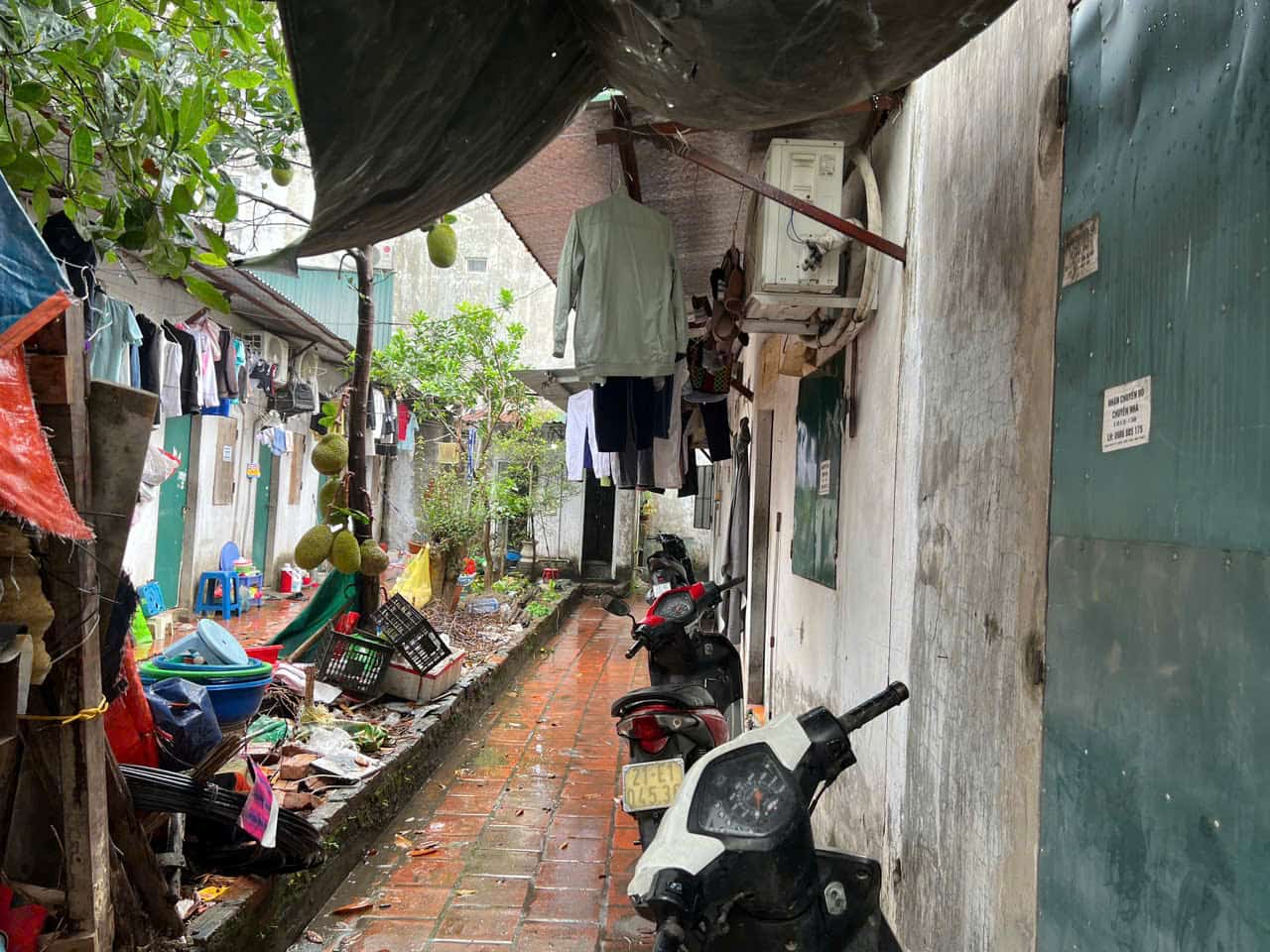
Her rented room is located in an old level 4 house in Bau village, Thien Loc commune (Hanoi), with a rent of 1.2 million VND/month, excluding electricity and water.
The cramped space is just enough to fit a bed, an old refrigerator, an electric fan, clothes hangers and a corner of the kitchen placed right next to the entrance. The toilet is closed but degraded and damp.
Coming home from work, I just want to sleep, I don't have the strength to do anything else," Ms. Quy shared. With a long night shift schedule, her daytime is almost entirely spent on sleep. On weekends, instead of having fun or socializing, she only rests in her room because "saving money, and not knowing where to go".
Ms. Quy's story is not isolated. This reflects the common situation of many workers living in industrial parks and export processing zones across the country.
According to the Vietnam General Confederation of Labor, there are about 4.5-5 million workers working in industrial parks. Among them, most have to rent rooms outside due to the limited supply of social housing.
The average area of each rented room is only 10-15m2, usually with 2-4 people living.
Rent costs account for 20-30% of workers' monthly income. Meanwhile, the average salary of unskilled workers currently ranges from about 6-8 million VND/month. After deducting rent, electricity, water, food and essential expenses, the rest is very meager.
Many boarding houses are built spontaneously, degraded over time, lacking common living space, lacking green trees, lighting and minimum living conditions. This not only affects physical health but also directly affects the spirit of workers.
Not only lacking material things, the spiritual life of workers is also a matter of concern. For people working in shifts like Ms. Quy, living time is disrupted, and social interaction opportunities become even more limited.
Friends are also few, because each person does a different shift. It's difficult to participate in any activity," Ms. Quy said.
Ms. Quy said that she rarely participates in cultural and entertainment activities. The main reasons are the lack of community living space, inappropriate time and limited income.
In fact, many industrial parks do not have cultural institutions such as cultural houses, sports fields, libraries... or do but do not meet enough needs.
Workers after work mainly stay in their rented rooms, using phones or sleeping, leading to poor spiritual life, easily falling into a state of stress and isolation.
From her own experience, Ms. Quy hopes: "If there are more playgrounds and socializing places for workers, it would be better. On weekends, you can go out to meet people, it's less boring.
This is also a common desire of many workers today. Some localities have begun to implement the model of trade union institutions with houses, mini-supermarkets, sports fields... but the actual needs of workers are still very large, and more projects are needed.


