
Bringing policies closer to workers
At factories, construction sites or industrial parks, the story of salaries, social insurance, working conditions or livelihood pressure is no longer closed behind the gates of businesses. When publicly reflected, many issues from the grassroots level have become materials for dialogue, contributing to promoting solutions from businesses, trade union organizations and management agencies.
For many workers, the press is now not only a place to update current affairs but also a practical reference channel about rights, jobs and changes that directly impact daily life.
For many workers, not everyone has the conditions to fully access legal documents directly related to their rights. Regulations on salaries, social insurance, occupational safety and health, or welfare regimes often contain many professional terms and are constantly adjusted to suit reality.
The gap between policy and accessibility is therefore still present if there are no easy-to-understand and close transmission channels.
From that perspective, the press is doing a good job of playing the role of a policy "translator" – helping inherently dry regulations become clearer and more accessible to union members and workers.
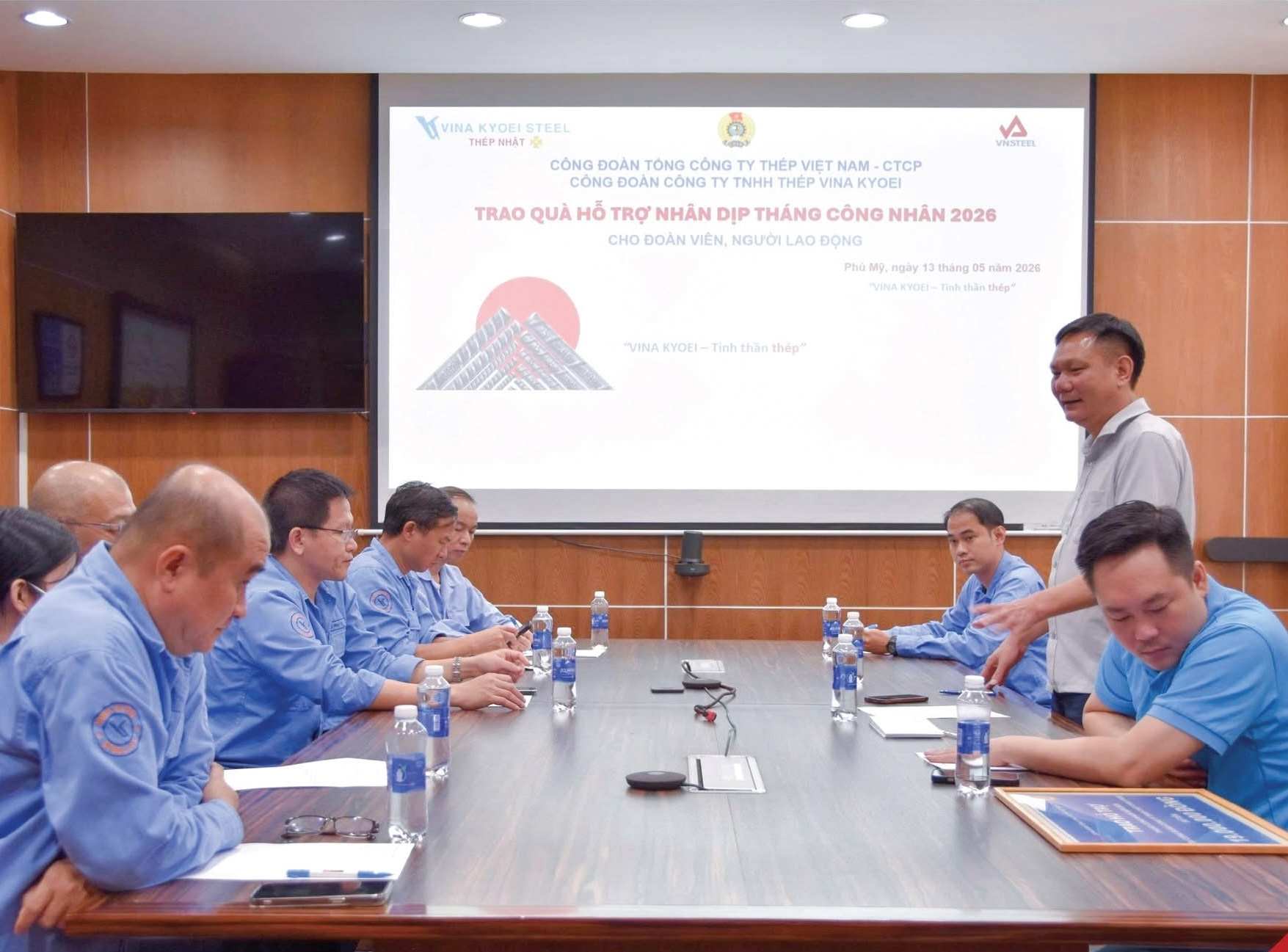
Talking to Lao Dong Newspaper, Mr. Dinh Hoang Hai - Vice Chairman of the Trade Union of Vina Kyoei Steel Co., Ltd. said that the press has been and is playing a particularly important role in caring for, representing and protecting the legitimate and lawful rights and interests of workers.
According to Mr. Hai, for the majority of workers, reading and fully understanding legal regulations is not easy at all. It is the press, through articles analyzing, answering or providing legal advice, that has contributed to bringing policies closer to labor practice.
Workers find it very difficult to have the conditions to read all legal documents related to their rights. Thanks to the press, new regulations are conveyed more easily, helping workers quickly grasp them to proactively protect their legitimate rights and interests," Mr. Hai shared.
The value of journalism lies not only in popularizing policies but also in the ability to reflect reality, detect inadequacies and create more positive pressure for regulations to be better implemented.
Reality shows that many cases related to late payment of social insurance, salary arrears, violations of working hours, labor safety conditions or inadequacies in policy implementation have been detected and reflected from the grassroots level through the press. When those voices are spread, public concern is also greater, leading to involvement from businesses, trade union organizations and functional agencies.
According to Mr. Dinh Hoang Hai, this is also one of the greatest values of journalism in accompanying trade union organizations.
Many issues that originally only existed within the scope of businesses or localities, after being reflected in the press, have received wider attention from society. This contributes to promoting functional agencies to consider and handle and businesses also have more motivation to review and overcome existing problems," he said.
From that reality, the press no longer only performs the task of information but has become a bridge of dialogue – where workers can raise their voices, businesses look back at shortcomings, and management agencies have more practical data to improve policies.
Spreading positive values in the digital age
Along with the changes in the labor market, the role of the press has also expanded. Besides reflecting reality, the press is increasingly contributing to spreading positive values, arousing the spirit of creativity and inspiring in labor production.
According to Ms. Nguyen Thi Dao - Chairwoman of the Trade Union of May 10 Corporation, for many years, the press has accompanied the trade union organization in propagating emulation movements for good labor and creative labor; introducing good models, effective ways of doing things and honoring typical collectives and individuals in production.
Many technical innovation initiatives and many beautiful stories about workers have been reflected in newspapers, thereby creating motivation for union members to continue studying, training and improving their professional qualifications.
The most precious thing is that journalism helps spread trust. When initiatives, kind people or beautiful stories are recognized, workers also have more motivation to try harder," Ms. Dao shared.
According to her, honoring examples of creative labor, workers overcoming difficulties or effective production models not only creates motivation for emulation but also contributes to affirming the role and position of the working class in the country's development.
The change in information reception habits is also posing new requirements for the press.When most workers access information through smartphones and online platforms, innovating content and transmission methods becomes an inevitable requirement.
According to Mr. Dinh Hoang Hai, the press needs to effectively utilize multimedia forms such as video, infographics, podcasts or online seminars to bring information faster, more visually and closer to workers.
In addition, content related to AI, automation or digital transformation - factors that are directly affecting jobs, income and professional skills - also needs to be given more attention so that workers have better preparation for changes in the job market.
In an era where information changes every hour, the value of journalism is not in being faster than social networks, but in its ability to verify, connect and build trust.
For trade union organizations and workers, the press is not only a place to receive information but also a forum to share thoughts, a bridge for dialogue and also a place where silent efforts in labor are recognized.
Because behind each production line, each construction site or factory are still people who need to be listened to, shared and protected. And there, the press is still present as a responsible, humane voice – quietly but persistently accompanying workers in every rhythm of life.


