
Risk of falling behind
The rapid development of technology, automation and artificial intelligence is reshaping many industries. A series of familiar jobs are narrowed down or disappeared, and new positions and jobs requiring higher skills are difficult to recruit. Meanwhile, many workers still have a psychology of being afraid of change, "just do your current job well".
Notably, not only unskilled workers, even skilled workers are facing the risk of falling behind if their skills are not updated. In fact, knowledge learned from 5-10 years ago may no longer be suitable for current requirements. The gap between training and labor use is therefore increasingly widening...
Ms. Ban Thi Quynh - Director of Mai Son Agricultural Products Joint Stock Company (Ha Dong ward, Hanoi) said that her company is currently not short of people, but short of people who "can do the job".
Average labor accounts for 50% of the personnel at my company, some people have decades of working experience. However, when the company improves machinery and changes some production processes, this is the group that faces the most difficulties. Workers over 35 years old are even more confused when businesses innovate technology. If they are not retrained, they are likely to fall into the surplus labor group," Ms. Quynh said.
According to Mr. Nguyen Van Nam - Director of Hoang Anh Production and Trading Co., Ltd. (Dinh Cong ward, Hanoi), his company has up to 80% of personnel directly involved in production. For nearly 1 year, the company has changed many machines, updated modern technology, and about 15% of personnel have quit their jobs/are dismissed because they do not meet new requirements.
In the context of fierce competition and fluctuating orders, businesses are forced to optimize costs and improve productivity. This leads to increasing demands for skills, from the ability to operate modern machinery, use software, to flexible thinking and labor discipline. We have proactively invested in internal training, but not always have enough resources. Retraining takes time, costs and potentially risks "workers quit after training". If workers do not proactively learn and improve their skills, we will choose a faster solution: recruit new workers with available skills, instead of patiently retraining the old force," Mr. Nam said.
Retraining - a mandatory problem
According to Ms. Nguyen Thi Lan Huong - former Director of the Institute of Labor Science and Social Affairs, in the context of businesses lacking labor to meet new requirements, retraining the labor force cannot only be placed on the shoulders of workers or businesses. This is a systematic problem, requiring the synchronous participation of the State, training institutions and businesses.
On the State's side, there needs to be policies to encourage and support retraining, especially for workers affected by technology transformation. Short-term, flexible training programs, associated with the actual needs of businesses, need to be expanded, instead of widespread training, heavily theoretical.
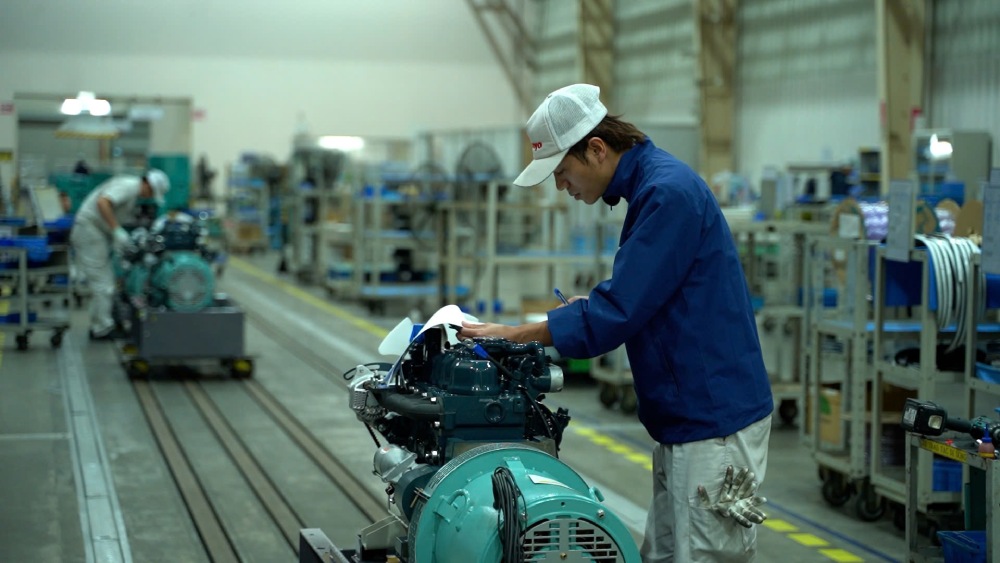
Vocational training institutions must also change strongly, update programs according to market requirements, and strengthen practical skills and digital skills. If training is still based on old "orders", the risk of training out of unusable labor will continue to be repeated. In addition, the social security system also needs to be strengthened so that workers have a "buffer zone" when participating in retraining. If the worry of food and clothing still weighs heavily, it is very difficult to ask workers to spend time and money on studying and improving skills.
Also according to Ms. Huong, before the new requirements of the labor market, retraining is not only the key to retaining jobs, but also the path for workers to improve their self-worth in the long term. Conversely, if they are slow to adapt, the risk of being eliminated is inevitable.
The skill race has begun and is becoming increasingly fierce. Only with the companionship of the State, businesses and workers can the labor market develop sustainably, instead of leaving a part of the labor force behind in the transition process," Ms. Huong emphasized.


