
In many agencies and units in Lang Son province, the image of female officials and employees who are both dedicated to their professional work and take care of family matters has become familiar.
According to the Labor Federation (LDF) of Lang Son province, the whole province currently has nearly 12,000 union members and workers, of which women account for nearly 8,000 people, equivalent to about 67%.
In recent years, the movement "Good at state affairs, good at housework" has always been identified by trade union levels as a key task in women's work.
The movement is implemented synchronously from the provincial level to the grassroots level, associated with the professional tasks of each unit and industry, thereby creating motivation for female union members to strive and affirm their capacity and role.
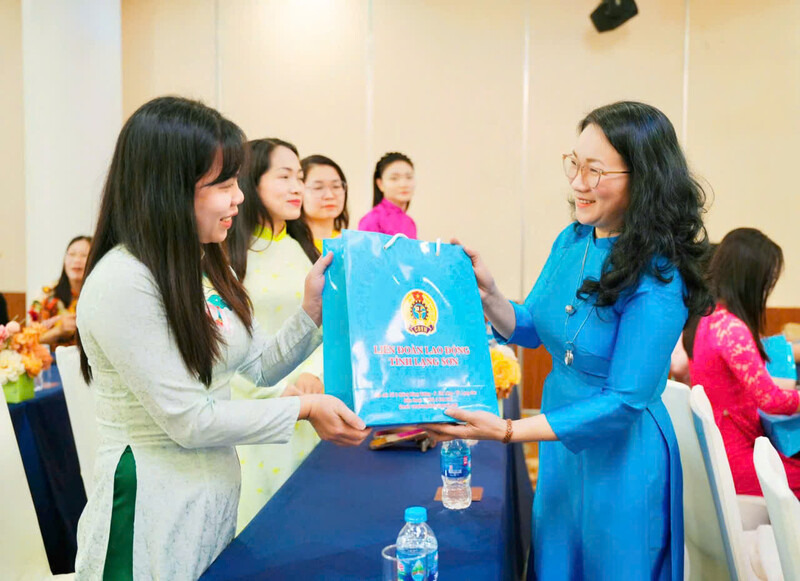
To make the movement truly go deeper, every year the Provincial Labor Federation issues specific guidelines, directing grassroots trade unions to include the content of the movement in the key work program.
Ms. Be Thi Hoa - Vice Chairwoman of the Provincial Vietnam Fatherland Front Committee, Chairwoman of the Lang Son Provincial Labor Federation - said that from 2021 to now, the implementation of the movement has always been adjusted flexibly to suit reality.
According to Ms. Hoa, the Provincial Labor Federation has issued guidelines for deploying the movement in the new situation, associated with the Resolution of the 13th Vietnam Trade Union Congress and the Resolution of the 17th Provincial Trade Union Congress.
Thereby encouraging female union members not only to successfully complete assigned tasks but also to actively participate in creative labor movements and apply information technology in their work.
According to Ms. Hoa, the criterion of "good at state affairs" is reflected in the fact that female union members constantly improve their professional qualifications, proactively adapt to new job requirements, especially in the context of digital transformation.
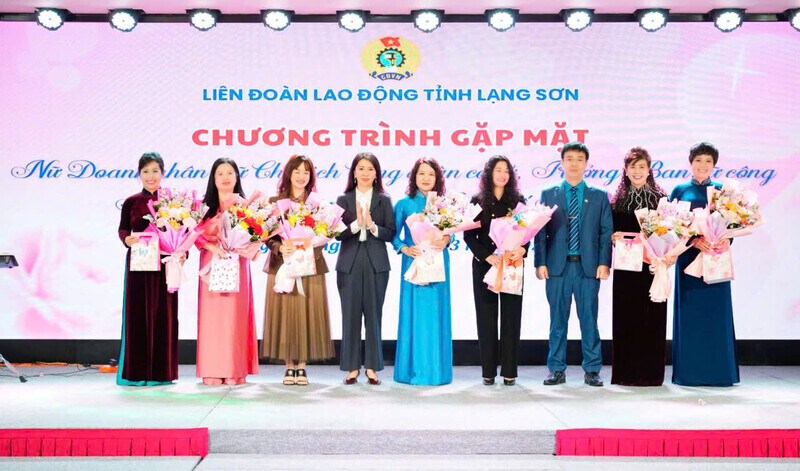
Many female officials and employees have boldly proposed initiatives to improve working processes, contributing to improving the operational efficiency of agencies and units.
Meanwhile, the "good at housework" criterion aims to build an equal and harmonious family, raise children well and maintain a cultural lifestyle.
At Lang Son Provincial Social Insurance, female union members account for more than half of the total number of officials and employees of the unit.
Ms. Nong Thi Phuong Thao - Director of Provincial Social Insurance - said that grassroots trade unions always focus on building a favorable working environment for female union members to develop their abilities.
According to Ms. Thao, the unit has developed emulation criteria suitable to the specific characteristics of the industry, and at the same time proactively coordinated with professional leaders to create conditions for female officials and employees to participate in training and improve their professional qualifications.
The mass women's committee has also been consolidated, promoting its core role in propaganda and mobilization, contributing to spreading the movement throughout the unit.
Thanks to that, many female officials and employees of the Provincial Social Insurance have become typical examples in labor and work.
In 2026, 100% of female union members of the unit will continue to register to participate in emulation movements launched by the trade union.
According to statistics, in the period 2021 - 2025, the rate of female union members and workers in the province registering to implement the movement reached over 97%, an increase of about 2% compared to the period 2016 - 2020.
In 2025 alone, the rate of female union members achieving the title "Two Goods" reached nearly 90%, an increase of about 5% compared to the previous period.
It is from these persistent contributions that the movement "Good at state affairs, good at housework" continues to become a driving force for Lang Son female workers to promote their capacity, contribute to building happy families and promote the socio-economic development of the locality.


