
Difficult to recruit people, businesses have to hire personnel
Mr. Pham Van Huong, 44 years old, is currently a hazardous wastewater treatment technician for a foreign-invested enterprise (FDI) in Bac Ninh. Mr. Huong's daily job is to check the acid concentration in the tank. Due to the nature of his work, Mr. Huong said that 90% of his working hours he has to wear protective clothing tightly from head to toe and use a specialized gas mask.
Currently, Mr. Huong's fixed salary is 35 million VND/month, plus hazardous duty allowance, meal allowance and special insurance, total monthly income is about 50 million VND.
“For a technical worker, this is a dream number. Of course, we accept occupational risks and dangers from the daily working environment. Currently, no one in my entire working group is under 40 years old, the oldest is 54 years old. For the whole year, the company has put up signs recruiting assistant workers, starting salary is 20 million VND/month but it is very difficult to recruit. Most young workers work for about 2 weeks and then resign, no young people stay for more than a month,” Mr. Huong sighed.
According to Mr. Huong, the hazardous waste treatment profession is not just collecting garbage as many people imagine. "This is a complex chemical separation process, treating heavy metals such as lead, mercury or special emissions generated from the chip production process. A small mistake in the acid neutralization process or operating a high-temperature incinerator can lead to environmental disasters or serious labor accidents. This is why this profession is likened to playing with fire," Mr. Huong said.
Mr. Nguyen Minh Viet - Director of Trung Hung Export Plastic Production Co., Ltd. (Phuong Liet ward industrial cluster, Hanoi) said that at his company, the most difficult position to recruit in recent years is chemical engineer. There were years when the company posted recruitment but could not recruit any personnel. To solve the personnel problem, at times Mr. Viet had to re-hire people at a cost twice or even triple compared to using on-site personnel.
“We pay salaries of up to 30 million VND/month, but it is very difficult to recruit people. Partly because the supply of human resources in this industry is not large, or if there is, they choose a less toxic working environment such as confectionery and food production companies; partly, if they follow this path, personnel working at FDI enterprises with "huge" salaries, after a period of accumulation, they will switch to other jobs," Mr. Viet shared.
It's not just about salary
Ms. Nguyen Thu Nga - Director of Au Viet Human Resource Supply Company (Phuong Liet ward, Hanoi), the demand for personnel for environmental and chemical treatment in industrial parks has now increased by 30% compared to 2024. However, the proportion of workers under 25 years old joining this industry has decreased to a record low.
The reason, according to Ms. Nga, is that young workers, especially Gen Z, tend to prioritize "clean" working environments, air-conditioned, offices or freelance jobs. Even when income from shippers or online sales is precarious, they are still reluctant to venture into places with chemical smells, noise and the risk of long-term health effects.
Besides, pressure from the family is also a barrier. Many parents would rather let their children work as office workers with low salaries than let their children "expose themselves" in waste treatment areas. Not only is it difficult to recruit because of the psychology of being afraid of hardship, this profession is also "tight" due to technical barriers. To be in the position of chief technician, workers must have a deep understanding of chemistry, physics and strict environmental safety standards," Ms. Nga said.
Also according to Ms. Nga, at FDI companies, personnel in this field also have to read and understand technical documents in English and operate complex automation systems. "Many new graduates have a chemistry degree but lack practical skills, when entering a high-pressure environment, facing acid tanks emitting smoke, they are scared and immediately quit their jobs," Ms. Nga added.
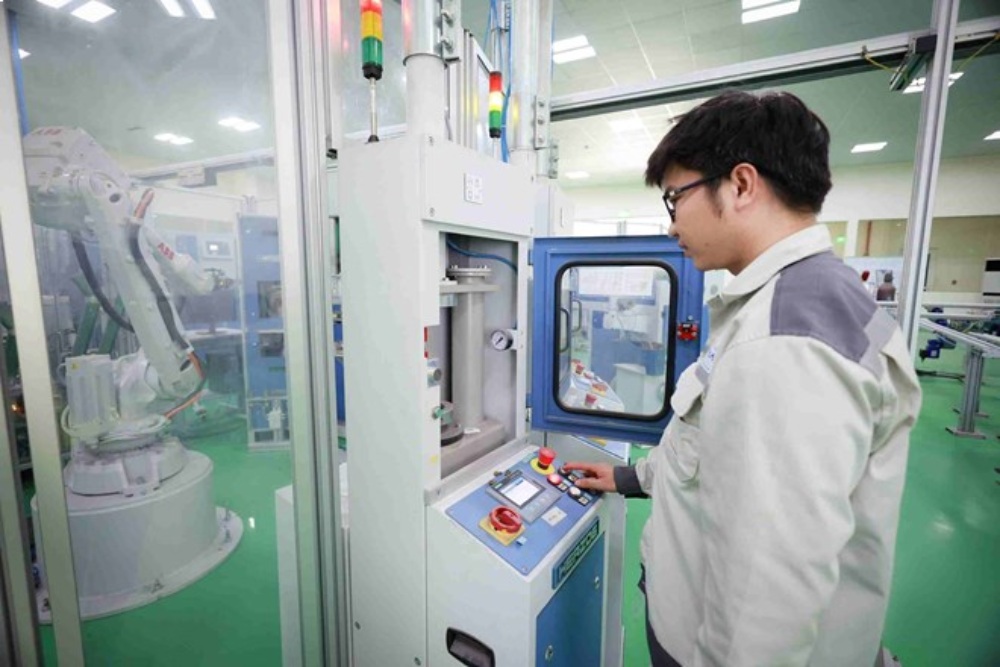
Ms. Nga said that in fact, with the development of technology, the process of treating hazardous waste has been automated in many stages. Sensor systems, robots and modern protective equipment have significantly reduced direct risks for humans. However, prejudices about the "toxic garbage collection" profession are still too heavy. Therefore, the problem of personnel shortage in specialized industries is not only a story of salaries but also requires clearer career orientation from schools and society.


