
Attending and chairing were Mr. Nguyen Ngoc An - Chairman of the Vietnam Education Union (CĐGD) and 71 outstanding scientists from units and higher education institutions across the country.
Digital transformation and technology are the core driving force for development
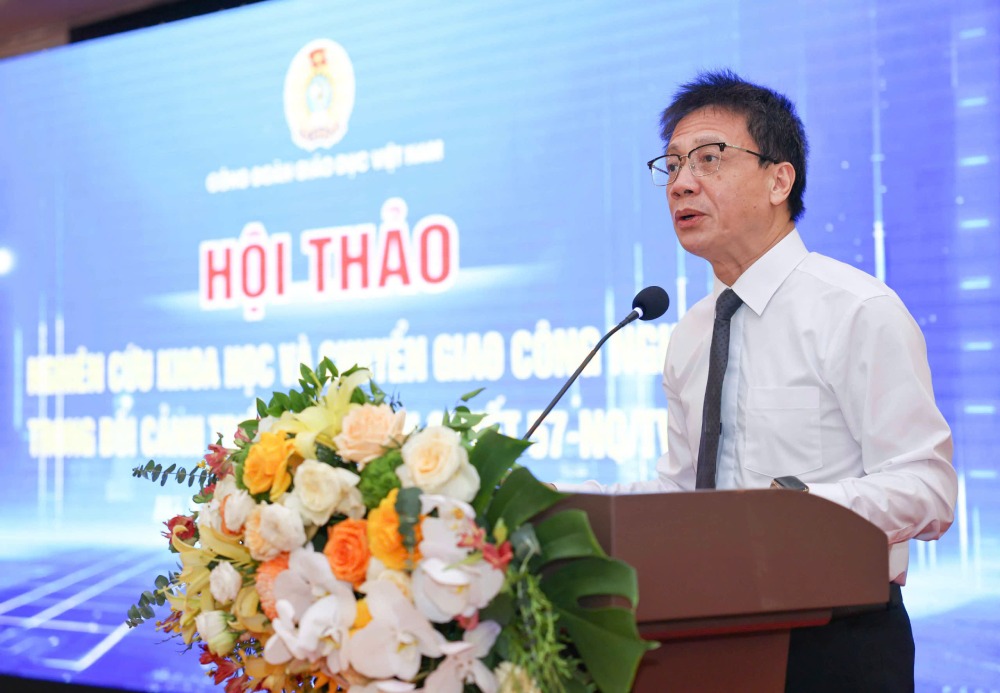
Speaking at the opening of the program, Chairman of the Vietnam Education Union Nguyen Ngoc An said that the workshop "Scientific research and technology transfer in the context of implementing Resolution 57-NQ/TW" is a forum for delegates to discuss and point out inadequacies in current mechanisms and policies; and at the same time propose solutions to create favorable conditions for scientists to promote their capacity and contribute to the overall development.
At the discussion session on urgent issues of scientists in implementing the breakthrough task of science and technology development according to Resolution 57-NQ/TW, Prof. Dr. Nguyen Dinh Duc - Vietnam National University, Hanoi affirmed that digital transformation and high-tech development, core technology associated with innovation is the core driving force for national development in the new era.
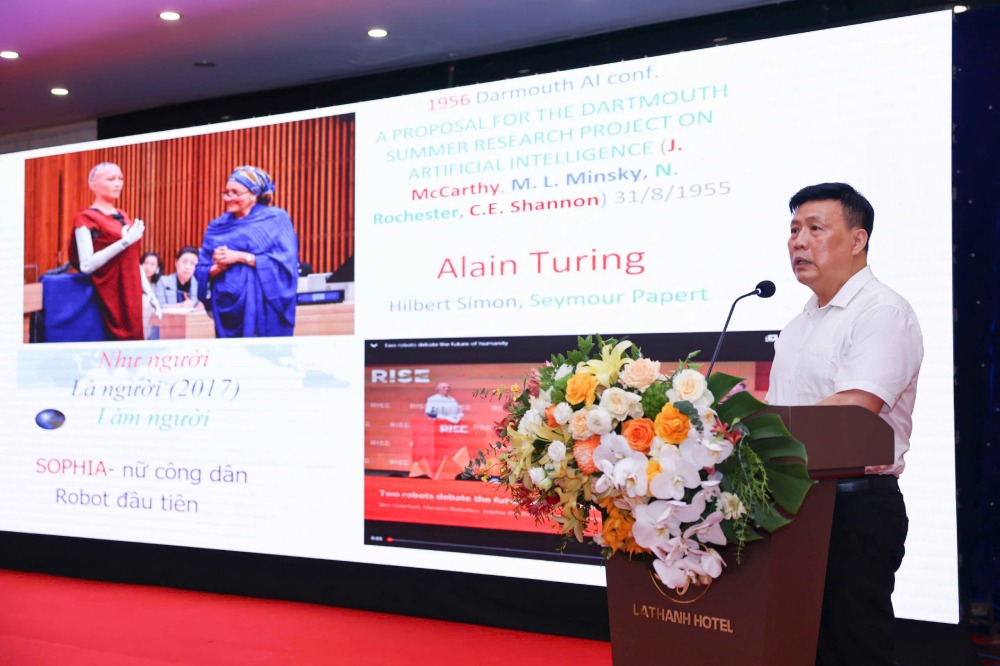
To achieve this goal, Mr. Nguyen Dinh Duc proposed a number of solutions such as the need for special mechanisms such as attracting and employing talents, focusing on high technologies; digital transformation - AI; promoting research and transfer of innovation; innovation in higher education...
Besides solutions, Mr. Duc also pointed out current challenges such as training programs still heavily focused on theory, digital infrastructure technology databases in education are still fragmented, and there is a lack of connection between schools - businesses - the State.
Assessing the role of lecturers in the digital age, Prof. Dr. Nguyen Dinh Duc said that lecturers need to shift from knowledge transmitters to mentors, knowledge creators; at the same time, they must improve digital capacity, know how to design learning materials and effectively use creative learning support tools.
Sharing the same view, Assoc. Prof. Dr. Chu Manh Hung - Hanoi University of Science and Technology emphasized 4 issues that scientists are concerned about, including: Shifting from the mindset of "doing research" to "creating value from research"; removing mechanisms and procedures for scientific research; promoting the "4-house" cooperation model including state - school - business - scientist and improving the reception and disbursement of international cooperation resources.
Removing barriers to scientific research
Discussing the issue of scientific publications in international journals at higher education institutions, Assoc. Prof. Dr. Nguyen Thi Ai Nhung - Hue University proposed that there should be a more objective and fair perspective between basic research and applied research. According to Ms. Nhung, basic research disciplines have an advantage in maintaining international publications, while applied research focuses on creating practical products, so applying a common academic measure will put a lot of pressure on scientists.
In addition to the requirements of scientific integrity and anti-plagiarism, Ms. Nhung also emphasized the role of internal mechanisms of universities such as simplifying procedures, accelerating disbursement of funds and strengthening support for facilities to help scientists feel secure in contributing.
Discussing issues that scientists need to pay attention to when implementing the Law on Science, Technology and Innovation 2025, Assoc. Prof. Dr. Le Nguyen Doan Khoi - Can Tho University said that this is not only a legal normative document but also a declaration to change national scientific management thinking, shifting from process control to output control.
From the perspective of an experimental researcher, Dr. Nguyen Thanh Nam - Military Technical Academy pointed out barriers. According to Mr. Nam, there is currently a gap between theoretical and experimental research in Vietnam. Many young highly capable scientists when returning from abroad face a shortage of working conditions, leading to waste of resources and reduced publishing frequency.
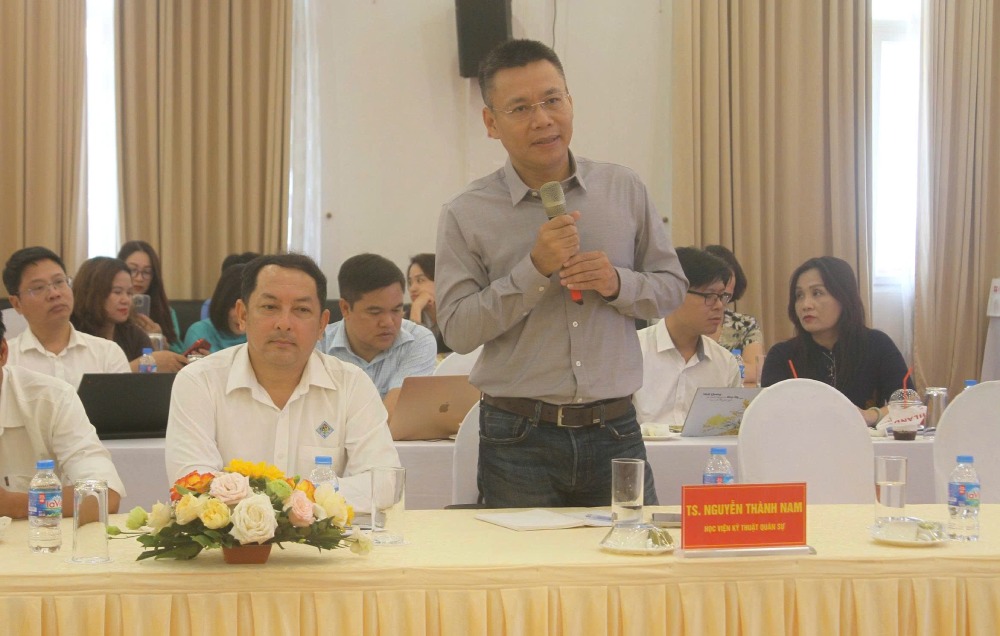
Agreeing with the view that universities must be the locomotive in the science and technology system, Dr. Nguyen Thanh Nam expects the innovations in the financial mechanism and disbursement of the Law on Science, Technology and Innovation 2025 to soon enter life. The biggest goal is to ensure resources and stabilize life so that researchers can focus all their efforts, promote professional capacity and contribute to the country.


