
Ms. Do Thi Truc in Kieu Phu commune, Hanoi has been a worker at a candy factory for more than 9 years. Due to the pressure of working hours, she decided to quit her job and find a way to change careers. When she came to the Hanoi Employment Service Center to complete procedures to receive unemployment benefits, she was advised on vocational training and connecting labor supply and demand.
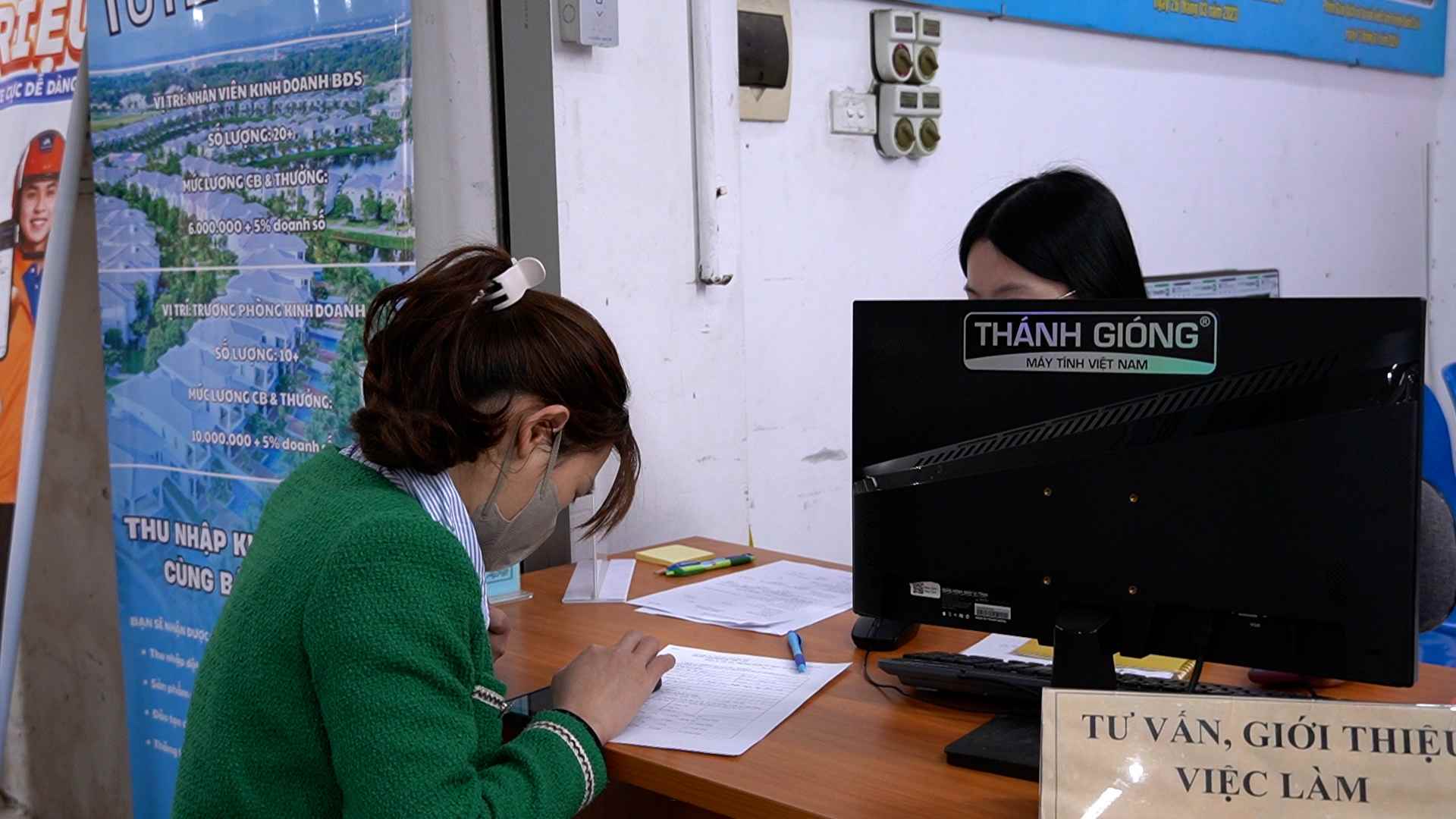
“Previously, I worked as a worker, working hours were about 12 hours/day, many overtime hours, few days off. While both husband and wife worked like that, so I didn't have much time to take care of the children, life was quite hard, so I resigned. When I came to complete the unemployment insurance procedures, I was enthusiastically consulted by staff about my future career orientation. Currently, I want to find a job part-time or participate in vocational training classes, specifically learning mixing so that I can open a business store later,” Ms. Truc shared.
According to the Hanoi Employment Service Center, in February, the unit received 2,402 applications for unemployment benefits, a sharp decrease compared to the previous month and the same period in 2025. Specifically, the number of applications decreased by 290 cases compared to January and decreased by 1,177 cases compared to the same period last year. In parallel with vocational training activities, the center also promoted the organization of job transaction sessions to expand networking opportunities for workers.
Mr. Kim Giao (Ba Dinh Ward, Hanoi) said that after leaving his old company for 2 months, through the Hanoi Employment Service Center, he found a job in the field of accounting suitable for his personal development orientation. The new job has a clearer and more professional process than before. Currently, his income is about 12-13 million VND/month, which is considered a significant step forward for a new graduate.

According to Mr. Vu Quang Thanh, Deputy Director of the Hanoi Employment Service Center, job transaction sessions have effectively supported businesses, especially those with labor recruitment needs before, during and after Tet. This is an activity that the unit actively implements.

In the first quarter, the center organized many thematic sessions such as part-time jobs in coordination with universities, sessions for demobilized police forces returning to their localities, attracting a large number of businesses to participate, thereby contributing to supporting businesses in recruiting and helping workers find suitable jobs.


