
Bridge between the Party and workers
In Vinh Long province, the work of developing party members in non-state enterprises has been focused on implementation in the past time, continuing to have positive changes, contributing to affirming the role of Party organizations in the private economic sector.
Mr. Nguyen Phuc Linh - Member of the Executive Committee of the Vietnam General Confederation of Labor, Provincial Party Committee Member, Vice Chairman of the Vietnam Fatherland Front Committee of the province, Chairman of the Vinh Long Provincial Labor Federation - said that the whole province currently has 1,942 party members and workers living in non-state enterprises and residences, with 69 grassroots party organizations in enterprises.
According to Mr. Nguyen Phuc Linh, the team of party members in enterprises is an important "bridge" between the Party organization and workers, between business owners and worker collectives, contributing to creating consensus in labor relations.
The Provincial Labor Federation determines that developing the Party in non-state enterprises is a key task, associated with building a strong trade union organization, thereby improving the quality of union members and the effectiveness of grassroots activities.
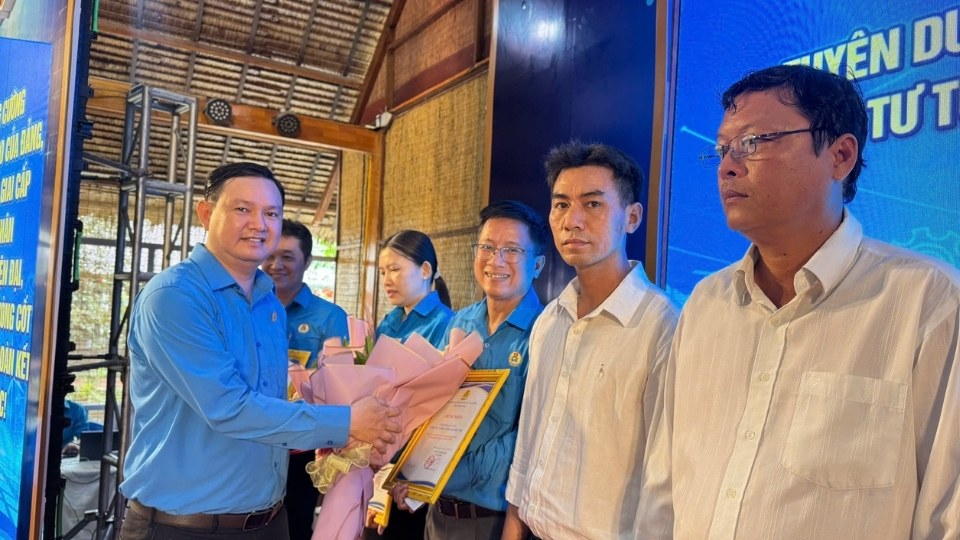
In 2025, trade union levels introduced 933 outstanding union members to the Party for consideration and admission, reaching 147.6% of the target, showing that resource creation work is becoming more and more substantive, no longer formalistic.
Many businesses have considered the Party and trade union organizations as companion partners in labor management, building corporate culture and maintaining long-term production and business stability.
At Dong Hai Ben Tre Joint Stock Company, the Party Committee has 3 party cells with 64 party members, in which business leaders participate in the Party Committee, creating unity in management and caring for employees.
Comrade Nguyen Truong Vu - Secretary of the Party Committee, Deputy Director of human resources of the company said that the Party organization and trade union are bridges to help businesses promptly grasp the thoughts and aspirations of employees, and limit the occurrence of disputes.
Reality shows that when the "bridge" of party members operates effectively, workers are more assured to work, labor relations are more harmonious, and labor productivity is clearly improved.
Party fire" keeps the pace of businesses
Reality shows that Party development in non-state enterprises still faces many difficulties, the number of enterprises with Party organizations is still low compared to the total number of operating enterprises; business owners have not paid due attention, and workers have few conditions for political activities.
Comrade Nguyen Thi Hong Nhung, Member of the Standing Committee of the Provincial Party Committee, Standing Vice Chairman of the Vietnam Fatherland Front Committee of the province frankly acknowledged that the development of party members is "not commensurate with the potential", Party cell activities are not associated with production practices, and operating methods are still lacking flexibility in enterprises.
From that reality, the province determines to continue to strongly innovate the operating methods of Party organizations in non-state enterprises in a flexible and practical direction, attaching production and business tasks; and at the same time focusing on discovering and fostering outstanding workers from the labor movement.
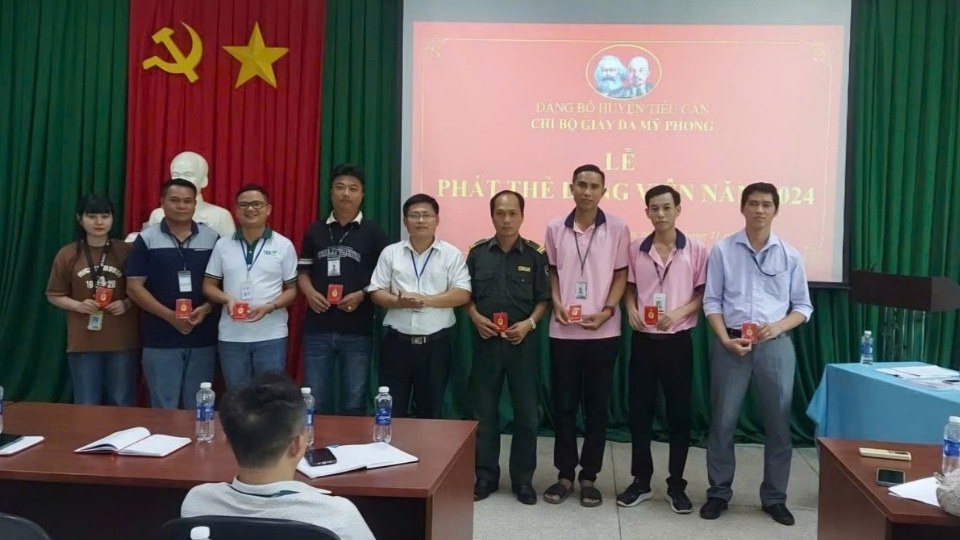
It is from the workshops and production lines that the "red nuclei" are silently contributing to making the Party organization increasingly clearly present in modern private economic life, creating a solid foundation for organizational development.
In the development wheel of the market economy, party members in non-state enterprises always show pioneering, exemplary, dynamic, innovative, responsible, creative, disciplined and close to employees.
Nearly 2,000 party members in private enterprises are becoming a "link" between businesses and workers, between the goal of growth and social stability, between production and business and building a sustainable corporate culture.


