
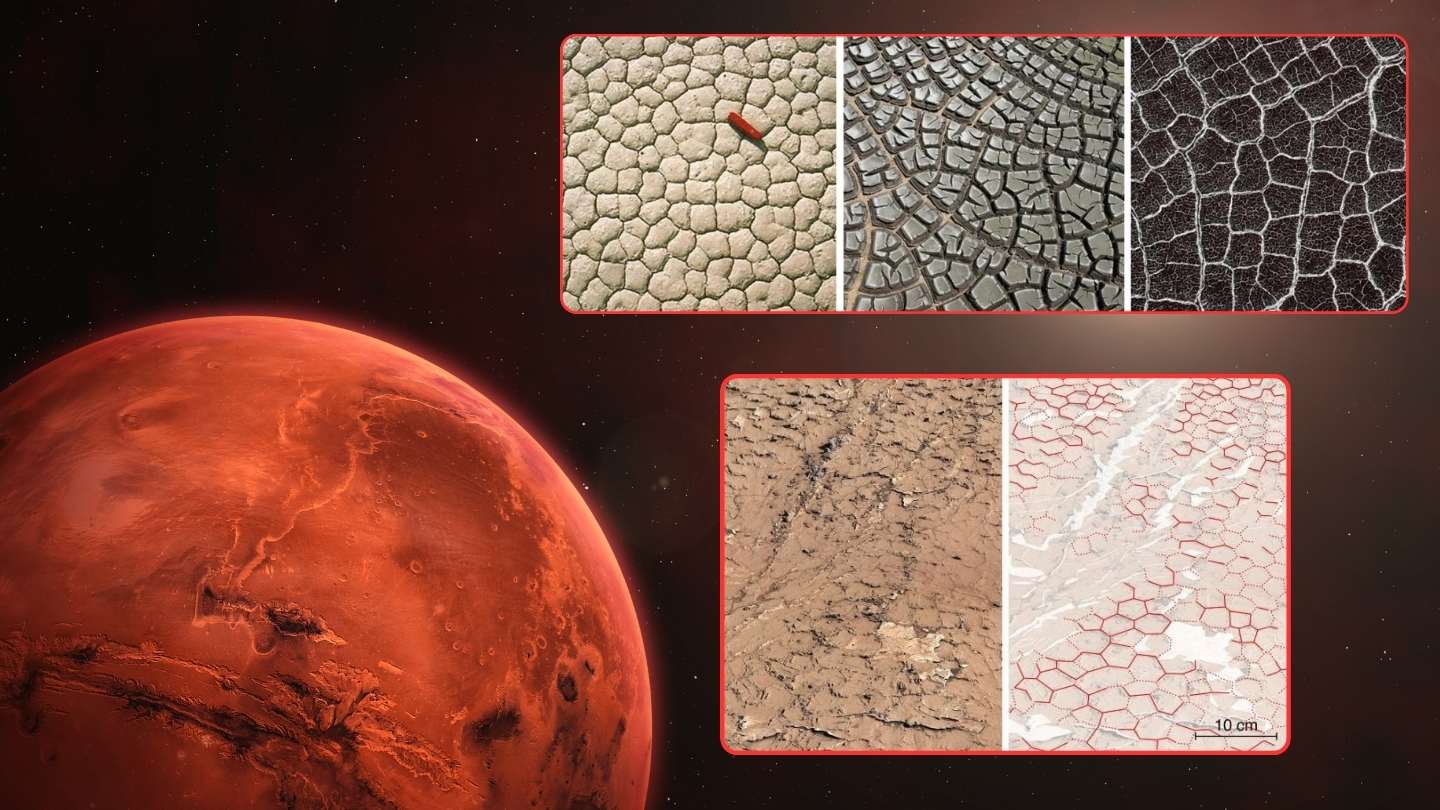
A Martian surface area with a strange polygonal structure has just been recorded by the Curiosity rover in the area near the Antofagasta crater, attracting the attention of scientists.
According to researchers at NASA, this structure consists of thousands of linked polygons, forming beehive-like patterns stretching across the rock surface.
Scientist Abigail Fraeman said that this type of structure has been observed before, but has never appeared on such a large scale as in this area.
Initial data suggests that these polygons may have formed from the expansion and contraction of the soil surface in repeated humid-dry conditions, similar to mud cracking on Earth. This suggests that this area used to have water presence in the past.
Another hypothesis relates to the cycle of freezing and thawing, which can also create polygonal cracks. However, on Mars, traces of these processes are rarer because the planet has lost liquid water for a long time.
Previously, another area called Pontours also recorded a similar hexagonal structure. Studies suggest that these shapes may have formed after many wet-dry cycles, reflecting past seasonal climate conditions of Mars.
A notable feature at Antofagasta is the apparent surface ruts, possibly due to minerals filling the neck cracks and resisting erosion better than the surrounding rocks.
Currently, scientists are continuing to analyze the data collected by Curiosity to accurately determine the mechanism of formation of these structures. If confirmed, this will be further evidence that Mars used to have a humid environment and a more complex climate than the current arid images.


