
Increased competitive pressure, opportunities still open
In the context of a volatile world economy, a globally competitive business environment is becoming increasingly clear, forcing Vietnamese businesses to proactively adapt to survive and develop.
On March 25, in an exchange with the press, Mr. Nguyen Duc Nghia - Deputy Director of the Center for Supporting Small and Medium Enterprises under the Ho Chi Minh City Business Association said that not only in Vietnam but in many countries, businesses are facing increasing competitive pressure. Economies in the region such as Cambodia, Thailand or China are actively expanding markets, making the "race" for customers more fierce than ever.
In that context, finding new markets and new customers becomes a vital factor for businesses. If they do not adapt quickly, businesses are very likely to narrow their market share, even lose competitiveness.
According to Mr. Nghia, despite facing many challenges, Vietnam still possesses certain advantages, especially the support from the Government through policies to improve the business environment. This is considered an important foundation to help businesses have more motivation to overcome difficulties.
However, businesses also face a series of new barriers, from competitive pressure with major economies to increasingly strict tariff regulations and technical standards from export markets.
In the opposite direction, these challenges create opportunities for businesses to restructure and improve competitiveness. Promoting digital transformation and green transformation not only helps businesses meet the requirements of demanding markets such as the US, Japan or the European Union (EU), but also enhances product value and position in the international market.
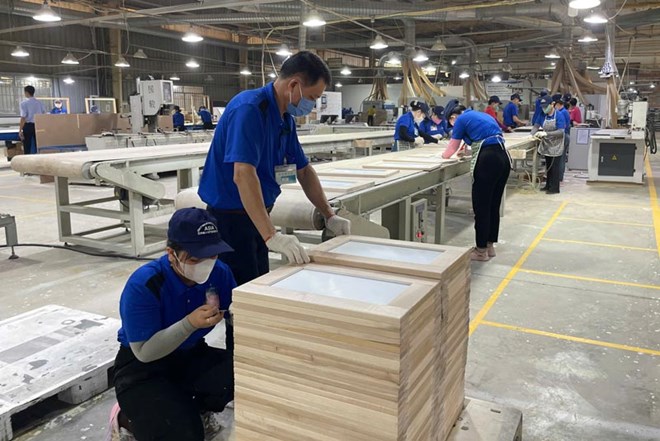
Diversifying the market, reducing dependence
From another perspective, Ms. Duong Hong Loan - Director of the Vietnam Initiative Institute, said that businesses have begun to proactively build more flexible business strategies to adapt to global economic fluctuations. However, these changes also raise many long-term lessons.
One of the important issues is that businesses need to focus on improving the localization rate, and at the same time understand the technical factors in the tax calculation method for exported goods. This is a key condition to take advantage of tariff preferences and avoid risks when participating in large markets.
In addition, dependence on intermediaries in exports is revealing many limitations. When not directly accessing the market, businesses are easily lacking updated information about policies, trade practices as well as the actual needs of partners, thereby reducing the ability to react to fluctuations.
Notably, excessive dependence on one market also contains many risks. When policies change suddenly, businesses may be immediately affected, causing production and export disruptions. Therefore, market diversification, partner expansion and reduction of dependence are urgent requirements.
According to experts, businesses need to quickly invest in data systems, traceability technology, and at the same time increase the localization rate to meet increasingly high standards. In parallel, shifting to products with greater added value and proactively seeking direct partners is also a sustainable direction.
The market fluctuations in the past time are considered a "test" for the endurance and adaptability of businesses.


