
When mobile phones are just for... watching the time
In Arooi village (Hung Son commune), going to get papers still has the appearance of a "journey". Mr. Briu Chuong, a Co Tu person, said that every time he needs procedures, he has to wake up early, go down to the commune and sit and wait. Once when he arrived, officials reported... having to make another appointment because of power outages, equipment could not operate.


In "waveless" areas like this, smartphones are sometimes just for timekeeping. Public service applications are pre-installed but without waves, it's like... decorations," Mr. Briu Chuong said, half-jokingly, half-seriously, and then sighed.
Next to the infrastructure story is the story of people. Mr. A Lang Buc honestly said: "I don't know how to read, I don't even know how to use a phone. To make calls, I have to ask my children. The waves are weak, many times I have to climb the hill to be able to contact them.
The village has no phone signal, to make calls you have to walk down to the commune; do paperwork from early morning, some days when you get there you encounter a chaotic situation, "using an application without signal will not solve anything.

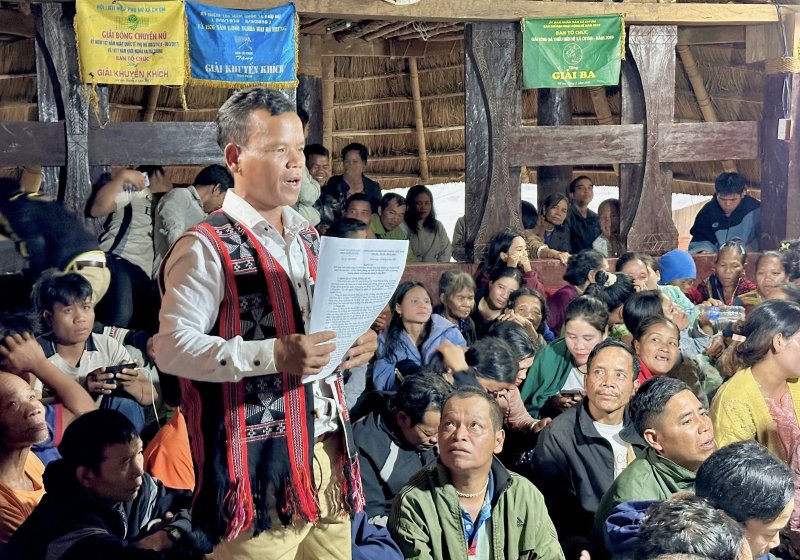
At the Hung Son Commune Public Administration Service Center, an official frankly shared: "In the early days of implementing the 2-level local government model, some people had to go three times to complete one procedure. The first time there was a power outage, the next time the network was weak, and then another day was scheduled. People worked very hard." A word is enough to show: digital transformation cannot just be "putting procedures online", but must ensure that electricity, network, equipment, and people operate smoothly together.
Not only investing in infrastructure, we must change the way of doing things from the grassroots level
Mr. Nguyen Thanh Hong, Director of Da Nang Department of Science and Technology, emphasized that the big barrier is not only in technology: digital transformation is changing thinking and ways of doing things, putting people and businesses at the center; if officials are still passive and afraid of new tools, "top is hot, bottom is cold", then everything is easily just on paper.
In fact, in the early stages of operating the new model, some localities still lack dedicated information technology staff, data is not synchronously connected, causing digital administrative procedures to sometimes "break down".
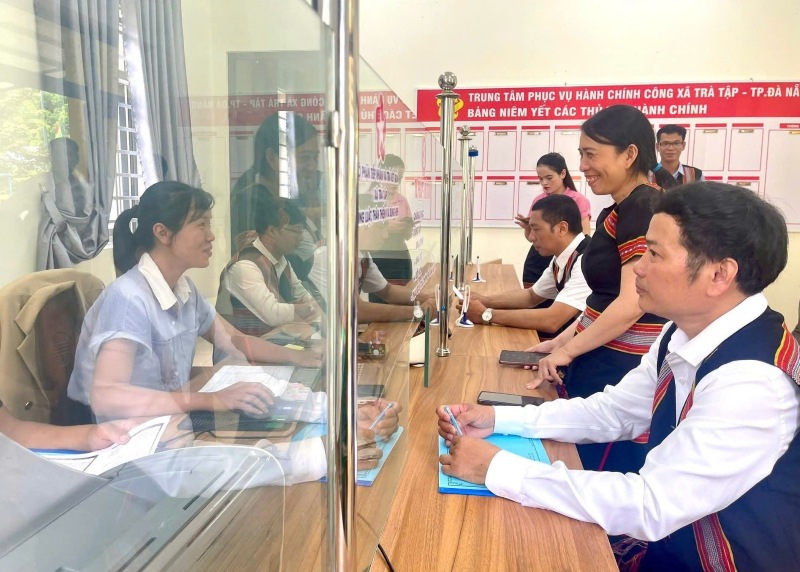
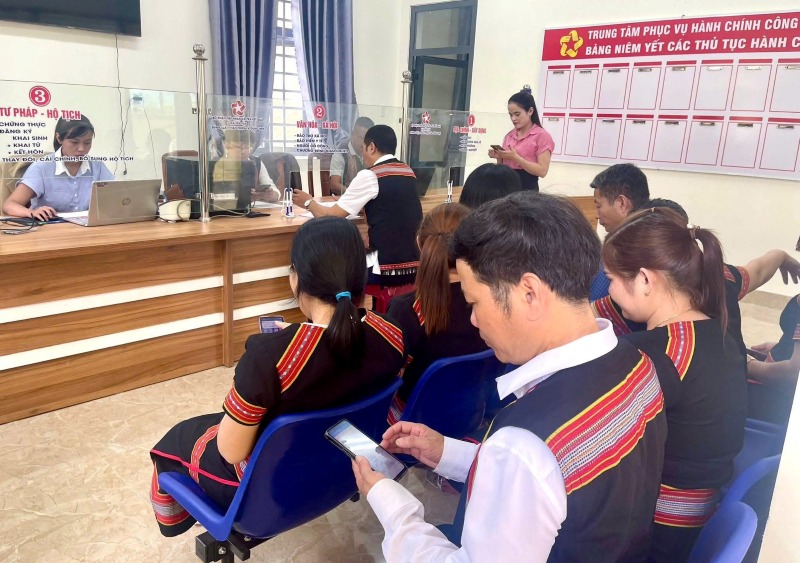
The Da Nang City Party Congress for the term 2025-2030 identified science and technology, digital transformation associated with high-quality human resource training as one of the three strategic breakthroughs; the goal by 2030 is for the digital economy to account for 40% of GRDP, completing digital government and smart cities.
To achieve this goal, the City People's Council approved the policy of purchasing generators and upgrading and renovating the LAN network for the People's Committees of communes and wards with a total budget of 15.25 billion VND.
In which, 45 communes and wards are supported to upgrade LAN networks; 7 mountainous communes including Phuoc Thanh, Lanh Ngoc, Tra Tap, Tra Tan, Avuong, Tra Leng and Dak Pring are equipped with generators. According to the leaders of the City People's Council, the goal is to ensure stable power supply, especially in the rainy and storm season, so that the grassroots apparatus is not "paralyzed" when prolonged power outages occur.
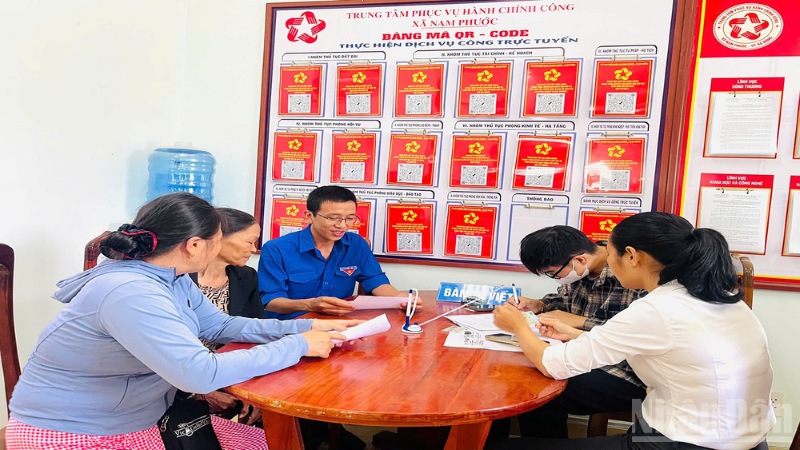
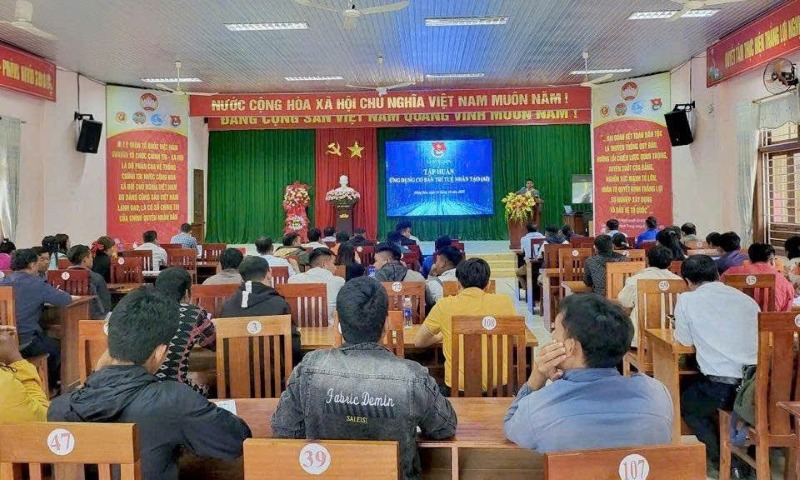
Da Nang also deploys "digital literacy classes": bringing officials to villages, guiding people to use smartphones, operate public services, pay in cash; and at the same time strengthening information technology officials to the grassroots level to "hold hands and guide", helping procedures not to be congested.
The frequency management agency said that many businesses are committed to soon covering "blank spots", "small spots", including areas that do not have electricity after the power supply is completed; and at the same time, an open direction from the low-range satellite station solution has emerged when businesses complete service deployment procedures.
Da Nang sets a target by 2030: 100% of households have access to fiber optic internet, 5G coverage in the centers of mountainous communes and community tourist destinations; over 80% of people of working age are trained in basic digital skills.


