
Pioneering steps
One morning in early April, Ms. Nguyen Quynh Hoa (35 years old, Thai Nguyen) brought her young daughter back to the Temple of Literature - Quoc Tu Giam after more than 10 years. Memories of an ancient space are still deeply ingrained in her. At that time, each time she visited, she had to stop for quite a long time in front of each stele, each item to read small annotations, fading over time.
But this time returning, she was really surprised. Just open her phone, scan a QR code placed next to items in the relic, all information about history, meaning, architecture... immediately appears clear and vivid.
In the old days, we had to read each small line of text, sometimes we didn't understand everything. Now just scan the code and we know everything, our children are also more excited" - Ms. Quynh Hoa shared.
A small story from a tourist shows the transformation in the digital transformation flow of the 950-year-old relic. From a space preserving traditional values to a destination that strongly applies digital technology, bringing heritage closer to the public, especially the younger generation.
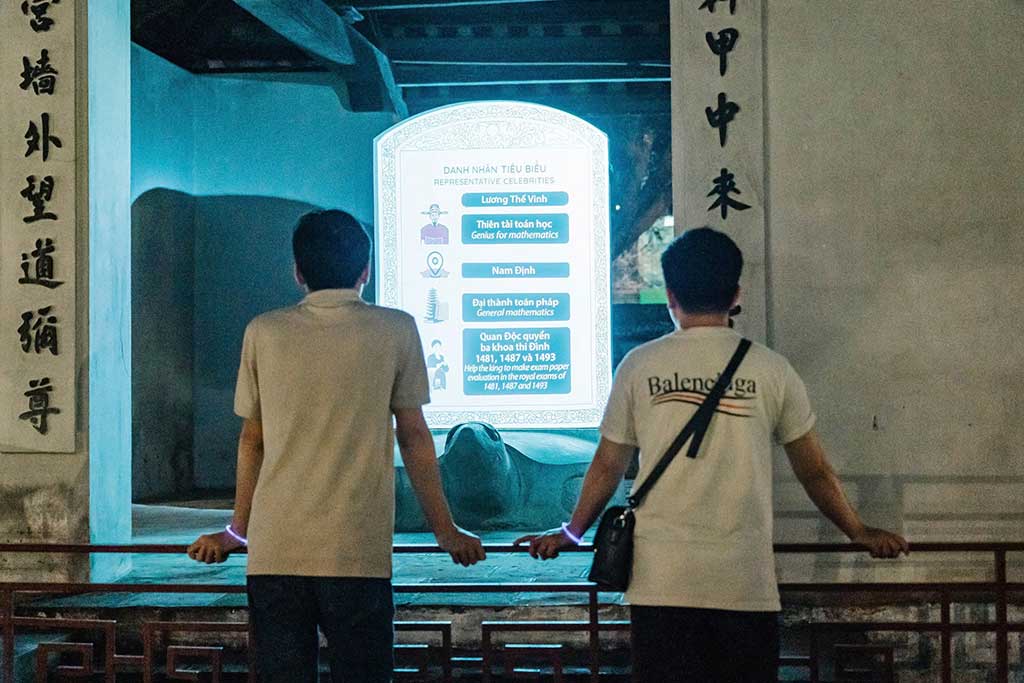
As a symbol of the tradition of studiousness, Van Mieu - Quoc Tu Giam not only preserves historical values but also proactively adapts to the technology era. Van Mieu - Quoc Tu Giam is considered one of the pioneering relics in Hanoi in the digital transformation process. These changes not only stop at improving the sightseeing experience but also contribute to shaping the approach to heritage in the new era.
Visitors when coming to Van Mieu - Quoc Tu Giam only need to buy one ticket, scan a QR code for the whole group to enter, instead of buying a paper ticket for each person like the traditional method. Each code is not only used to scan at the gate but also contains full information about ticket issuance time, serial number, usage status... helping to make control faster, more transparent, and reduce waiting time. Thanks to the electronic ticket system, the ticket gate no longer has congestion like using traditional printed tickets.
In parallel with that, the management unit has digitized 40 important items in the relic site. At each point, QR codes are placed for tourists to proactively look up information. This is considered an important step forward, replacing the previous static presentation boards, and opening up the ability to update content more flexibly.
Another highlight is the Audio Guide system - an automatic tour guide device - with 12 languages. No longer completely dependent on tour guides, domestic and foreign tourists can choose the appropriate language, listen to tour guides according to their own itinerary, creating a personalized experience.
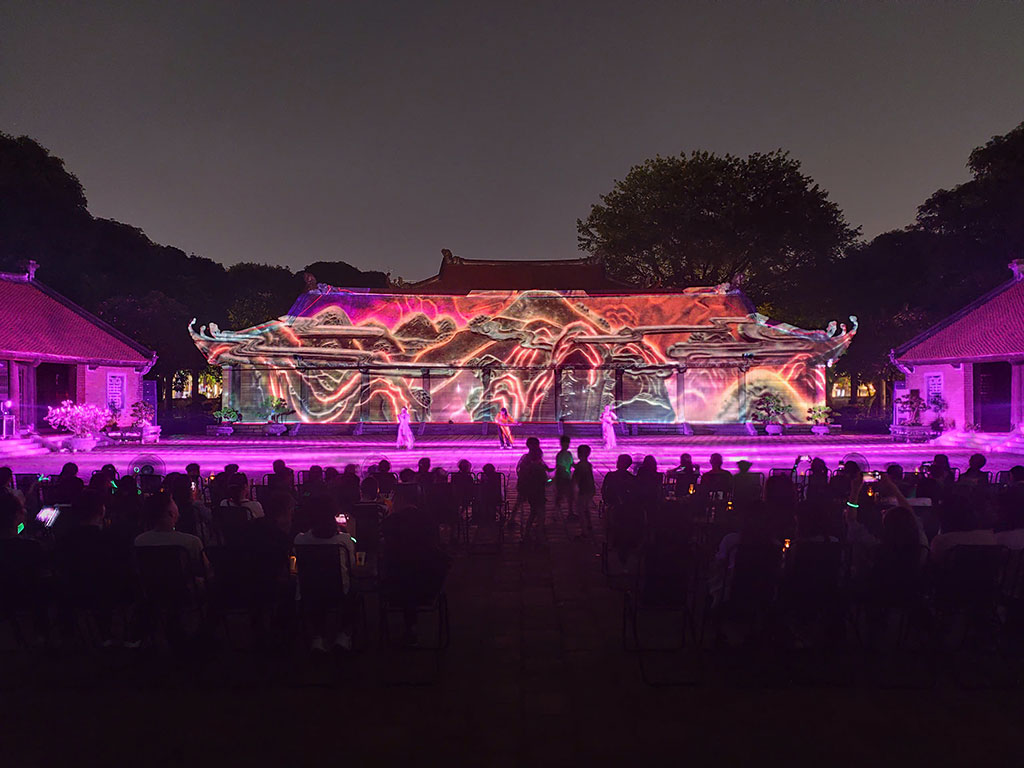
In particular, the "Pearl of Taoism" night tour launched quickly became a tourist product attracting customers. In the ancient night space, 3D Mapping technology is applied to project light onto architectural works, recreating the history of formation and development of the Temple of Literature - Quoc Tu Giam.
Stories about talents, academics, about the tradition of respecting teachers and valuing morality are no longer just told in writing but become vivid through images, sounds and movements. This is a way to renew heritage, helping history become closer to the public, especially young people.
Leverage" from digital transformation
Talking to Lao Dong Newspaper, Director of the Van Mieu - Quoc Tu Giam Cultural and Scientific Activities Center Le Xuan Kieu said that digital transformation is becoming an inevitable trend. "Digital transformation is an objective lever for all areas of social life. With relics like Van Mieu - Quoc Tu Giam, this is a way to preserve and promote values more effectively in the new context," he said.
According to Mr. Kieu, after the COVID-19 pandemic, the unit clearly recognized the need to change to adapt. When sightseeing activities are interrupted, technology becomes an important tool to maintain connection with the public, while preparing for the recovery phase.
However, this journey is not easy at all. The first difficulty is awareness. Initially, many officials worried that digital transformation would lose jobs. But in reality, technology does not replace humans but supports humans to work more efficiently.
Besides, there is the issue of mechanisms and policies. The implementation of digital solutions needs a suitable legal corridor, from data management to cooperation with businesses. If there is a lack of open mechanisms, the implementation process will face many barriers.
Another major challenge is resources. Digital transformation requires significant costs for infrastructure, content and operation. Therefore, according to Mr. Kieu, it is necessary to prioritize and select important items to deploy in advance, while mobilizing social participation. "The introduction of technology into relics once worried many people that it would lose its inherent quiet and ancient beauty. However, the reality at Van Mieu - Quoc Tu Giam shows the opposite. Technology does not change heritage, but helps heritage "speak" more clearly." - Dr. Le Xuan Kieu said.
The doctoral steles are still there, the mossy tiled roofs are still intact, but the storytelling about them has changed. Instead of dry words, visitors can access information through images, sounds, and even interactive experiences.
According to Mr. Le Xuan Kieu, the staff of Van Mieu - Quoc Tu Giam does not replace heritage with technology, but uses technology to highlight the value of heritage.
Thanks to that, sightseeing is no longer an activity of "seeing for knowing", but becomes a personalized exploration journey. Each visitor can choose a suitable approach, thereby creating a deeper connection with the cultural and historical space.
In the coming time, Van Mieu - Quoc Tu Giam will continue to promote the application of technology, especially the development of 3D virtual sightseeing products combined with light at night. The goal is not only to attract visitors but also to contribute to making the relic a cultural and technological experience center, in line with the orientation of cultural industry development of the Capital.


