
Current situation in Vietnam
One of the technologies that is being widely exploited today is Deepfake - using artificial intelligence (AI) to create fake images, videos or sounds with high authenticity, making it difficult for viewers to distinguish between real and fake. Subjects can use images and voices collected on social networks to create fake videos of relatives to commit fraudulent acts of appropriating property.
Ms. Nguyen Thi Hanh (32 years old, name changed) - an accountant of a company in Hanoi recounted that at the end of November 2025, she received a video call from an account with a profile picture and a name exactly like a company leader. The image and voice of the person in the call were so similar that Ms. Hanh did not suspect it. Until she finished transferring money and called back with the director's personal phone number, she realized she had been scammed into transferring more than 300 million VND.
Another case occurred in Bac Ninh, Mr. Ta Van Quang (55 years old, character name changed) received a call from a strange number with a voice resembling his son studying abroad in China. This person said he was in an accident and needed to transfer 150 million VND urgently to pay hospital fees. Hearing the tone and way of speaking exactly like his son, and worried about his son, Mr. Quang quickly transferred money to the scammer.
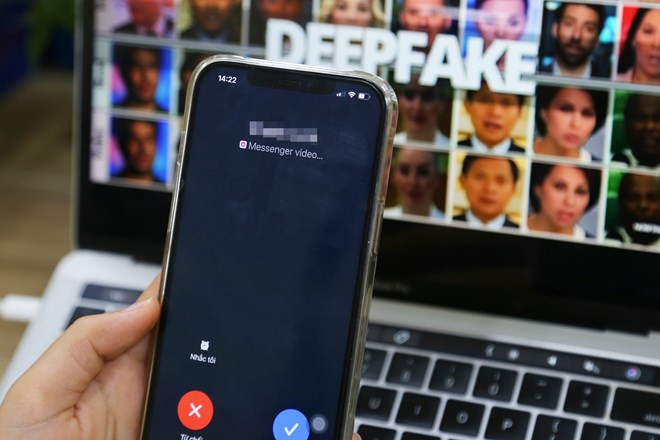
In Vietnam, in addition to impersonating relatives, the subjects also impersonate functional agencies and police to video call victims related to drug and money laundering cases... thereby forcing them to transfer money to collude and appropriate. In addition, they also impersonate celebrities to invest and advertise dirty. The method of implementation is that fraudsters ghép hình, synchronize the voices of influential artists and financial experts to create fake advertising videos as real. The purpose is to lure victims to participate in fake virtual currency and stock exchanges or buy poor quality goods.
Phone equipped with useful features with AI help
In Vietnam, users can proactively install third-party applications to be supported in detecting scam calls. In addition, some phone companies are starting to introduce the Deepfake detection feature using AI, integrated into the device, bringing higher reliability in terms of detection rate as well as personal data security for users.
Images, video calls and call recordings are locally analyzed on the device using AI models. Data is not stored on the device or uploaded to any server. Content detection service is created by AI or not.
In addition, AI also statistically counts phone scams that often begin with users being tricked into performing a specific action, such as changing the security settings of the device, or authorizing an application. AI identifies common scam scenarios (such as impersonating police, post office, requesting money transfers) based on keywords and abnormal voice tone, then disconnects or issues an emergency warning. AI scans conversations or checks big data of reported phone numbers to display warnings directly on the screen.

Most recently on the newly launched Honor 600 phone, users can activate and use this feature by going to Settings > Security & Privacy > Device & Data Protection > AI Deepfake Detection, and make sure that the AI Deepfake Detection feature is turned on.
While the user is video calling, a notification will appear. Tap Start detection and after the detection process is complete, the results of the suspicious scam call will be displayed on the screen.


