
Sứ mệnh Những chân trời Mới của NASA, được thực hiện vào năm 2006, đã chụp những bức ảnh chi tiết về bề mặt của sao Diêm Vương - một hành tinh lùn và là vật thể lớn nhất trong Vành đai Kuiper. Một nghiên cứu mới đã phân tích các hình ảnh của một khu vực có hai gò đất lớn, được gọi là Wright Mons và Piccard Mons, mà các nhà khoa học đã đề xuất là núi lửa băng. Wright Mons là một ngọn núi cao từ 4 đến 5km và rộng khoảng 150km, trong khi Piccard Mons cao khoảng 7km và rộng 250km.
Trong nghiên cứu, các nhà khoa học kết luận bề mặt xung quanh những gò đất này có khả năng được hình thành do hoạt động khá gần đây của các núi lửa băng, hay còn gọi là cryovolcano.
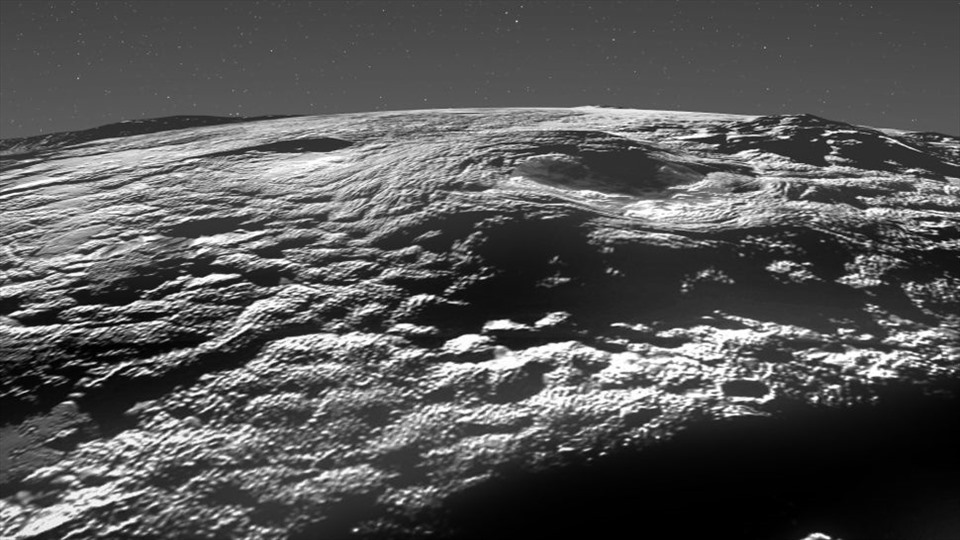
Phát hiện này làm dấy lên khả năng rằng những ngọn núi lửa này có thể vẫn đang hoạt động và nước lỏng hoặc thứ gì đó tương tự, đang chảy hoặc gần đây đã chảy dưới bề mặt của sao Diêm Vương.
Hoạt động gần đây cũng có nghĩa là có khả năng hành tinh nóng hơn so với suy nghĩ trước đây của các nhà khoa học. Với những nghiên cứu khác gần đây, các nhà khoa học cho biết công trình của họ thậm chí có thể nâng cao khả năng tồn tại sự sống dưới bề mặt sao Diêm Vương.
Những ngọn núi có những chỗ trũng cực kỳ sâu ở đỉnh. Nhiều phần của khu vực này còn có hình dáng bất thường và sần sùi, được tạo thành từ những gò tròn nhấp nhô.
Tác giả chính của nghiên cứu, nhà khoa học hành tinh Kelsi Singer từ Viện Nghiên cứu Tây Nam ở Boulder, Colorado nói với Space.com: "Không có khu vực nào khác trên sao Diêm Vương trông giống khu vực này. Và nó hoàn toàn độc nhất trong Hệ Mặt trời".
Không giống như các khu vực khác của sao Diêm Vương, khu vực này có ít hoặc không có hố va chạm, cho thấy bề mặt được hình thành tương đối gần đây trong thời gian địa chất. Căn cứ vào việc thiếu các hố va chạm, khu vực này có thể không già hơn 1 hoặc 2 tỉ năm tuổi, với một số khu vực có thể ít hơn 200 triệu năm tuổi.
Nghiên cứu ngày 29.3 được công bố trên tạp chí Nature Communications.


