Các nhà khoa học trồng cây trong đất Mặt trăng thu thập trong các sứ mệnh của tàu Apollo. Đây là lần đầu tiên thực vật nảy mầm và phát triển trên Trái đất trong đất từ một thiên thể khác.
Nghiên cứu này có thể đặt nền tảng cho việc phát triển các loài thực vật cung cấp ôxy và thức ăn trên Mặt trăng trong bối cảnh chương trình Artemis của NASA tìm cách đưa người phụ nữ đầu tiên và người da màu đầu tiên đặt chân lên cực nam Mặt Trăng vào cuối thập kỷ này.
Nghiên cứu chi tiết về thí nghiệm thực vật được công bố ngày 12.5 trên tạp chí Communications Biology.
“Thực vật giúp xác minh rằng các mẫu đất mang về từ Mặt trăng không chứa mầm bệnh hoặc các thành phần không xác định khác có thể gây hại cho sự sống trên mặt đất, nhưng những thực vật đó được phủ lớp đất mặt Mặt trăng chứ chưa bao giờ thực sự được trồng trong đó" - Lisa Paul, giáo sư nghiên cứu về khoa học làm vườn tại Viện Khoa học Nông nghiệp và Thực phẩm thuộc Đại học Florida, Mỹ cho hay.
Giáo sư Paul và đồng tác giả nghiên cứu Rob Ferl - giáo sư khoa học làm vườn tại Viện Khoa học Nông nghiệp và Thực phẩm UF, muốn tiến thêm một bước nữa và xem liệu hạt giống có mọc trong đất Mặt trăng hay không.
Thí nghiệm này đã được đề xuất từ 15 năm trước và yêu cầu lấy mẫu vật Mặt trăng cuối cùng được chấp thuận cách đây 18 tháng. Nhóm nghiên cứu đã đề nghị NASA cấp 4 gram mẫu vật từ Mặt Trăng trong sứ mệnh Apollo 17.
Ryan Zeigler, người phụ trách mẫu Apollo của NASA, nhận thấy giá trị khoa học trong việc cung cấp nhiều mẫu vật hơn từ các sứ mệnh Apollo khác nhau. Ông đã gửi cho nhóm nghiên cứu tổng cộng 12 gram (2,7 muỗng cà phê) từ các mẫu vật Mặt trăng thu được từ các sứ mệnh Apollo 11, 12 và 17.
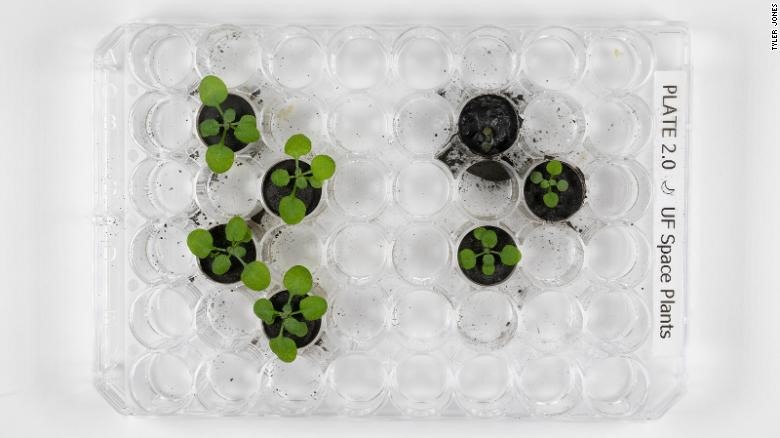
Các nhà nghiên cứu đã đưa vào mỗi ống trồng cây 1 gram đất Mặt trăng, bổ sung chất dinh dưỡng và nước, rồi cho vào một vài hạt Arabidopsis thaliana - cây thuộc họ cải có nguồn gốc từ khu vực Á-Âu và Châu Phi.
Hạt giống cũng được trồng vào đất từ Trái đất để làm nhóm đối chứng. Kết quả, sau 2 ngày, tất cả hạt giống ở 2 nhóm đều nảy mầm và phát triển tương tự nhau. Tới ngày thứ 6 của thí nghiệm, sự khác biệt bắt đầu xuất hiện, với những cây trong mẫu đất Mặt trăng sinh trưởng chậm hơn và rễ còi cọc.
Sau 20 ngày, các nhà khoa học thu hoạch tất cả các cây và tiến hành các nghiên cứu về ADN. Phân tích cho thấy, cây trồng trên đất Mặt trăng đã phản ứng tương tự như những cây trồng trong môi trường khắc nghiệt như đất có quá nhiều muối hoặc kim loại nặng.