
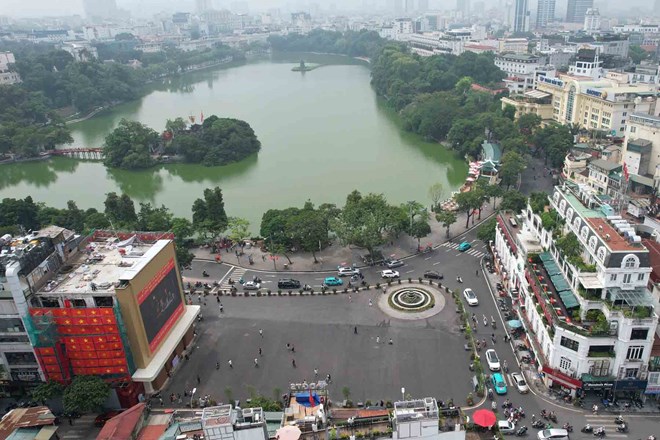
According to the draft submission of the Hanoi People's Committee on the low-emission zone project in Ring Road 1, phase 1 (from July 1 to December 31), the city plans to pilot it in Hoan Kiem ward.
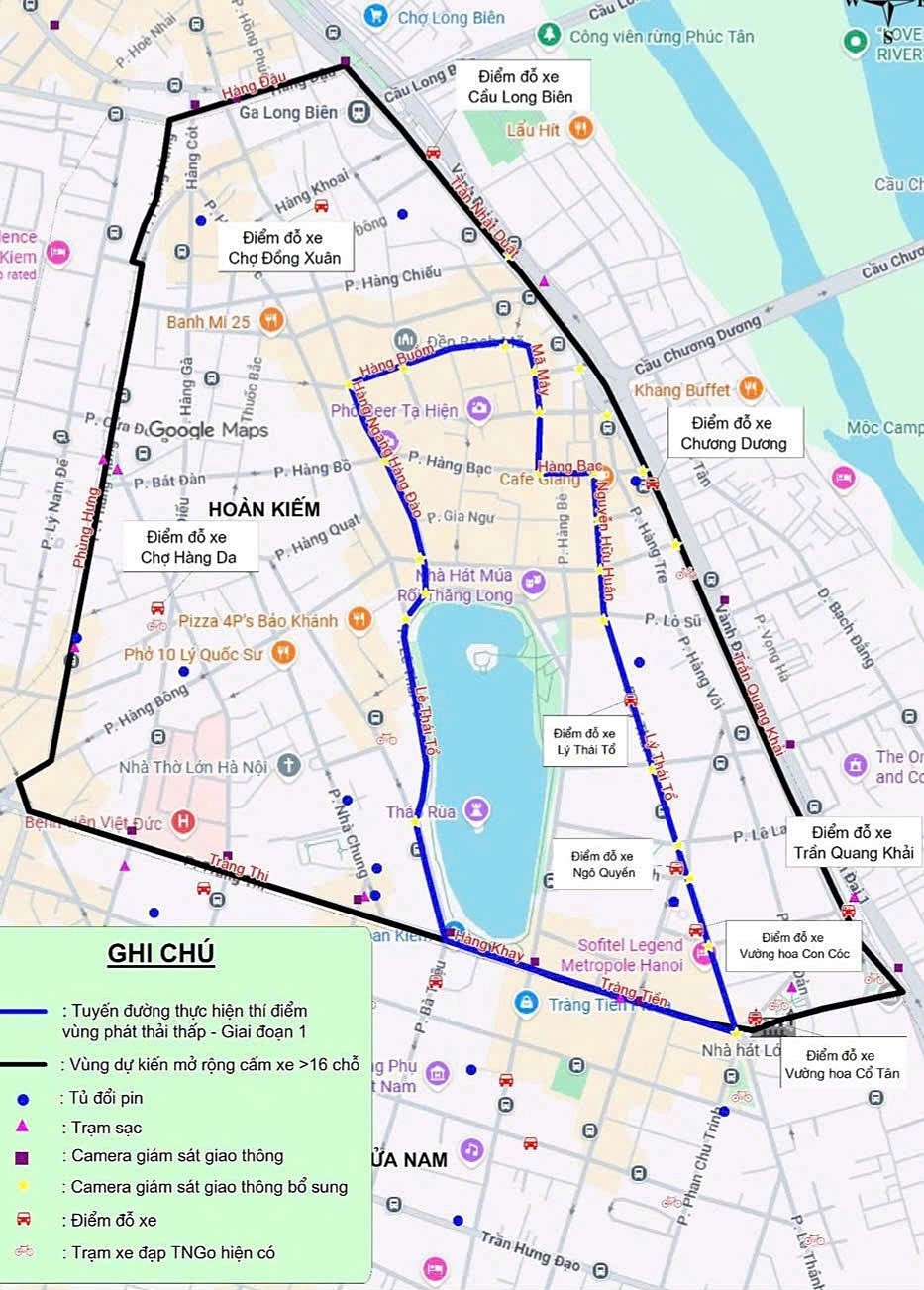
Specifically, the low emission zone is enclosed in 11 streets including: Trang Tien, Hang Khay, Le Thai To, Hang Dao, Hang Ngang, Hang Buom, Ma May, Hang Bac, Hang Mam, Nguyen Huu Huan and Ly Thai To. This area has an area of about 0.5 km2, a circumference of 3.5 km, and a population of nearly 20,000 people.
Within the pilot area, the regulation banning gasoline motorbikes is applied according to the time frame. Motorbikes and mopeds using gasoline for business through applications (technology motorbike taxis) will be completely banned. For personal gasoline motorbikes, circulation is restricted from 6 pm to 12 am on Fridays and from 6 am to 12 am on weekends.
In addition, other types of vehicles are also subject to adjustments in emissions and operating hours. Trucks under 2 tons that meet emission standard level 4 are only allowed to circulate outside peak hours. Trucks from 2 to under 3.5 tons (meeting level 4) are only allowed to operate from 9 pm to 6 am the next day and need written approval from the City Police. Trucks over 3.5 tons are completely prohibited in the area.
For cars with 16 seats or more (except for buses and school buses), vehicles must meet emission standard level 4 and are not allowed to circulate during the hours of 6:00-9:00 and 16:00-19:30 daily in the Old Quarter area and around Hoan Kiem Lake (belonging to Hoan Kiem ward and Cua Nam ward).
Buses and school buses are still allowed to operate but must meet emission standard level 4. Vehicles under 16 seats using fossil fuels must also meet similar standards.
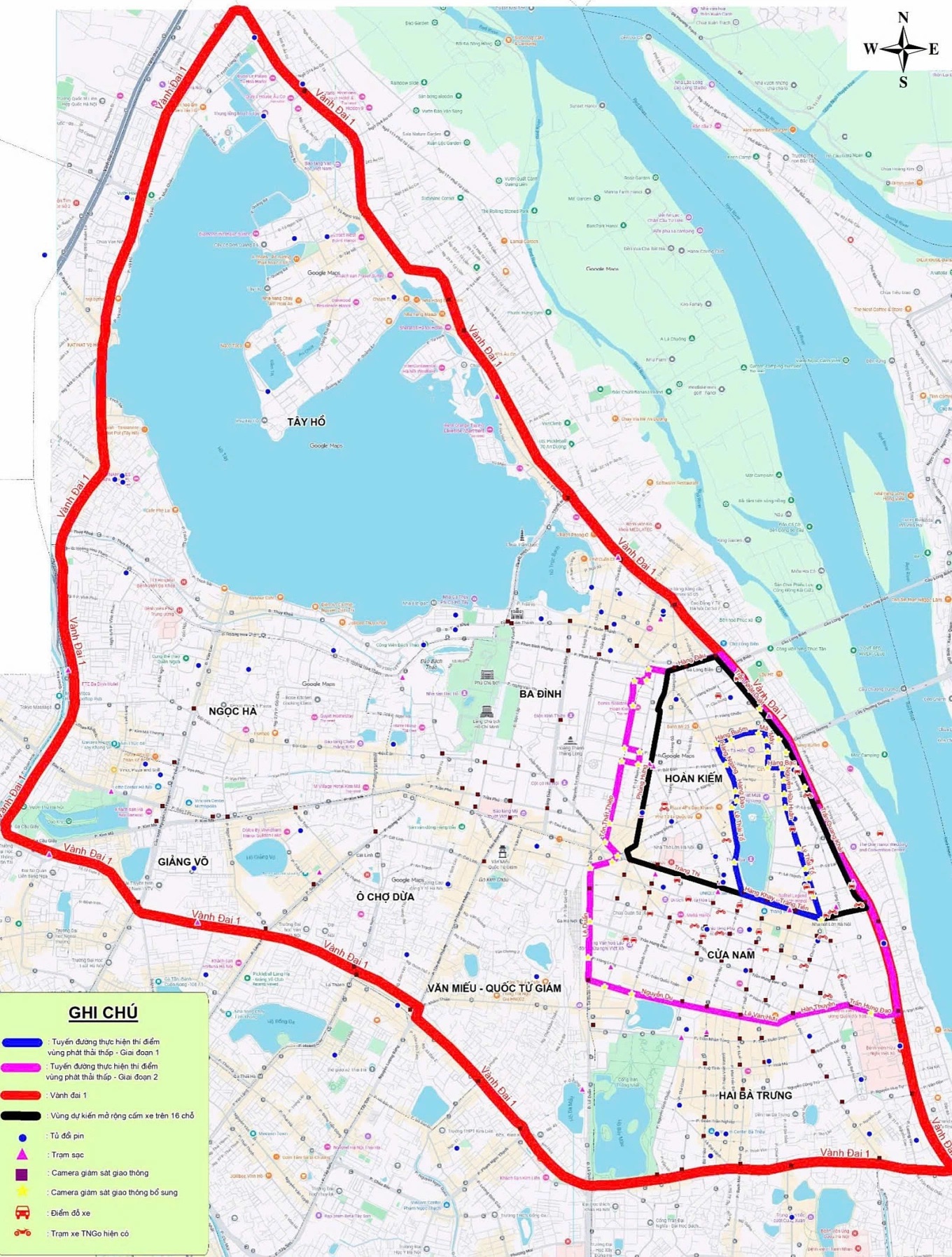
According to the roadmap, phase 2 (January 1, 2027 - December 31, 2027), the scope of the low emission zone will be expanded to Cua Nam ward, including the core area of Hoan Kiem and 14 adjacent streets such as Nguyen Du, Han Thuyen, Tran Hung Dao, Tran Khanh Du, Tran Quang Khai, Tran Nhat Duat, Hang Dau, Cua Dong, Ly Nam De, Ton That Thiep, Dien Bien Phu, Hang Bong, Cua Nam and Le Duan.
By phase 3 (January 1, 2028 - December 31, 2029), the city plans to expand the low emission zone and limit gasoline motorbikes to the entire Ring Road 1, with an area of more than 26 km2, a circumference of about 25 km and a population of about 625,000 people. This scope covers 9 wards, surrounded by roads such as Hoang Cau, De La Thanh, O Cho Dua, Xa Dan, Dai Co Viet, Tran Khat Chan, Nguyen Khoai, Tran Khanh Du, Tran Quang Khai, Tran Nhat Duat, Yen Phu, Nghi Tam, Au Co, An Duong Vuong, Lac Long Quan, Buoi and Cau Giay.
The project is built to concretize Resolution 57/2025 of the Hanoi City People's Council, which sets the goal of deploying low-emission zones in Ring Road 1 from July 1, 2026.
According to the Hanoi People's Committee, air quality in recent years has tended to decline, especially in the inner city - where the population density is high and traffic volume is large. Research by the Ministry of Agriculture and Environment in the period 2023-2025 shows that transport contributes about 25% of PM2.5 fine dust, while internal inventory determines that traffic sources alone account for 59% of direct emissions in the city.
The deployment of low-emission zones, including measures such as banning gasoline motorbikes by the hour, is considered an important test step to control pollution, while creating a basis for expanding the model in the future.
Currently, Hanoi has about 6.9 million motorbikes, of which Ring Road 1 area alone has about 450,000 vehicles.
The pilot ban on gasoline motorbikes at Hoan Kiem by the hour will directly affect travel activities in the central area, especially on Friday evenings and all weekends.
Tourists when coming to Hoan Kiem Lake area and the Old Quarter need to proactively choose suitable means of transport such as walking, electric cars or public transport to avoid violating regulations. In case of using personal vehicles, it is necessary to carefully monitor the restricted hours and streets applied to adjust travel schedules.
In addition, official information should be updated from functional agencies during the pilot period, as the scope and regulations banning gasoline motorbikes can be adjusted according to each implementation phase.


