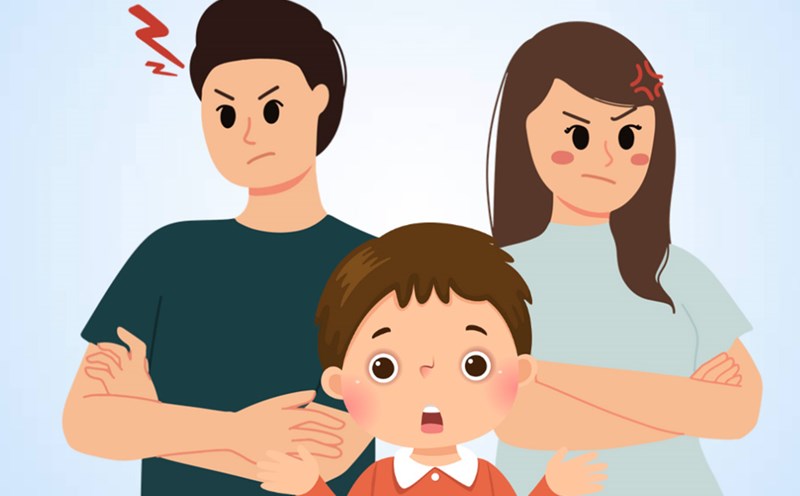
On a winter morning, in a small house in Hoa Binh ward, Ms. Nguyen Hai Yen (31 years old) hurriedly prepared for her 18-month-old daughter to go to daycare. As soon as she returned to the room to get her backpack, the grandmother carried her grandchild up, bringing a spoonful of porridge close to her mouth.
Eat a few more spoons to make your stomach firm, not hungry when it's cold outside," she said.
Ms. Yen sighed slightly. Her daughter is full, but according to habit, she still tries to fertilize more. Although she has given advice many times, it seems that this habit of hers has not changed.
Not only the issue of weaning, but the grandparents' childcare in Ms. Yen's family also revolves around a series of differences.
She shared: "At night, grandma resolutely demands that grandchildren sleep together because "sleeping separately is cold, startling". When grandchildren are disturbed, the phone is quickly turned on to "watch a little to be obedient". When winter comes, grandchildren are dressed in many layers of clothes, wrapped tightly in scarves, even though sweat wets their backs.
I know she loves her grandchild, but many times I find my child uncomfortable, and if I give too many advices, I'm afraid she will be sad.
The story of Ms. Yen's family is not uncommon. In many Vietnamese families, especially families of many generations, grandparents are often the ones who directly take care of their grandchildren when young parents are busy making a living.
Along with that is the clash between the parenting experience of the previous generation and modern childcare knowledge.
For them, forcing them to eat, sleep together, watch the phone or warm up thoroughly originated from the years of raising children in deprived conditions and limited medical care.
In the old days, raising children without books, but still growing up," is a familiar saying in many families.
Meanwhile, young parents today access a lot of medical information, scientific advice on proper weaning, independent sleep, limit screen time, and keep warm enough. That difference, if not shared and understood, can easily become contradictory.
Psychologist Mai Viet Duc - Nhan Hoa Viet Center for Counseling and Psychological Therapy shared: "Most of the conflicts in childcare do not stem from malicious intentions, but from love and worries in each generation's own way.
However, when grandparents apply old habits rigidly, children may be affected in terms of health and psychology, and children's parents fall into a state of prolonged stress.
Medically, forcing children to eat easily makes them afraid of meals. Prolonged sharing sleep can affect independent sleep. In addition, exposing children to phones early increases the risk of dependence on the screen, excessive warming causes children to sweat and easily get retrograde colds.
The important thing is not who is right and who is wrong, but that families need to have a common voice in how to care for children," the expert said.
Along with that, instead of arguing, parents should explain gently, share scientific knowledge, and acknowledge the hardship and love of their grandparents.
In the opposite direction, grandparents also need to listen and accept that the way children are raised today has changed a lot. Love, sometimes also needs to be updated to suit the times.