
The program is issued to continue to improve the quality of school health work, strengthen activities to protect, care for and manage the health of children, students, and pupils in educational institutions; ensure that learners are comprehensively developed physically and mentally, contributing to improving the quality of education and the quality of human resources in the new period.
100% of children, students, and pupils have health check-ups at least once a year.
After many years of implementing school health policies, school health care has achieved many positive results. However, practice still poses new requirements for ensuring school health personnel, facilities, mental health care, school nutrition, school disease prevention and the application of digital technology in student health management.
The School Health Program for the period 2026-2035 is built to overcome the above limitations, while creating a strong and synchronous change in the work of protecting, caring for and improving the health of learners nationwide.
Accordingly, by 2030, basic education institutions will meet the requirements for school health personnel, medical rooms, medicines and essential equipment; ensure clean water conditions, school hygiene, food safety; organize inspection, monitoring and management of learners' health according to regulations. In particular, 100% of children, students, and pupils are checked, health checked or screened at least once a year and are updated information on the Electronic Health Record connected to the National Population Database.
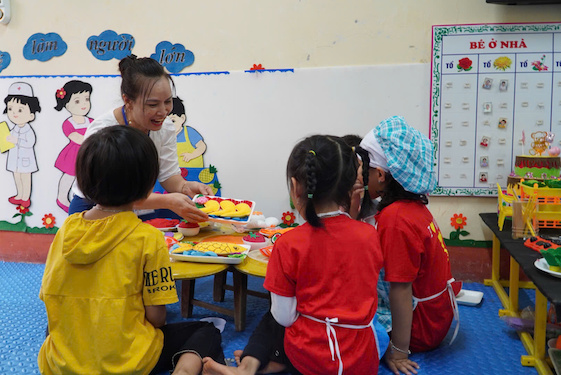
In the period 2031-2035, the Program continues to improve the conditions to ensure human resources, facilities and quality of healthcare services in schools, aiming to fully meet the healthcare needs of learners in the context of digital transformation and international integration.
Prioritize investment in school health and school mental health
One of the key contents of the Program is to strengthen the school health system in a professional, effective and sustainable direction.
Ministries, branches, and localities will continue to review and improve mechanisms and policies related to school health; prioritize arranging, recruiting and improving the capacity of school health staff; strengthen investment in facilities, equipment and conditions to ensure health care activities in educational institutions.
Along with physical health care, the Program pays special attention to school mental health. Educational institutions will strengthen psychological counseling activities, life skills education, skills to respond to risks affecting mental health; promote coordination between schools, families and medical facilities in early detection, support and intervention for learners at risk of mental health problems.
In addition, communication and health education will be implemented regularly, suitable for each level of education to raise awareness, form healthy living habits, increase physical activity, ensure reasonable nutrition, and prevent diseases and behaviors that may affect health.
In addition, the program identifies digital transformation as an important solution to improve the effectiveness of school health work.
Accordingly, health checks at the beginning of the school year, periodic health checks, and management of learner health records will be gradually digitized and interconnected with national databases. Educational institutions are encouraged to apply digital technology in monitoring nutritional status, school meal management, health education communication and building a safe and friendly learning environment.
The formation of a synchronous school health data system will contribute to improving management efficiency, supporting policy development and ensuring that learners have access to timely and appropriate healthcare services.


