
Recently, Lao Dong Newspaper had an article "Parents' representative board accused of overcharging, school forced to stop sponsorship", reflecting the fact that the Parents' Representative Board (BDDPH) of Nguyen Van Cu Elementary School (Quy Nhon Nam ward, Gia Lai) in the 2025-2026 school year mobilized donations of many amounts contrary to regulations of the Ministry of Education and Training (MOET).
Since the beginning of the school year, BDDPH has mobilized parents to donate money to build roofs and clean up with a total estimated cost of 624 million VND for 52 classes, each class 12 million VND.
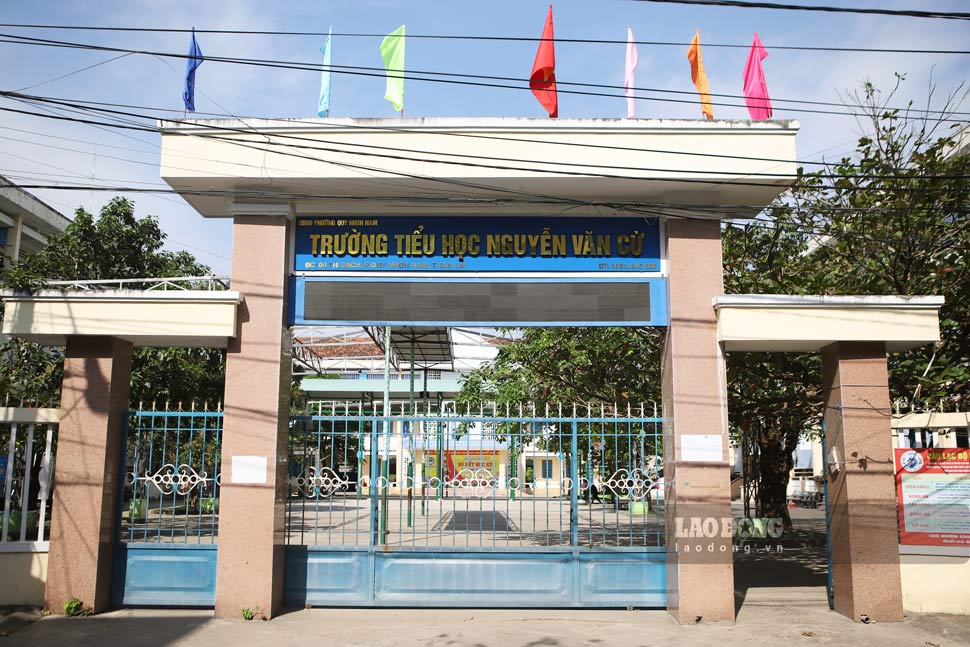
To date, BDDPH has collected more than 457 million VND, spent more than 312 million VND on roofing and cleaning, leaving more than 144 million VND. In the second semester, BDDPH continued to mobilize parents to donate more than 110 million VND to maintain cleaning activities...
Before the parents' feedback, BDDPH affirmed the policy of mobilization, the collection and spending of sponsorship funds are transparent, not for personal gain, the mobilized funds are not used for BDDPH's activities and said that the sponsorship is in accordance with Circular No. 16/2018/TT-BGDDT dated August 3, 2018 of the Minister of Education and Training (Circular 16).
Inappropriate funding mobilization
Regarding this case, Lao Dong Newspaper reporters exchanged with Lawyer Diep Nang Binh - Head of Tinh Thong Law Office (Hanoi Bar Association) to clarify the legal perspective in mobilizing and sponsoring BDDPH and receiving sponsorship from schools.
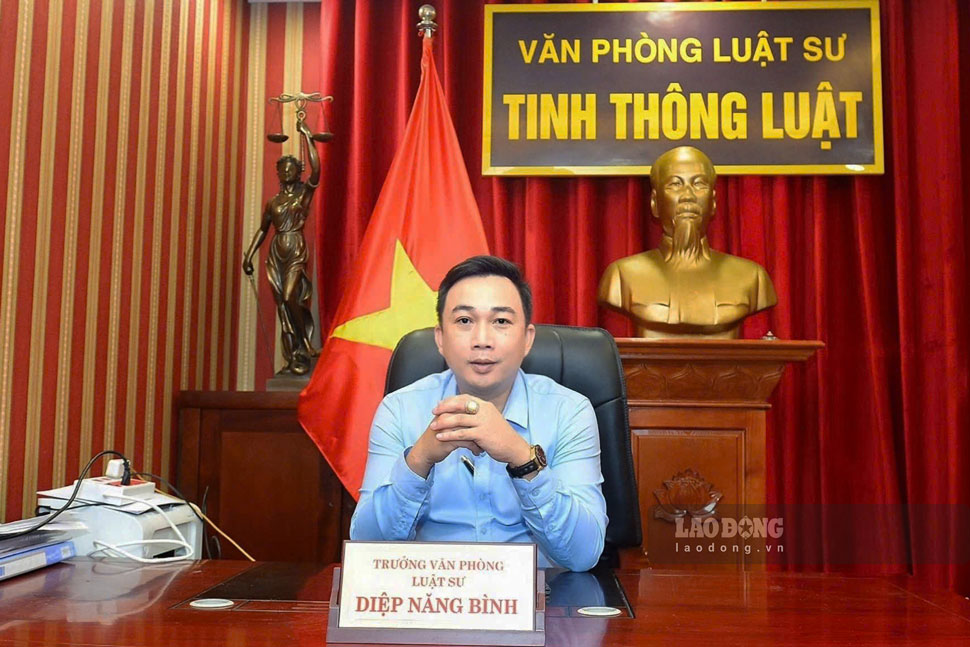
Lawyer Binh said that, in terms of law, first of all, it is necessary to affirm that the activities that BDDPH of Elementary School X implements, whether called "supporting mobilization" or "sponsorship", are still essentially mobilizing sponsorship for educational institutions and must comply with the provisions of Circular 16.
According to Circular 16, sponsorship for educational institutions is only legal when it ensures absolute voluntariness, is not allowed to stipulate the average sponsorship level, is not allowed to assign mobilization targets for collectives, classes and is not allowed to create any form of pressure on parents.
In this case, BDDPH has developed an overall financial plan with a specific figure of 624 million VND and divided equally among 52 classes, equivalent to 12 million VND/class, even pre-determining a plan to continue mobilizing additional funds if the funding is not sufficient. Although it is affirmed in form as "voluntary", quantifying it into the average number by class has completely changed the nature of voluntariness in the legal sense.
When a "common level" is issued in the form of a plan, even if not written into a mandatory regulation, this level still has the potential to become an implicit standard, forcing parents to comply to avoid being evaluated, compared, or creating a hesitant mentality for their children.
Therefore, from a legal perspective, the method of planning sponsorship mobilization as in this case is not consistent with Circular 16, because it directly violates the principle of not stipulating the average sponsorship level and not assigning sponsorship targets.
Potential signs of circumventing regulations
According to Lawyer Binh, Circular 55/2011/TT-BGDDT (Circular 55) stipulates that BDDPH is only a representative organization with coordination, does not have independent legal status and is not allowed to organize financial mobilization activities beyond its authority or beyond the scope of assigned functions.
The concept of "charity" in legal and social practice is understood as individuals and organizations outside the school or without direct obligations related to students' learning, voluntarily supporting education on a charitable basis. However, the actual source of money is contributed by parents whose children study at the school, so it cannot be called a source of money from philanthropists, even though this amount of money is used to improve students' learning conditions.

In essence, using such a way of calling has distorted the legal origin of the revenue, creating the feeling that this is an external source of funding, but in reality it is money contributed by parents.
The explanation that this amount of money "is not used for BDDPH's activities" does not change the legal nature of the issue, because the important thing is not who the money is spent on, but who is the lobbyist, who is the contributor, and whether the lobbying is within authority or not.
Therefore, it can be assessed that calling this collection "support money from philanthropists" is not in accordance with the spirit and content of Circular 55, and also contains signs of circumventing regulations, blurring the boundary between legal sponsorship and improper collections in the educational environment.
Schools cannot shirk responsibility
Regarding the reception of sponsorships from schools, Lawyer Binh said that Articles 6 and 7 of Circular 16 clearly define the responsibilities of educational institutions and heads in organizing, managing, using and publicizing sponsorship sources, ensuring that the entire process of receiving and implementing sponsorships complies with the principles.
Comparing with the regulations, it can be seen that even if the mobilization is carried out under the name of BDDPH, the legal responsibility is still attached to the school, because according to Circular 16, educational institutions are the ultimate responsible entity for receiving and managing funding to serve the school's operations.
The fact that BDDPH directly stands out to mobilize and collect money from parents on a large scale, associated with a specific spending plan for school activities, this activity is no longer simply coordination, but has exceeded the legal limits allowed.
From the above bases, it can be affirmed that the receipt of sponsorship in this case has revealed signs of not being in accordance with legal regulations due to violating the principle of voluntariness and not being in accordance with the role of BDDPH. Legal responsibility first and foremost lies with the school and the head of the educational institution in organizing, supervising and promptly rectifying activities of mobilization and receipt of sponsorship that are not in accordance with regulations.


