
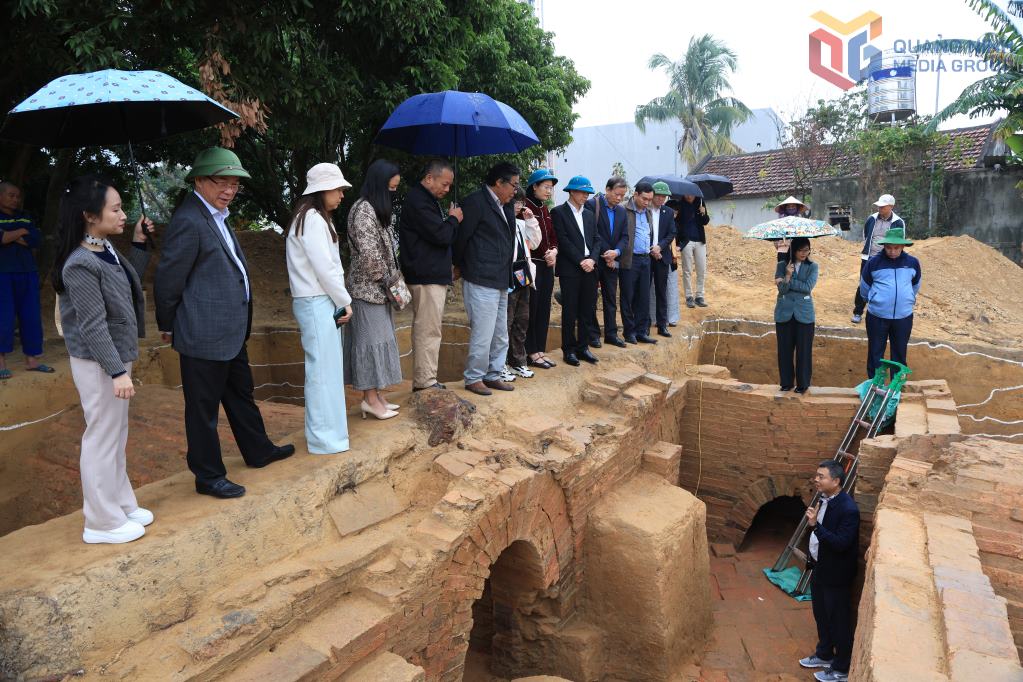
On January 17, in Vang Danh ward, the Quang Ninh Provincial Museum - Library organized a conference to report preliminary results of archaeological excavation of brick tombs dating back about 2,000 years in the Chap Khe area, Vang Danh ward, and at the same time consult scientists on the nature, value and plans to preserve and promote the value of relics.
Chap Khe brick tomb (located adjacent to Chap Khe parish church, Vang Danh ward) was discovered during people's construction of leveling the ground and was excavated by Quang Ninh Museum in coordination with the archaeological group of Dr. Nguyen Van Anh - Head of the Faculty of History, University of Social Sciences and Humanities, Vietnam National University, Hanoi from December 2025.
The results showed that this is a brick tomb area distributed on a high mound, with an area of about 150m2, much larger in scale than the brick tombs previously discovered in Quang Ninh and across the country.
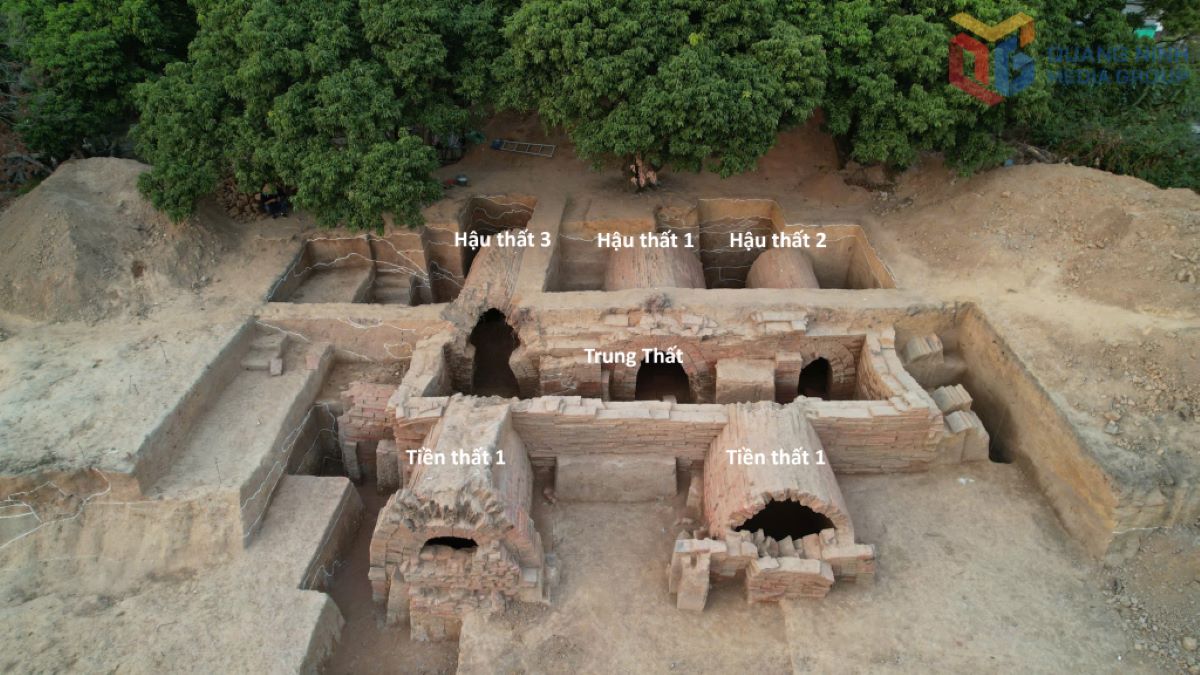
The base of the tomb is about 2.5m deep compared to the current mound surface. The tomb is located in the North direction, 20 degrees East, with a structure consisting of 2 vestibules, 1 median chamber and 3 rear chambers. The median chamber and rear chamber both have ears.
The beds and ears are built and arranged with rectangular bricks with high heating, on the bricks are decorated with many types of patterns such as coin motifs, umbrellas, concentric circles, letters S.., arched roofs made of grapefruit segment bricks.
The artifacts collected during the excavation include 3 main groups: architectural materials: rectangular bricks, grapefruit segment bricks; terracotta ceramics including house and pot models; ceramic tiles including pots, jars, lamp bases... Based on the structure and patterns on the artifacts, it can be confirmed that the tomb dates back to the I-II century AD (nearly 2,000 years ago today).
This type of tomb was discovered quite commonly in the Bach Dang river basin belonging to the (old) districts and towns of Quang Ninh such as Quang Yen, Uong Bi, Dong Trieu and the (old) districts and towns of Hai Phong, Hai Duong such as Thuy Nguyen, Kinh Mon, which is evidence of the important role of the Bach Dang river basin as a cultural center, administrative center, and densely populated riverside area in the early Neolithic period.
Based on the excavation results, archaeological researchers, leaders of Quang Ninh Department of Culture, Sports and Tourism and local authorities agreed to continue to study and clarify the structure, scale, and age of the relic, prepare a scientific dossier of the relic to propose ranking and have a plan to preserve it on the spot, the original state of the relic has been revealed, and plan this area to become an archaeological park to serve cultural preservation and heritage education associated with cultural and tourism development of the locality.


