
On May 22, Dai Nam University and Soha. vn organized the Workshop: "Creating a Happy University in Vietnam: From Vision to Action".
A happy university is not where students smile the most
Speaking at the opening of the conference, Mr. Bui Ngoc Hai - Director of Soha.vn, Head of the Organizing Committee of the Conference - said that "happy university" is not only an issue of education, but also a story of human development for the whole nation.
Mr. Hai affirmed that in recent years, higher education has made strong strides to improve the satisfaction and happiness index for learners. However, with the harsh reality in the labor market when AI is developing every day, schools still have a lot to do.
Citing the survey results of the unit with 15% of students saying they lack confidence in job opportunities after graduation, Mr. Hai said that this is the psychology of many young people today - those who have more opportunities than previous generations but also face greater pressure and uncertainty.
Presenting the presentation, Dr. Le Dac Son - Chairman of the Council of Dai Nam University - said that pressure is not always negative. The important thing is whether learners are supported to overcome pressure and grow up.
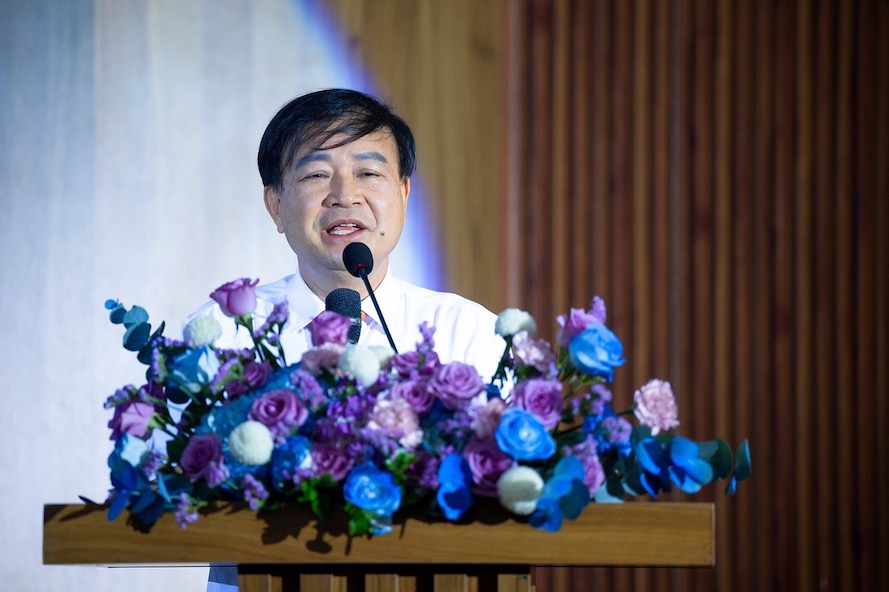
He emphasized that higher education needs to help students form real competence instead of just chasing after formal achievements.
A happy university is not where students smile the most. But it is where graduates can stand firm in life, and when they ask themselves "Am I happy?", they have enough capacity and bravery to answer "yes" - Mr. Son said.
Higher education cannot just stop at imparting knowledge
From the perspective of changes in the labor market in the AI era, many experts believe that higher education needs to strongly change both in training thinking and in assessing learners' abilities.
Professor Rick Bennett - Vice Rector cum Vice President of the British University Vietnam (BUV) - believes that higher education needs to shift from the "expanding quantity" mindset to building "substantial quality and international trust".
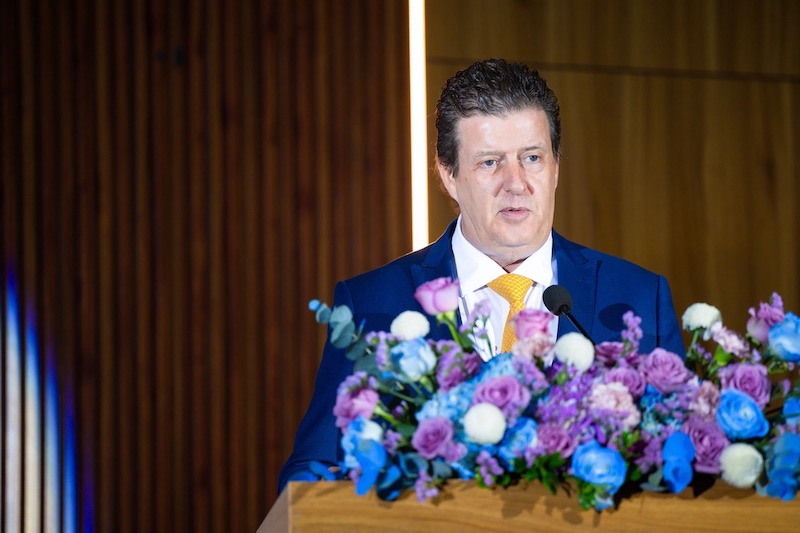
According to him, the important thing is not only the ranking or accreditation, but whether the university really helps students form capacity, adaptability and confidence to enter a volatile world.
Sharing the same view, Prof. Dr. Nguyen Van Noi - Chairman of the Vietnam Test Room Association, former Rector of the University of Science, Vietnam National University, Hanoi - emphasized that higher education must not lose its academic depth, but must also not be separated from social reality.

According to him, students need to be equipped with a solid thinking foundation to be able to self-study and adapt in many different environments, and at the same time know how to apply academic thinking to solve practical problems. Therefore, a successful university must play a role in connecting academia and the actual needs of the labor market.
Prof. Dr. Nguyen Huu Ninh - Chairman of the Management Board of the Center for Research, Education, Environment and Development (CERED) also believes that in the 21st century, the greatest value of education is no longer in memorizing knowledge, but in the ability to learn new things, work with AI and adapt to change.
A good university is not just about creating people who are good at exams, but about creating people who are capable enough to adapt to the future while still maintaining personality, creativity and happiness" - Mr. Ninh said.
From the perspective of a business manager, Mr. Pham Huy Phong - CEO of Mainetti Vietnam cum CPO of Mainetti Global Group - said that Vietnamese students today have many strengths in knowledge and learning ability, but the ability to withstand pressure is still a noteworthy weakness.
He said that universities have done a good job of equipping knowledge and skills, but need to help students transform those things into adaptive abilities to be able to work and develop in many different environments.


