
In a world where careers no longer follow linear roadmaps, universities are not only places to impart knowledge, but become an environment that determines whether learners can re-learn, redo, and continue to create value when the context changes.
According to Dr. Hoang Ngoc Vinh, former Director of the Department of Vocational Education (Ministry of Education and Training), in the technology era, qualifications are no longer a "lifetime ticket". When the labor market changes faster than the training program, learners who lack self-study and adaptability will quickly lose their advantage, even if they graduate from majors that were once considered safe.
When choosing a major that is no longer enough to decide the future
Today, many jobs are fragmented, restructured, and even disappear after only a few years. New roles appear faster than the traditional training cycle. Asking young people to make a "fixed" decision from the beginning, choosing a major, choosing a career for the future becomes increasingly risky.
Dr. Nguyen Thi Thu Anh, former Principal of Nguyen Tat Thanh Secondary & High School (Hanoi), once shared a story about an old student: she is good at studying, capable of entering many top universities and choosing a major considered "safe". But when she entered practical study, she realized that it was not the right path. After graduating, she switched to a completely different field and is currently successful, although almost unrelated to the major she studied.
This story is not isolated. It reflects the biggest risk of traditional industry selection logic: learners are not prepared enough to self-adjust, re-learn and move when the career context changes.
Assoc. Prof. Dr. Pham Manh Ha (Hanoi University of Science and Technology) said that the development of AI is redefining millions of jobs. If learners only look at the short-term needs of the market or the name of the major, but lack the ability to self-study and adapt, the advantages from degrees will quickly decrease.
From the experience of someone who has worked, Ms. Hoang Van Anh - creative operation manager in Hanoi believes that "hot" majors only bring very short-term advantages. "When entering a real working environment, the important thing is not what major you study, but what values you can create, are you willing to re-learn when the job changes," she shared.
These perspectives show that when the profession changes faster than the training cycle, the major is no longer a "guarantee" if learners lack a foundation of competence to adapt.
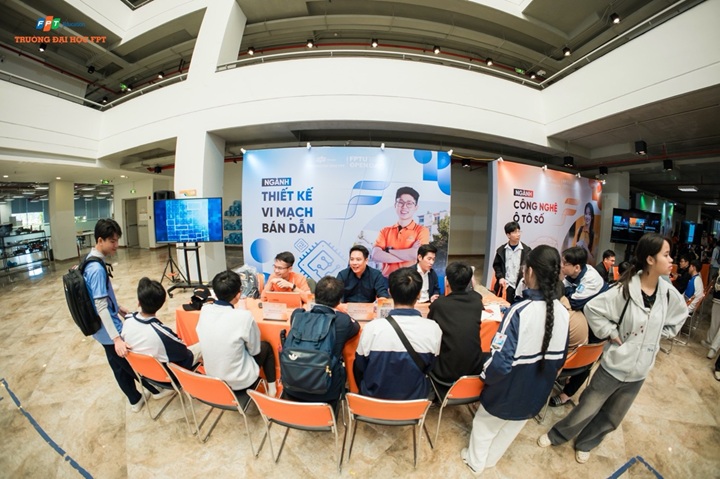
Businesses look for people ready to adapt
From the labor market side, the increasingly clear differentiation does not lie in the starting major, but in the practical working ability and adaptability of young workers.
Mr. Bui Doan Chung - Vietnam Human Resources Joint Stock Company said that businesses prioritize recruiting people who can quickly integrate into the working environment, use technology and AI as daily tools, have the ability to solve problems, work in teams and aim for results, rather than just relying on qualifications or specialized names.
In the field of finance and banking, Ms. Phan Thi Kim Thoa - Director of Northeast Saigon Region, Vietnam Prosperity Bank (VPBank) also said that many repetitive positions are gradually being automated, forcing employees to continuously learn new skills and expand their capabilities instead of just clinging to a fixed specialty.
From a longer-term perspective of the global technology industry, Dr. Le Quang Dam - General Director of Marvell Vietnam Technology Company believes that what determines a career does not lie in what industry young people study, but in the ability to study continuously and adapt to unprecedented changes. According to him, young people need to know how to use AI as a support tool to improve labor efficiency, and at the same time be equipped with foundational capabilities to be able to go the long way in their careers, instead of just meeting a job position at the time of graduation.
When students are directly put into a real working environment
A clear proof of adaptive capacity training is how some university models are bringing students into a real working environment even while they are still studying.
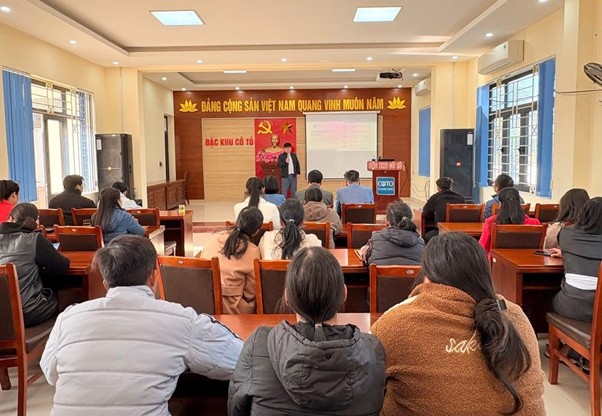
In Quang Ninh, from the beginning of 2026, 74 students of FPT University have been sent to intern in more than 30 communes, wards and units in the province, participating in supporting the implementation of tasks on information technology and digital transformation. This activity is considered an On-the-Job Training semester, in which students not only observe but also directly participate in work, from system operation, data processing to supporting officials and people to use online public services.
According to assessments by receiving units, many students can take on the job immediately and participate as real collaborators in technology projects in the locality, showing that the boundary between "learning" and "working" is gradually being blurred in training models that focus on practical experience.
Choosing a university for an unnamed future
When the profession becomes uncertain, the important question for students and parents is no longer which major is "hot", but: does that university help learners build adaptive capacity to be ready for the future?
According to experts, the difference between universities today is not only in the name of the major or training program, but also in the ability to create a learning environment to help students: working with technology and AI as daily tools, participating in real projects, real problems, training problem-solving thinking and proactive spirit, working in a multicultural environment, using foreign languages and global standards.
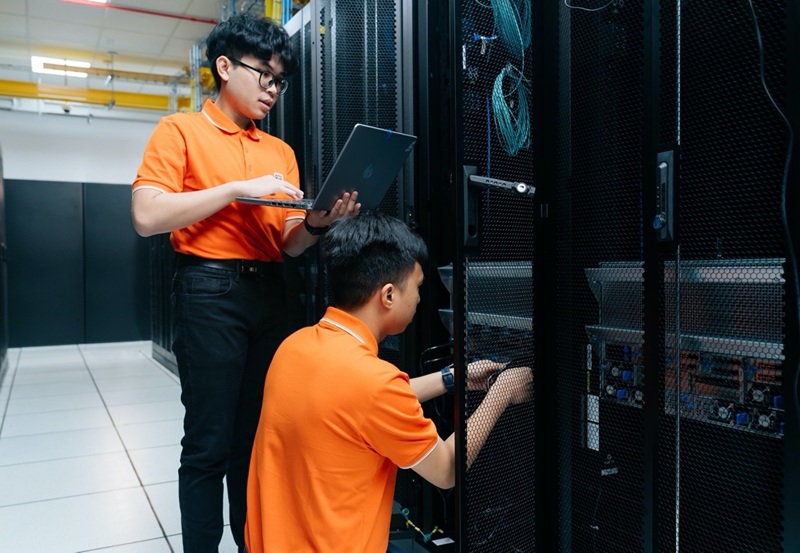
Observations from the recruitment market show that students who are trained in an environment focused on practical experience, associated with businesses and real projects are less "shocked" when entering the labor market, are more proactive in the face of work pressure and are ready to move when the context changes.
In the context of AI and technology continuing to blur the lines between industries, choosing a university is no longer just about choosing a place to get a degree, but about choosing an environment capable of preparing learners to have the ability to re-learn, re-work and go far in a future that has not yet been named.


