New Year's joy in the land of learning
In the early days of 2026, joy spread again on the "school land of Nghe" when the Ministry of Education and Training announced the results of the national excellent student exam for grade 12 in the 2024-2025 school year. At this exam, the Nghe An provincial student delegation excellently won 96 prizes, including 9 first prizes, 29 second prizes, 37 third prizes and 21 consolation prizes. Notably, 100% of the prize-winning students are students of Phan Boi Chau High School for the Gifted - a school that is a symbol of Nghe An's leading education.
Not only leading in quantity, Nghe An also continues to affirm quality in most exam subjects. Physics alone won 3 first prizes; Math, Chemistry, Biology, Geography, English all had first prizes. With this result, 12 Nghe An students were selected for the second round to select the Vietnamese team to participate in regional and international Olympic exams. In the same exam, Vinh University High School for the Gifted also won 27 prizes, contributing to thickening the gold medal table of Nghe An education.
Nghe An - land of learning
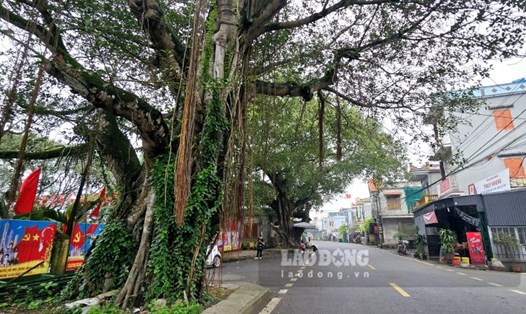
Going back in history, Nghe An has long been considered one of the major cultural centers of the country, belonging to the Hong Lam cultural region - a place where the sacred energy of rivers and mountains converges with the symbol of the Lam River and Hong Mountain.
Historically, this was an important "fence" of the nation, people were steadfast in resisting foreign invaders, persistently overcoming harsh nature to build their homeland.
Historian Phan Huy Chu once assessed Nghe An as a land of "high mountains and deep rivers, solemn customs, harmonious people who study hard", the birthplace of many famous mandarins. From the Ly Dynasty, when Uy Minh Vuong Ly Nhat Quang was assigned to manage Nghe An (XI century), the opening of schools to teach literacy and educate the people was emphasized. Trang Nguyen Bach Lieu (XIII century) became the founder of the land of Nghe An, beginning the glorious tradition of academic achievements.
During the Le Dynasty, especially under the reign of Le Thanh Tong, imperial examinations and education in Nghe An continued to develop strongly. The Huong Nghe An examination school was opened in Lam Thanh, attracting a large number of Confucian students, many of whom achieved high scores. The King also focused on educating Western Nghe An, opening schools to teach for mountainous people, both developing people's knowledge and consolidating borders.
During the Tay Son Dynasty, King Quang Trung established the Sung Chinh Library in Nam Dan, translated Han script books into Nom script, and opened the Tuan Si examination to select talents. Under the Nguyen Dynasty, Nghe An continued to lead the country in the number of people who passed Tu Tai, Bachelor, Pho Bang, and Doctorate.
Associated with exams is a religion deeply ingrained in village life. In addition to public schools, many families and clans open classes themselves, inviting teachers to teach. Learning has become a daily occurrence, sown from childhood through mother's lullaby. Despite poverty, Nghe people still cherish raising their children to study, forming a characteristic called "hard learning": working day, studying night; studying under the moon, beside buffaloes, using areca nuts instead of paper, branches and sticks instead of pens.
The spirit of studiousness is still deeply imprinted in the cultural space of Nghe land through a series of landmarks associated with literacy and exams such as But Dien, Van Hien, Tam Khoi, Bang Son, Van Truong... Each mountain, rice field, river all faintly show the image of gold boards, pencils. As Dang Thai Mai commented: when exams were still prosperous, "every village saw in their mountain a board, a pen keeper".
According to some academic research works, from 1075 to 1919, Nghe An had about 190 people who passed major exams (Doctorate, Deputy Head), hundreds of Bachelors and tens of thousands of Tú tài, Sinh đồ - a prominent figure in the history of Vietnamese imperial examinations. That tradition continued to be promoted in modern times, when Nghe An trained and fostered many professors, scientists, and great cultural figures, contributing to glorifying Vietnamese intelligence.
Spreading the movement to encourage learning
According to Mr. Nguyen Thanh Hien, Member of the Central Executive Committee of the Vietnam Association for Promoting Education, Chairman of the Nghe An Provincial Association for Promoting Education, the national excellent student achievement is just a typical slice in the larger picture of the Nghe people's tradition of studiousness.
Nghe An people have long considered studying as the most important path to establish themselves, start a career and serve their homeland and country. That tradition was formed in harsh natural conditions, life is still difficult, but the more difficult it is, the more the spirit of studiousness is nurtured and passed down from generation to generation," Mr. Hien emphasized.
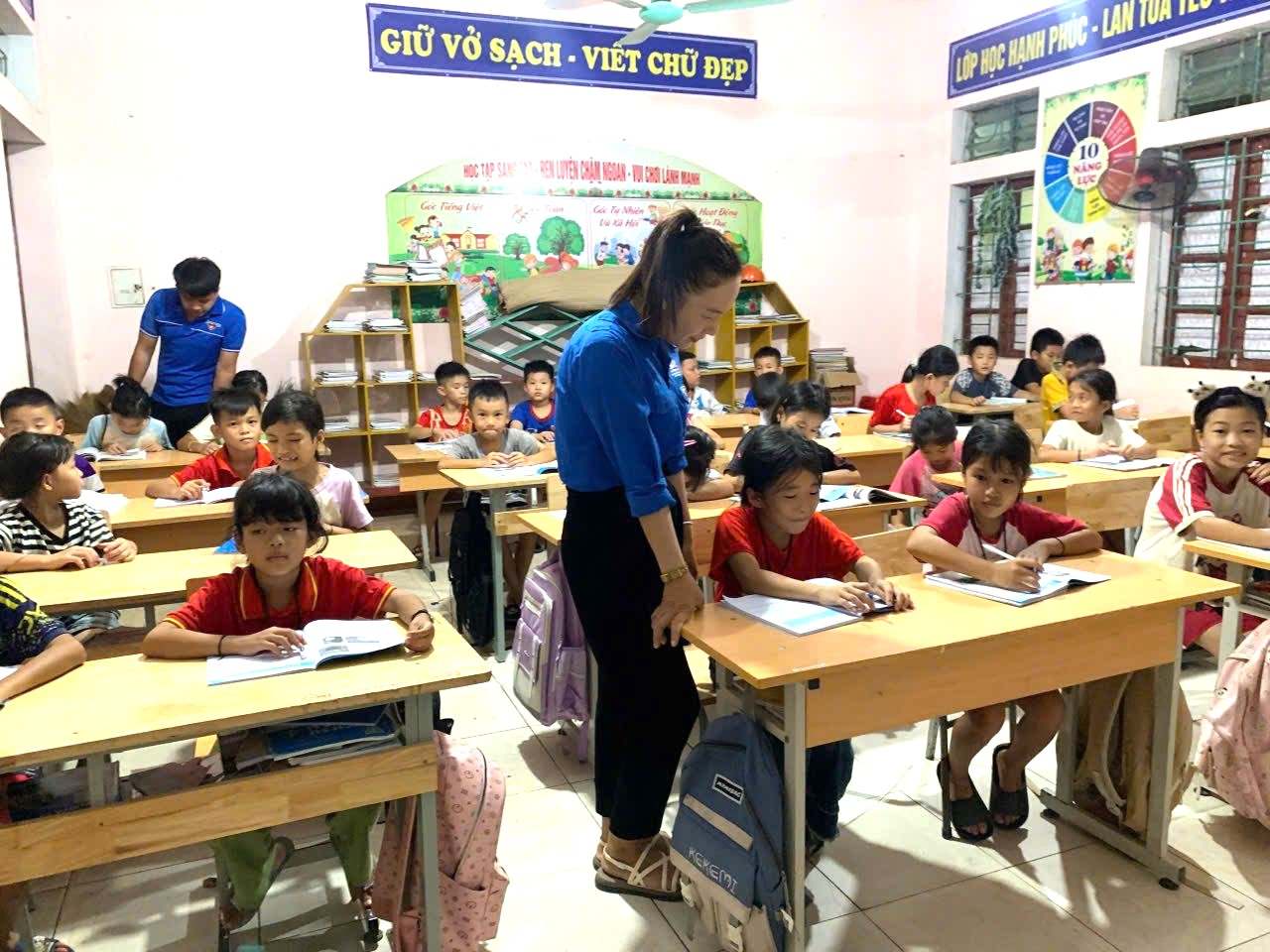
From that cultural foundation, for many years, Nghe An has persistently implemented major policies of the Party and State on building a learning society, lifelong learning, considering this as a fundamental solution to improve people's knowledge, develop human resources and create motivation for sustainable development. Encouragement movements such as "Tet Encouragement for Learning", "Month of Encouragement for Learning" have been implemented synchronously, strongly mobilizing organizations, individuals, and businesses to join hands to support students in difficult circumstances.
To date, Nghe An has nearly 949,667 members of the Association for Promoting Education, reaching a rate of over 27.1% of the population, an increase of 3,974 members compared to the previous year.
Along with that, the lifelong learning emulation movement among cadres, party members, civil servants, public employees and laborers is promoted; taking the criteria of building "Learning Units", "Learning Citizens" as the basis for evaluating the quality of Party organizations and party members annually.
From the achievements of national excellent students at the beginning of 2026, one can clearly see one thing: education promotion in Nghe An is not just a movement, but has become a sustainable cultural and social foundation.