
Regulations on the arrangement of principals after school merger in Ninh Binh
According to the plan to arrange the network of public educational institutions of Ninh Binh province, as of July 1, 2026, the whole province has 1,413 schools and educational centers. Including 439 kindergartens, 437 primary schools, 422 secondary schools and inter-level primary - secondary schools, 92 high schools and 23 continuing education centers, vocational education - continuing education.
According to the plan, from now until August 30, 2026, Ninh Binh province will continue to rearrange 100% of kindergartens, primary schools, secondary schools and inter-level schools under the management of commune-level People's Committees. Thereby, forming large-scale public educational institutions.
Each commune and ward will have a main school and branches and school points. After arrangement, the number of public educational institutions under the commune level is expected to decrease by about 68%.
The sharp reduction in the number of public educational institutions managed by communes will lead to the requirement to restructure the management staff. Accordingly, each school after the merger will only have one principal, instead of maintaining the number of principals corresponding to the schools before the merger.
Administrative and personnel departments such as accounting, cashier, and clerical staff are also organized for common use. Professional teams will be arranged in accordance with each branch and school point to maintain professional activities and ensure that teaching is not interrupted.
For the position of vice principal, the plan does not stipulate keeping the entire existing number. Based on the scale of the class, number of students, distance from the branch to the main school and actual conditions, each branch or school point may be arranged with a vice principal in charge. However, the arrangement must be within the total staffing quota assigned, without causing the management apparatus to exceed regulations. See more...
Ministry of Education lists 3 reasons why the high school graduation exam cannot be abolished
The Ministry of Education and Training (MOET) said that in recent years, the high school graduation exam has been organized and gradually adjusted to suit reality. Continuing to innovate and improve a national standardized exam is not only a requirement according to policies and regulations, but also a requirement from practice to move towards a fair, quality and honest education.
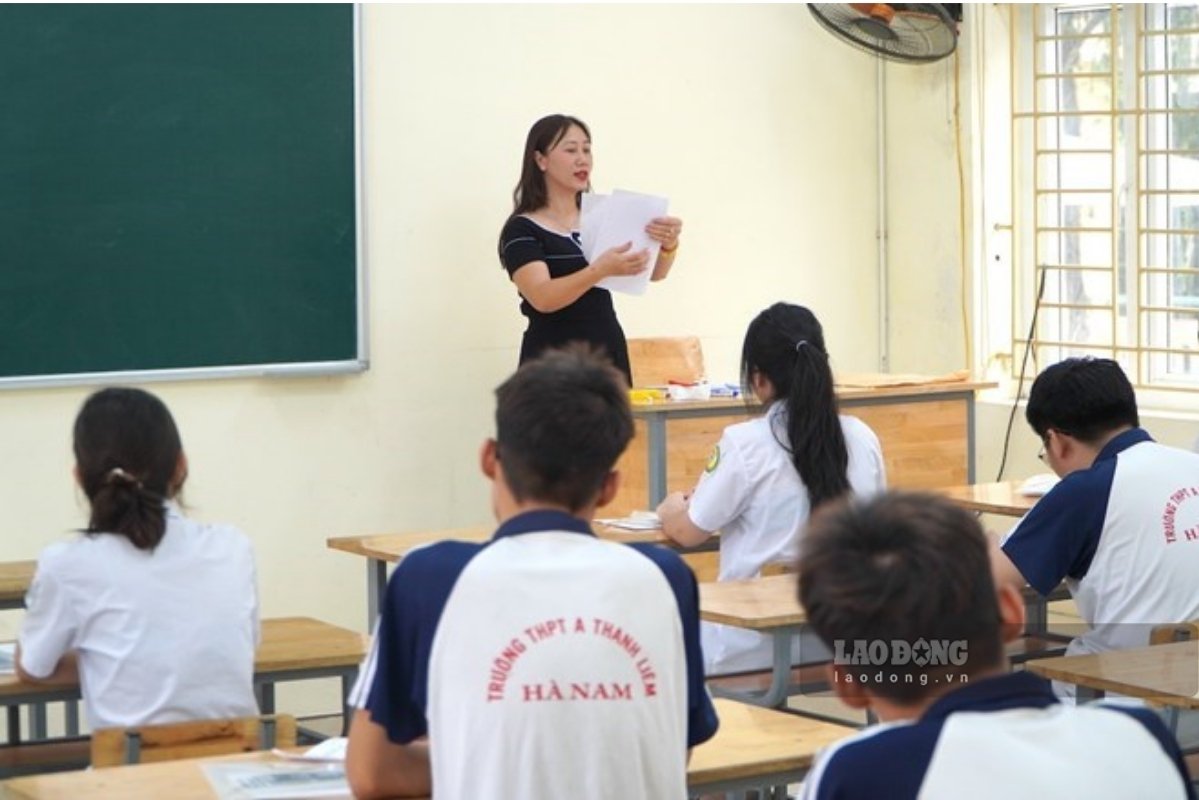
According to the Ministry of Education and Training, Resolution 29-NQ/TW and the Law on Education both identify the innovation of the exam in the direction of reducing pressure but still ensuring reliability, correctly assessing students' abilities, as a basis for vocational and university education enrollment.
The innovation of the high school graduation exam from 2015, especially from 2020 to now, has promoted many advantages such as creating a common assessment level nationwide, contributing to ensuring fairness, reducing pressure and social costs, and providing data to serve education quality assessment and university admissions. See more...
Summary of Benchmark Scores for Livestock Industry in 2025
Principal reflects disadvantages because teacher gives birth to third child
On July 26, a principal of a public school in Nghe An said that he is facing disadvantages in the process of considering and selecting management staff after schools are arranged and merged.
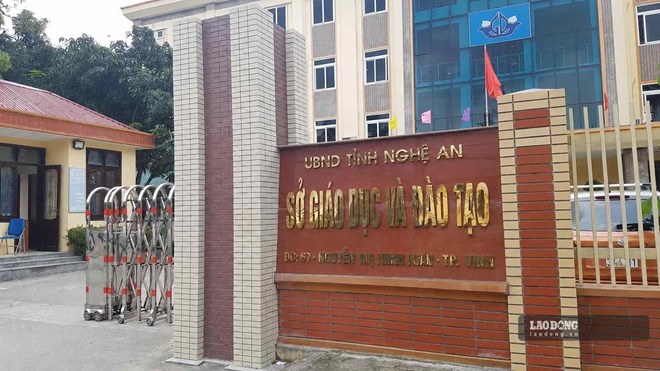
According to the principal, in the 2023-2024 school year, the school achieved many achievements, and he was proposed to be ranked as completing tasks excellently. However, because the school has a teacher who gave birth to a third child, at the end of the year, he was only ranked as completing tasks.
Being downgraded in ranking for one year is putting this principal at risk of not meeting the priority order when the locality selects and arranges principals at schools after the merger. See more...


