
Local teacher shortage at many levels of education
After the merger, Hai Phong City has 72,055 officials, teachers, lecturers, and staff (public 62,535 people, accounting for 86.79%; private 9,520 people, accounting for 13.21%). The public payroll block from preschool to high school has 51,769 people, of which 51,049 people (98.61%) meet the standard or higher, not yet 720 people (1.39%). The teaching staff has been gradually standardized, but there is still a local shortage of teachers in some subjects, levels of education and areas.
At the preschool level, the total number of staff currently available in the public sector is 16,108 people, still locally lacking 576 people compared to the assigned staff and 1,472 people compared to the norms of the Ministry of Education and Training. The ratio of staffed teachers/class reached 1.99 people, lower than the norm of 2.2-2.5 teachers/class.
Primary school level has 17,499 officials, teachers, and staff, the total current payroll in the public sector is 16,247 people, with a local shortage of 1.175 people compared to the assigned payroll and 979 people compared to the norms of the Ministry of Education and Training. The ratio of payroll teachers/class reached 1.37, lower than the norm of 1.5 teachers/class.
The secondary school level is the level of education lacking teachers compared to the highest norm among general education levels with a total current staff of 13,362 people in the public sector, a local shortage of 1,270 people compared to the assigned staff and 2,464 people compared to the norm of the Ministry of Education and Training, the ratio of staffed teachers/class reaches 1.56, lower than the norm of 1.9 teachers/class,
High school education also has a ratio of full-time teachers/class of 1.92, lower than the quota of 2.25 teachers/class, causing difficulties in organizing differentiated teaching, choosing subjects and experiential activities, and career guidance.
The vocational education sector still lacks a large number of practical teachers (especially in key professions). The proportion of teachers with integrated teaching capacity is still low; the application of foreign languages and informatics in teaching and communication is still limited, even in a part of key vocational teachers; the teaching staff shifting from academic training to training based on actual capacity is still facing major challenges.
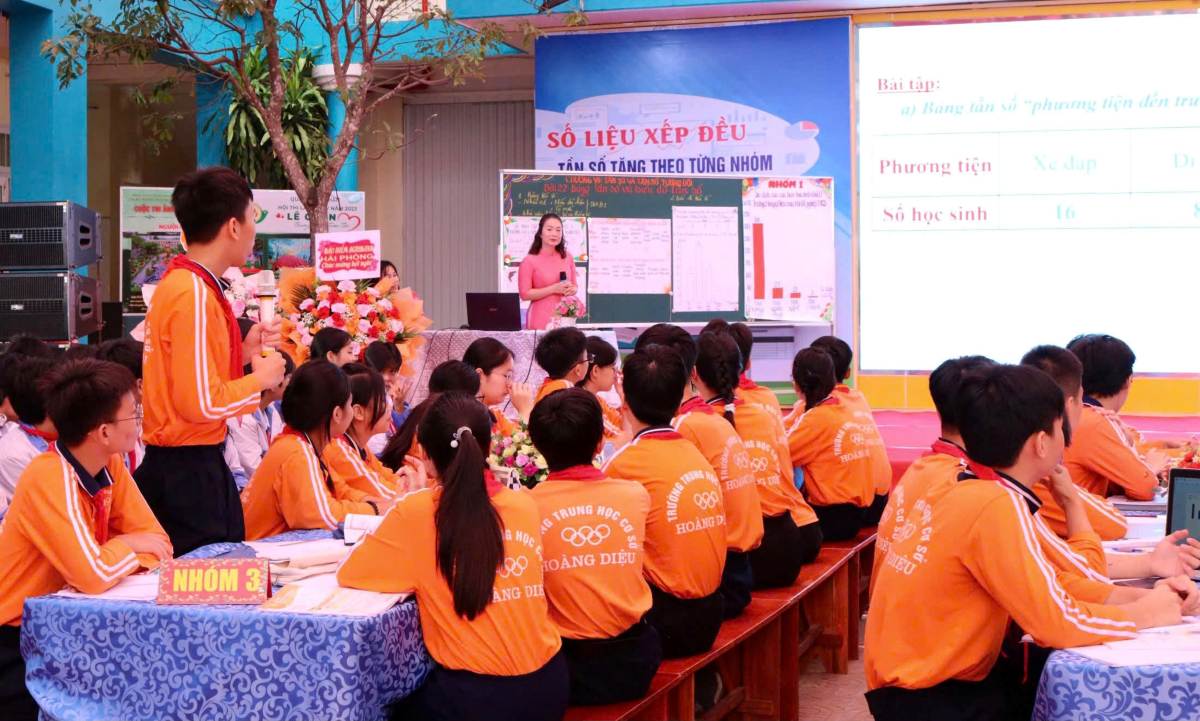
Implementing preferential mechanisms and policies for teachers
Recently, Hai Phong City People's Committee approved the Project on Developing education and training in the city to 2030, with a vision to 2045. In which, in the face of the situation of local teacher shortage, the city set out the task by 2030 to implement preferential treatment for teachers according to Resolution 71-NQ/TW, ensuring professional preferential allowances for preschool and general education institutions of at least 70% for teachers, at least 30% for staff, 100% for teachers in island areas in 2026; implementing the mechanism of visiting lecturers, inviting domestic and foreign experts; attracting and valuing high-quality human resources.
Along with that, review and improve standards and regulations, ensuring the quantity, quality, and structure of the teaching staff to organize review, classification, and evaluation of the staff according to standards/titles and job positions; arrange sufficient staff of teachers and staff according to regulations before 2030. On the other hand, the city strengthens the teaching staff of teachers teaching Foreign Languages, Informatics, Arts, teaching science subjects in English; regularly fosters and improves professional qualifications and skills for teachers and education management staff; promptly updates new requirements of the new preschool education program, the 2018 general education program, and improves the skills of applying technology and modern teaching methods for teachers.
The city also proposed that the Ministry of Education and Training assign/supplement targets for teacher training enrollment suitable to the city's human resource needs; organize training according to orders associated with quality requirements and arrange jobs. At the same time, fully implement preferential policies for teachers; promote attracting excellent students to the pedagogical sector.
Functional agencies deploy the construction of public houses or support convenient accommodation for teachers far away, teachers working in difficult areas; improve the capacity and responsibility of education management officials at all levels; arrange and use officials according to their expertise and strengths to maximize the capacity of human resources of the city's education sector.
The city also develops and implements a Plan for training and fostering to improve the capacity of teachers and educational administrators to meet the requirements of Resolution 71-NQ/TW in the first quarter of 2026; develop and submit to the People's Council for promulgation a resolution on policies to support teaching in English; attract English teachers (especially preschool level); support teachers to self-cultivate and pass international English certificates to be eligible to teach English and teach in English in the fourth quarter of 2026...


