No more worrying about rice for children to go to school
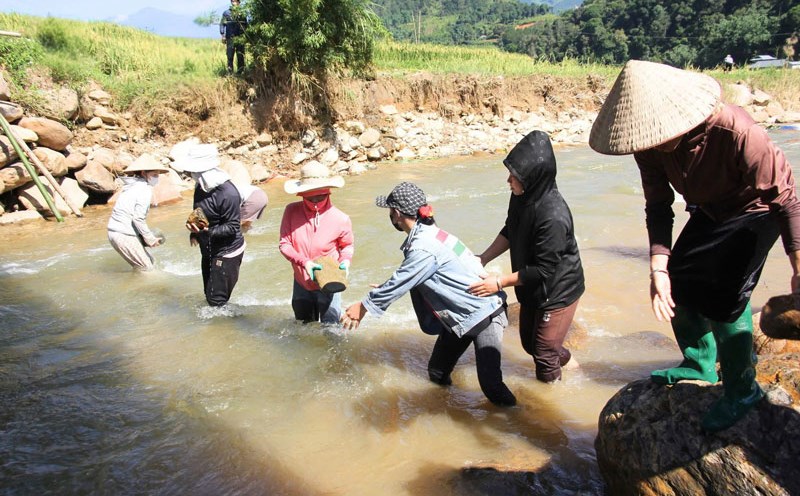
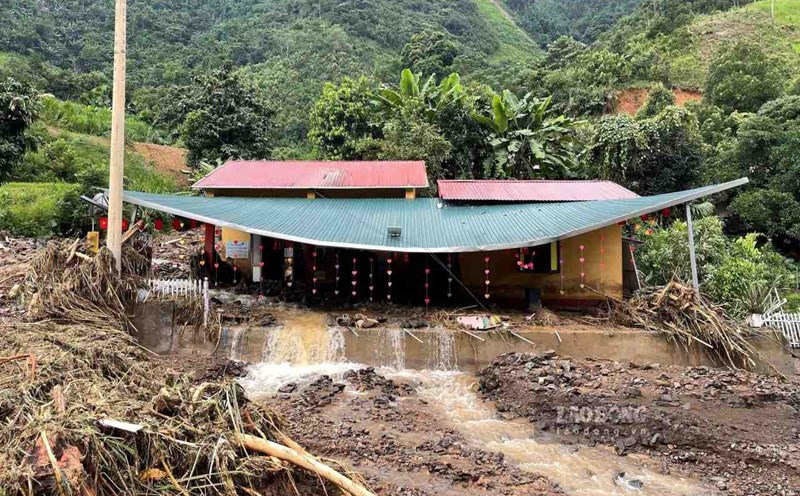
In many mountainous communes of Lao Cai province, the terrain is strongly cut off, transportation is difficult, and people's lives are still lacking. Many students have to walk dozens of kilometers of forest roads to get to school. The cold rainy season, slippery roads, the crop-breaking season, hunger... make the road to the classroom of ethnic minority children more fragile than ever.
Mr. Thao A Pao, a parent with two children studying at Xa Ho Primary and Secondary Boarding School for Ethnic Minorities, recalled: "There was a time when the family lacked rice, I thought of letting my children take a few months off from school to follow their parents to become a daughter-in-law. But then I was afraid that the children would quit and not return to school.
That worry is not only Mr. Pao's family's, but also the common sentiment of many poor households in mountainous areas where sending their children to school is sometimes a tiring exchange.
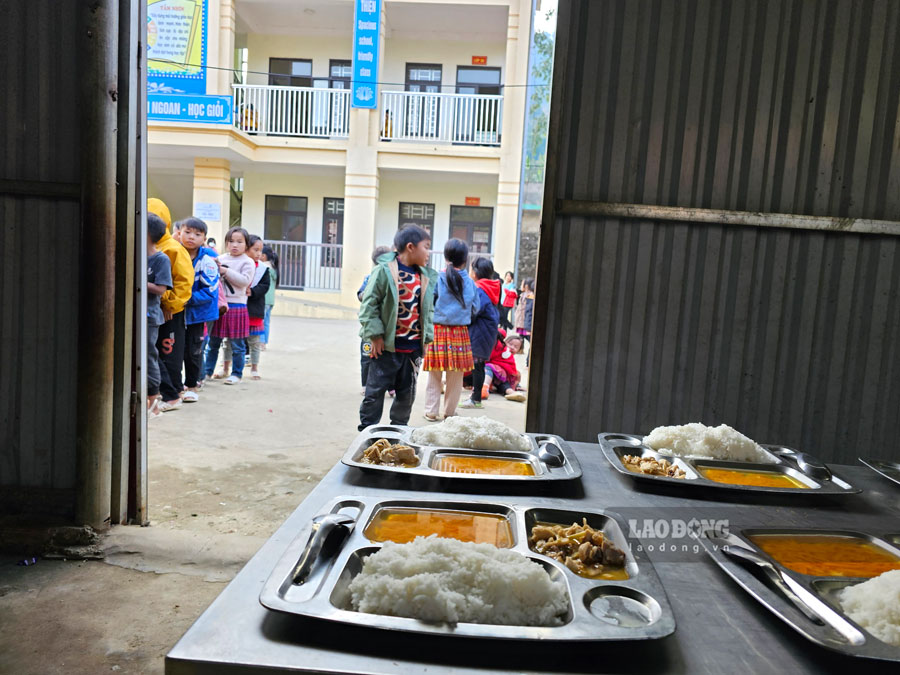
In order to facilitate students in particularly disadvantaged areas to go to school, the Government has issued Decree No. 66, replacing Decree 116, with many additional support policies and increasing the level to be more comprehensive.
According to Decree 66, students in villages and hamlets with special difficulties are supported for 9 months/school year with VND 936,000 for meals/month, 15 kg of rice/month; at the same time, they are supported with electricity, water, medicine cabinets, health check-ups, sports activities, etc.
Mr. Lo Van Lien - Principal shared: Those seemingly dry numbers are clearly present in every meal, sleep, and every class of students in the highlands. From the 2025-2026 school year, when Decree 66 is issued, children will be allowed to eat at school, families will no longer have to worry about the situation of rice being grown for their children to go to school.
Limit the situation of students dropping out of school halfway
Similarly, Pa Lau Primary and Secondary Boarding School for Ethnic Minorities currently has 408 students, of which 291 students are entitled to boarding benefits according to Decree 66. Thanks to adequate care and education, the school's admission rate is always maintained at over 98% - a meaningful figure for highland education.
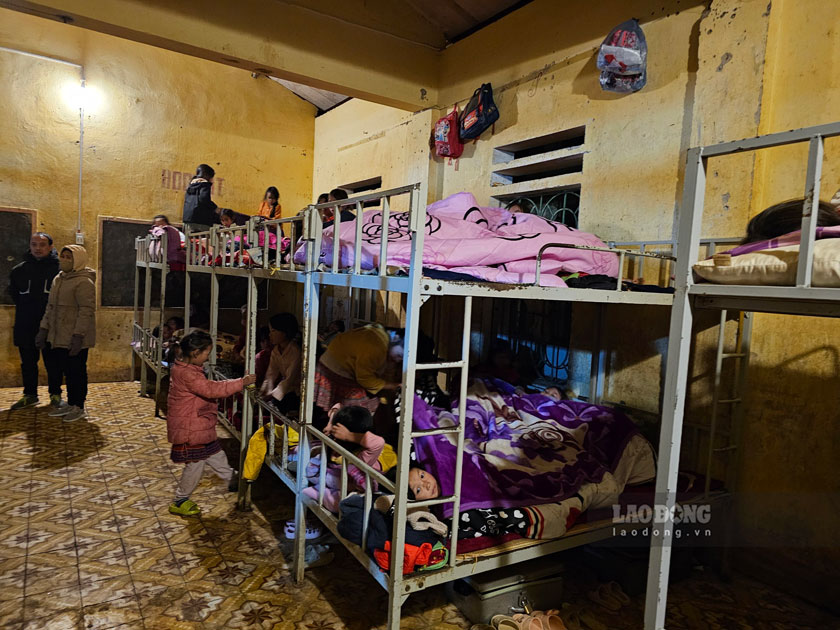
Mr. Ngo Van Huynh - Principal of the school said: "Previously, teachers not only taught letters but also worried about students who were hungry, cold, and had seasonal school days off. Now, when living conditions are guaranteed, teachers can focus more on their expertise and innovate teaching methods".
In the mountainous commune of Tram Tau, there are currently 8 school units with a total of 3,560 students, of which 2,467 students are entitled to boarding benefits according to Decree 66. Thanks to timely support policies, students' living conditions have improved, and seasonal school breaks have been gradually overcome.
Mr. Giang A Dau - Vice Chairman of Tram Tau Commune People's Committee said: "For many families in mountainous areas, Decree 66 is not only a material support but also a great source of spiritual encouragement. When their children are cared for and supported by the State, people have more confidence in the policies of the Party and the State, feel secure so that they can go to school to learn to read and write, learn a trade, and open up opportunities to escape poverty sustainably in the future".
At Y Ty Primary Boarding School for Ethnic Minorities, the full and timely implementation of policies according to Decree 66 is implemented promptly, not leaving students in need. Along with that, the school regularly organizes inspections and supervisions at schools, promptly removing difficulties in the implementation process.
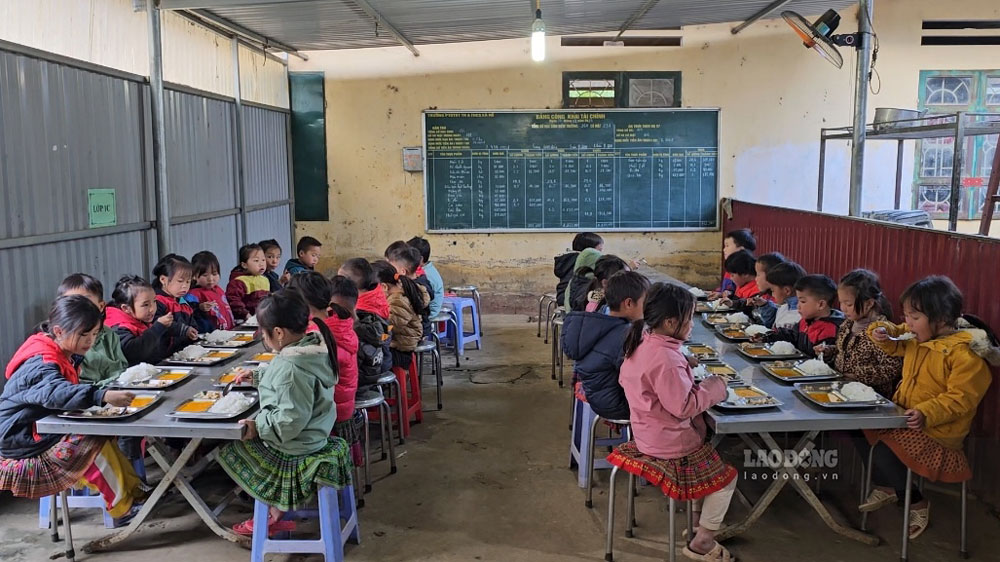
Teacher Tran Anh Khoa - Principal informed: For small schools, due to the characteristics of the center and the lack of facilities, the school has proactively assigned teachers in charge of monitoring the implementation of policies, ensuring that students at the school also enjoy full benefits like students at the main school.
As teachers working in mountainous schools, we are very happy and excited that Decree 66 was issued to replace the previous Decree 116 with many changes towards raising the level of support for students.
Specifically, for medicine money for students, Decree 66 stipulates 180,000 VND/student/school year, an increase of 130,000 VND compared to Decree 116. Similarly, the amount of support for sports equipment increased from 100,000 VND (Decree 116) to 180,000 VND/student/school year...
Thereby, students who are children of ethnic minorities and poor households can go to school with peace of mind, limit the situation of dropping out of school in between, and at the same time create motivation for teachers and students to strive together, contributing to the development of education in mountainous areas, said Mr. Khoa.