
In the context of Vietnam preparing to implement a series of large-scale transport infrastructure projects, especially the North-South high-speed railway line, the human resource problem is no longer a separate issue of the railway industry but has become a strategic and urgent task of the nation. To realize the goal of modernizing the transportation system, human resource training needs to go one step ahead, towards mastering technology and ensuring sustainable development.
Modern railway projects are creating a very large demand for human resources. According to calculations by Vietnam Railways Corporation (VNR), the Lao Cai - Hanoi - Hai Phong railway line alone needs more than 2,400 personnel belonging to 13 groups of positions for management and operation.
On a national scale, the North-South high-speed railway project, which is more than 1,500km long, is forecast to create more than 200,000 jobs in the fields of project management, design consulting, operation, maintenance and equipment manufacturing.
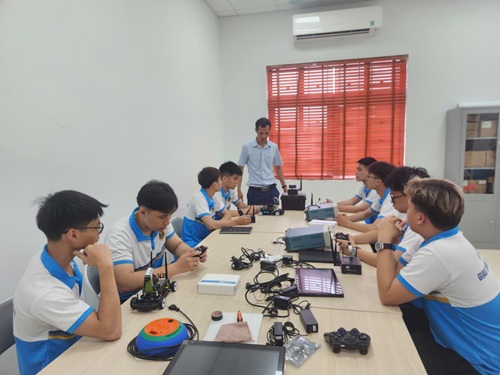
The large demand for human resources also encourages businesses to strongly participate in the railway labor market. SGC Investment and Construction Joint Stock Company announced a plan to recruit about 25,000 workers, including 15,000 high-quality personnel serving the construction of modern infrastructure projects. This shows that railway human resources are becoming an important part of the labor market in the fields of mechanics, construction and technology.
Clearly recognizing the development requirements of the industry, Conclusion No. 49 of the Politburo defines the direction of building a synchronous, modern, sustainable railway system and gradually mastering core technology.
To concretize this policy, Deputy Prime Minister Le Thanh Long signed Decision No. 2230/QD-TTg approving the Project on training and developing human resources for Vietnam Railways to 2035, with orientations to 2045.
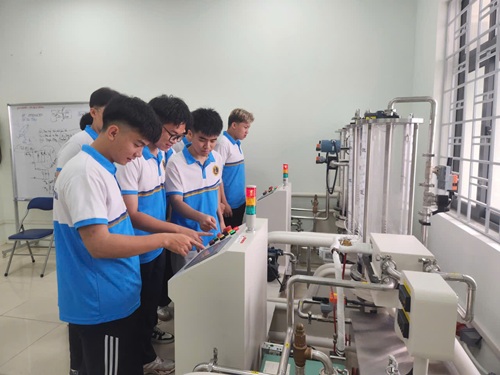
According to the project, in the period 2025 - 2030, at least 35,000 high-quality human resources will be trained, including about 1,000 people with postgraduate degrees, 14,000 people with university degrees and tens of thousands of workers with college and intermediate degrees in specialized fields. About 88 million USD from the project capital is also allocated for training and building in-depth research laboratories.
Talking to a reporter from Lao Dong Newspaper, Assoc. Prof. Dr. Ngo Van Minh, Hanoi University of Transport, said that from 2025, the school has completed 7 integrated technology training programs of countries with developed railway industries such as Japan, China and some European countries. At the same time, the school organizes short-term training courses to improve the qualifications of engineers participating in key projects.
According to Assoc. Prof. Dr. Ngo Van Minh, the participation of businesses plays an important role in enhancing the practicality of the training program. Some large enterprises such as Hoa Phat have cooperated with the school to build a system of specialized laboratories right at the factory.
To attract high-quality human resources, many businesses offer relatively attractive income levels. Engineers can receive salaries from 30-55 million VND/month, while technical workers enjoy from 22-29 million VND/month along with full insurance regimes. This is considered an important motivation to change the career choice trend of young people.
The key factor still lies in people. If Vietnam cannot master the technology, it will have to depend on foreign experts for a long time," Assoc. Prof. Dr. Ngo Van Minh emphasized.
Many students also expressed their determination to pursue this specific field. Student Trinh Huy Quyen, class 5 of Transport Engineering, Hanoi University of Transport, said that high-speed railways require absolute accuracy and safety, so students must study seriously, in-depth and accumulate practical experience right from when they are still in school.
According to student Nguyen Duc Manh, this is not only a stable career but also an opportunity for the young generation to contribute to the development of the country and solve traffic challenges in the future.
Developing high-speed railway human resources is considered a test for Vietnam's science and technology capacity. With the involvement of the State, training institutions and businesses, the expectation of a generation of Vietnamese experts capable of mastering modern railway technology is gradually becoming a reality.


