
Piloting synchronously and flexibly but not causing overload
In April 2026, the Khanh Hoa Department of Education and Training will pilot AI education content for general education students in the province in the 2025–2026 school year.
Based on the content framework issued by the Ministry of Education and Training, educational institutions proactively choose or combine many forms of organization such as integrating into subjects, organizing topics, learning through projects, and clubs.
The pilot program is required to be implemented uniformly throughout the province, while promoting proactiveness, flexibility, and suitability to the conditions of each locality and educational institution. Notably, the implementation does not change or overload the current general education program.
AI education content must be designed to suit the age psychology, needs and ability to access technology of students at each level of education; effectively exploit facilities and equipment, avoid spreading investment and wastefulness.
At the same time, localities need to have solutions so that all students, especially in areas with difficult socio-economic conditions, have access opportunities.
AI in schools: Supporting tool, not replacing thinking
In the context of digital transformation, AI has become a part of teaching and learning innovation. However, the application of this technology needs to be accompanied by a clear orientation to both support learning and develop thinking for students.
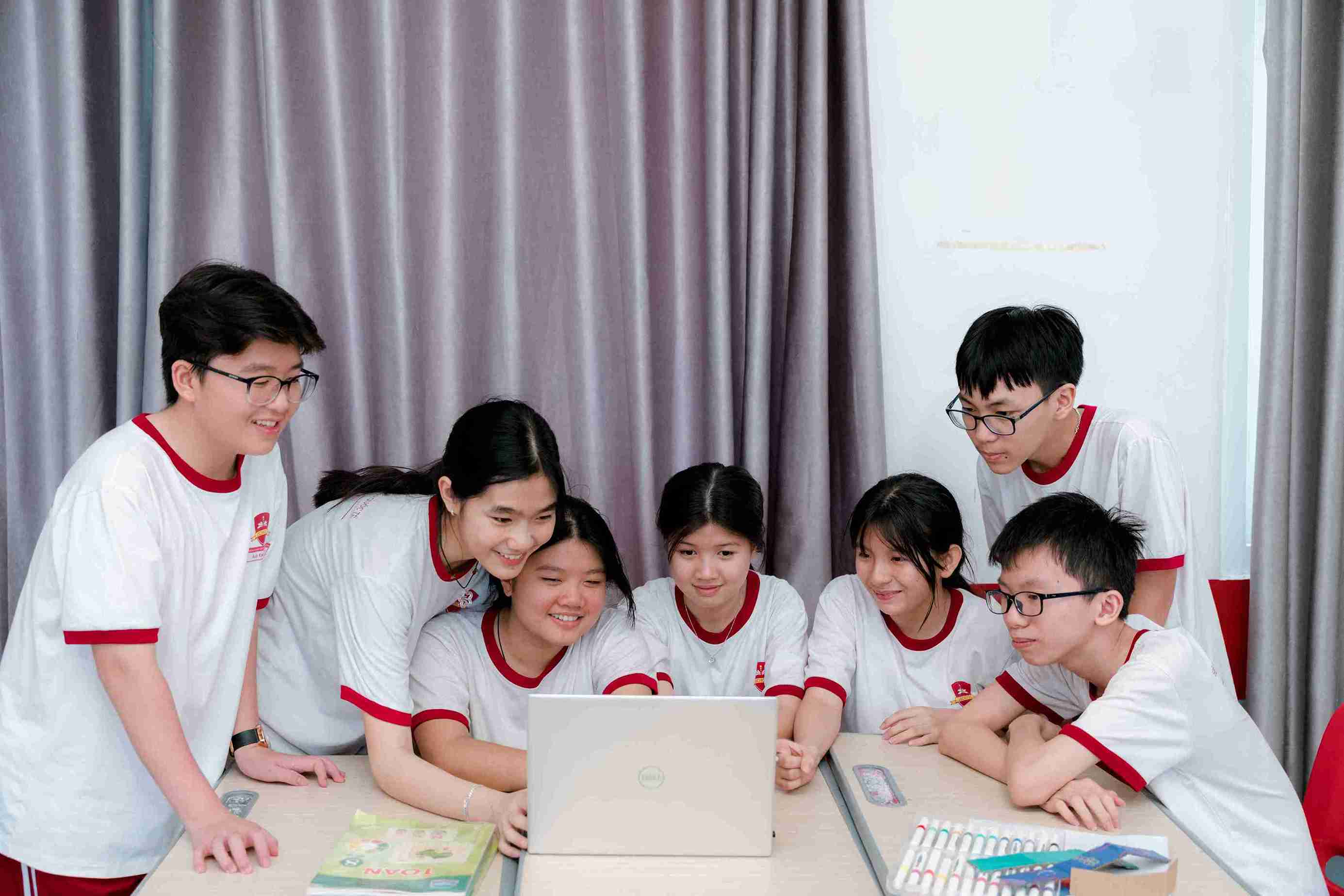
At iSchool Ninh Thuan High School, AI is deployed in a methodical direction, associated with the goal of comprehensively developing learners' abilities. The application is built on the iTL Plus educational method platform - a model that focuses on personalizing learning and enhancing experience.
From the 2022–2023 school year, the school has trained teachers, developed programs and integrated AI into lecture design.
Technology is used as a "smart assistant", supporting teachers in building content, evaluating students, and increasing invisibility and interaction in the classroom.
From reality, students have more positive experiences. Dao Minh Quan (8A2 class) said that AI helps to have more suggestions when starting a Literature essay, but still has to understand and complete the content in his own way.
A parent shared that initially he was worried that the use of AI would make students dependent, but after a period of application, students have learned how to learn and select information instead of using available answers.
At iSchool Ninh Thuan, AI is not deployed as an independent tool but associated with the goal of building a humane educational environment.
Ms. Nguyen Thi Hong Ngoc's "Digital Happiness Profile" project is an example, when technology is used to record students' journey of maturity not only through academic results but also in emotions and skills.
According to Mr. Pham Minh Nhut - Vice Principal of the school, students are oriented to use AI as an information support tool, through asking questions, comparing multiple sources and self-completing papers, instead of relying on available results.
From practical implementation, it can be seen that in the digital age, technology can change learning methods, but it is the educational orientation that is the decisive factor in the development of learners.


