
In the afternoon of April 22, the National Assembly discussed in the hall about the draft Resolution of the National Assembly on piloting the institution of public lawyers.
Participating in the discussion, delegate Pham Van Hoa (Dong Thap delegation) said that regarding the institution of public lawyers, although the drafting committee has explained, this is an unprecedented issue and has not been fully assessed for impact.
According to the delegate, there are currently no specific figures on the number of cases that must participate in legal proceedings in each locality, as well as the frequency of participation of public lawyers. Meanwhile, the draft proposes a policy regime equivalent to full-time officials of the National Assembly according to Resolution 197, which is considered unreasonable.
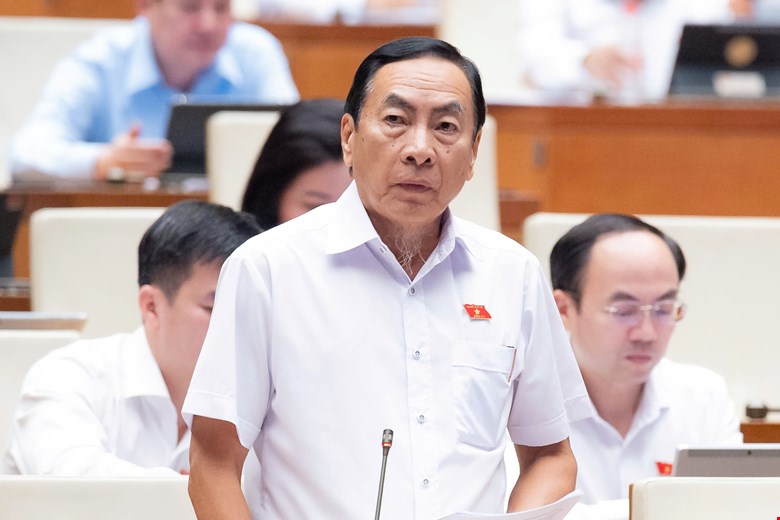
The delegate pointed out the reality that in a month, public lawyers may not participate in any case but still receive 100% salary according to the regime. At the same time, according to the provisions of Clause 10, Article 2, when participating in resolving legal cases, public lawyers are also entitled to allowances per working session, at a rate of 0.5 times the base salary per session.
Thus, in addition to fixed salaries, additional allowances also arise according to cases. I think it is necessary to study carefully to ensure appropriateness" - delegate Pham Van Hoa said.
He agreed with case-by-case training, and may apply appropriate spending levels depending on the nature of each case. However, according to the delegate, paying a fixed monthly salary equivalent to a full-time official, while the workload may be unstable, is not reasonable.
It is proposed to continue to study and adjust policies to be appropriate" - the delegate stated his opinion.
Delegate Nguyen Thi Viet Nga - Deputy Head of the Hai Phong City National Assembly Delegation supported the view that there must be strong enough policies to attract and retain capable people, but was concerned about the regulations in Clause 2, Article 10 of the draft. Specifically, the delegate said that the regulation on case-based allowances calculated per working session equal to 0.5 times the base salary is still mechanical.
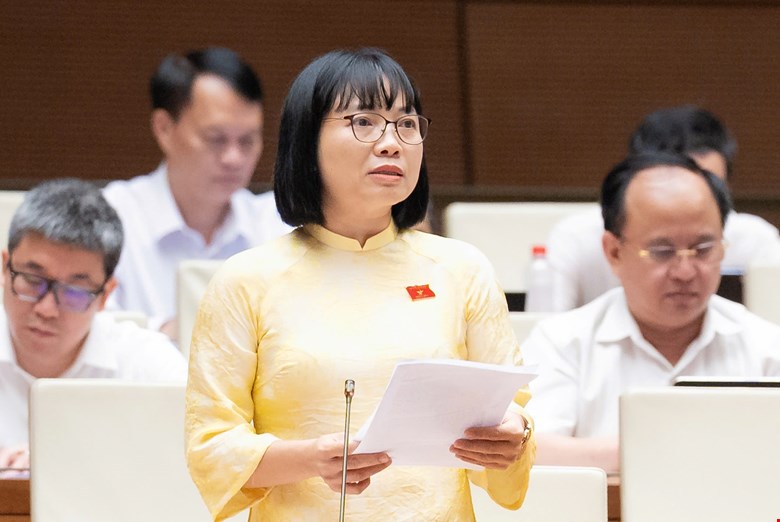
A legal case is not the same in terms of complexity, pressure, responsibility and value of protecting state interests. If only calculated by working session, it is very easy to be averaged, making it difficult to accurately reflect the nature of each case" - delegate Viet Nga analyzed.
From there, she proposed assigning the Government to stipulate a framework for fostering by group of cases, with clear confirmation criteria, a payment ceiling and a control mechanism to both ensure attraction and ensure tightness in budget expenditure sources.
In addition to the preferential policies, Clause 3, Article 10 of the draft stipulates that income from the work of public lawyers is exempt from personal income tax and other financial obligations to the state.
Delegate Nguyen Thi Viet Nga said that the phrase "other financial obligations" is too broad, easily leading to understandings that exceed the necessary policy scope.
Believing that with a pilot resolution, especially a resolution that has an impact on financial policy, it is even more necessary to have specific and transparent regulations that can be quantified, Ms. Nga suggested: "Only clearly stipulate which items are exempted, and should not use such a large overarching phrase.


