
On September 15, the Ho Chi Minh City People's Committee issued regulations on fees, collection levels and revenue-expenditure management mechanisms for services serving and supporting educational activities at public educational institutions, applicable from the 2026-2027 school year.
According to regulations, fees for services serving and supporting educational activities at public educational institutions are implemented according to the list and fee levels specified in the appendix attached to the decision.
The collection level is divided into 2 groups, including educational institutions in wards and educational institutions in communes and special zones.
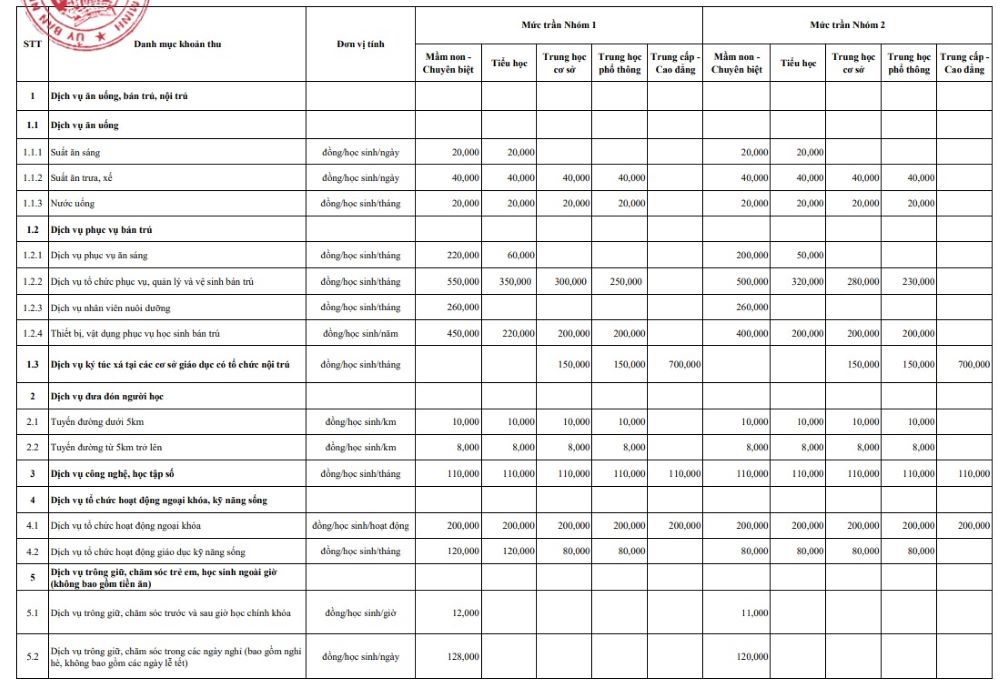
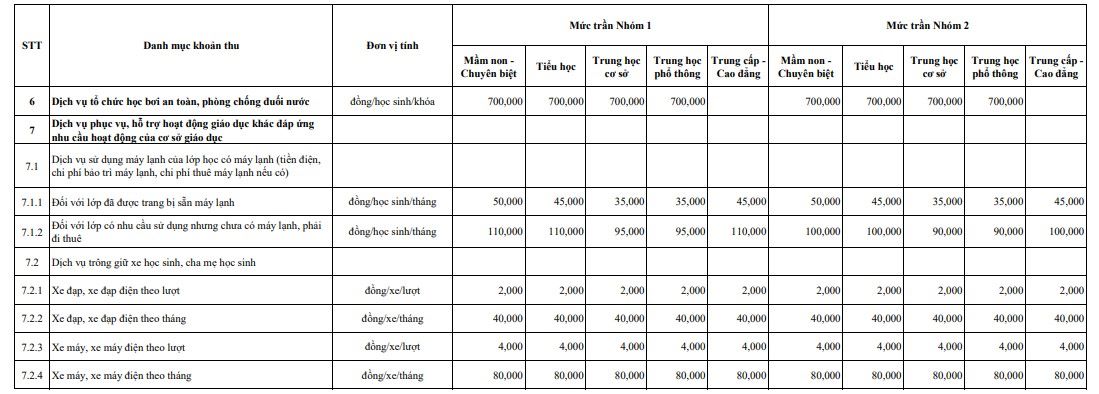
For educational institutions that are public non-business units that self-guarantee regular expenditures or self-guarantee regular expenditures and investment expenditures, the maximum collection level is equal to 2 times the collection level applied to public non-business units guaranteed by the State for regular expenditures or partially self-guaranteed for regular expenditures.
One of the principles stipulated is that the fees must be based on the voluntary and consensus of parents, guardians and learners; implemented according to the principle of revenue and expenditure compensation and not exceeding the prescribed ceiling.
Educational institutions must develop detailed estimates for each revenue content, ensuring the correctness and sufficientness of reasonable costs and in accordance with facilities conditions and the needs of learners. In case a content has been supported by the state budget or allocated funds from other sources, the revenue level must be reduced accordingly.
The regulation also requires that the collection must not be extended beyond the school year according to the plan of the competent authority. The collections must be used for the right purpose, publicly, transparently and fully implement financial management regulations.
Notably, at the end of the school year, if the service fee is greater than the expense, the educational institution must reimburse the difference to the learner. In case the fee is not enough to cover expenses, the school must use the legal funds of the unit to compensate, not to collect more from the learner and the state budget does not provide compensation.
Before implementing the collections, public educational institutions are responsible for developing estimates, determining specific collection levels and organizing to collect the consensus of parents according to regulations.
Ward, commune, and special zone People's Committees are responsible for deploying, guiding, inspecting and supervising the implementation at educational institutions under their management. The Department of Education and Training coordinates to guide, inspect, and supervise the implementation in Ho Chi Minh City.
The decision takes effect from September 2026 and is applied from the 2026-2027 school year.


