
According to Vietnam Air Traffic Management Corporation (VATM), the incident occurred for more than 2 hours on the night of August 11. Upon receiving information about the UAV, take-off and landing operations at Tan Son Nhat had to be temporarily suspended to ensure safety. This caused many flights preparing to arrive at Tan Son Nhat to be unable to continue their planned journey. Some planes had to fly around waiting in the air, while others were routed to a backup airport.
According to data from the Air Traffic Management Center, 73 flights were directly affected during the airport's temporary suspension of aircraft reception.
More than 50 flights have to fly waiting
During the restricted operating time at Tan Son Nhat, some aircraft on their way to the airport are organized to fly in waiting at a suitable area. In necessary cases, aircraft are diverted to alternate airports. According to statistics, more than 50 flights have to fly in waiting, of which 27 flights have diverted or landed at alternate airports.
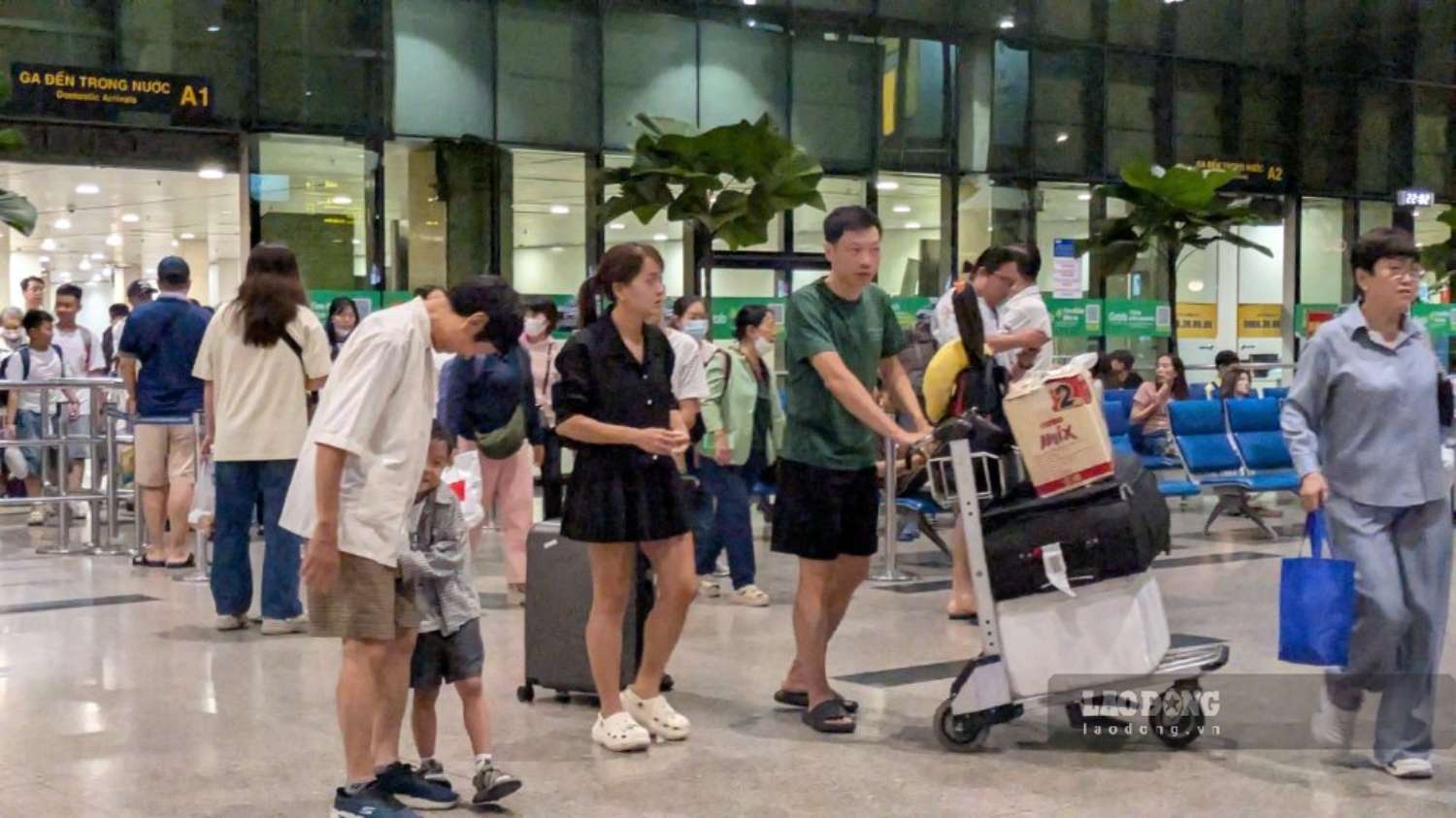
The aircraft diversion is carried out to ensure safety when operating conditions at Tan Son Nhat do not meet requirements. After the situation is controlled, flights continue to be operated again according to the actual receiving capacity of the airport.
VATM said that in the first UAV detection, flight regulation was deployed from about 6:25 pm. After Tan Son Nhat started receiving the aircraft again, at about 7:34 pm, the UAV continued to be detected, causing regulation measures to be deployed again.
The scope of regulation was then expanded to some airports with flights heading towards Tan Son Nhat to control traffic flow, avoiding further pressure on the airport during the limited operating capacity period.
For international flights, the air traffic flow coordination agency also exchanges with regional coordinating units to inform about the situation and coordinate to implement the allocated departure time.
Prioritize safety, limit chain reaction
VATM said that in the situation of UAVs appearing near the airport area, information from the flight crew is received and evaluated by air traffic controllers to organize appropriate operating plans. Relevant units also coordinate to exchange, verify and handle situations. Lifting and landing operations are only resumed when safety conditions are ensured.
According to VATM, simultaneous handling at the airport and remote coordination help control the number of aircraft arriving and departing during Tan Son Nhat's limited operating capacity, thereby reducing the risk of chain reaction to other airports and routes.
After the incident, VATM said it will continue to review and complete response plans for situations related to UAVs, and at the same time strengthen training for air traffic controllers.
The unit also identified early detection and warning of UAVs as one of the solutions that need to be strengthened to proactively respond to new risks to aviation operations.


