
From free tickets to passenger data
After more than a month of implementing 100% ticket price support, the number of bus passengers in Ho Chi Minh City increased sharply. From July 1 to July 7, 134 routes under the program served more than 10.5 million passengers, an increase of 42% compared to the same period in 2025. On average, each day reached 278,037 passengers, an increase of about 82,800 passengers.
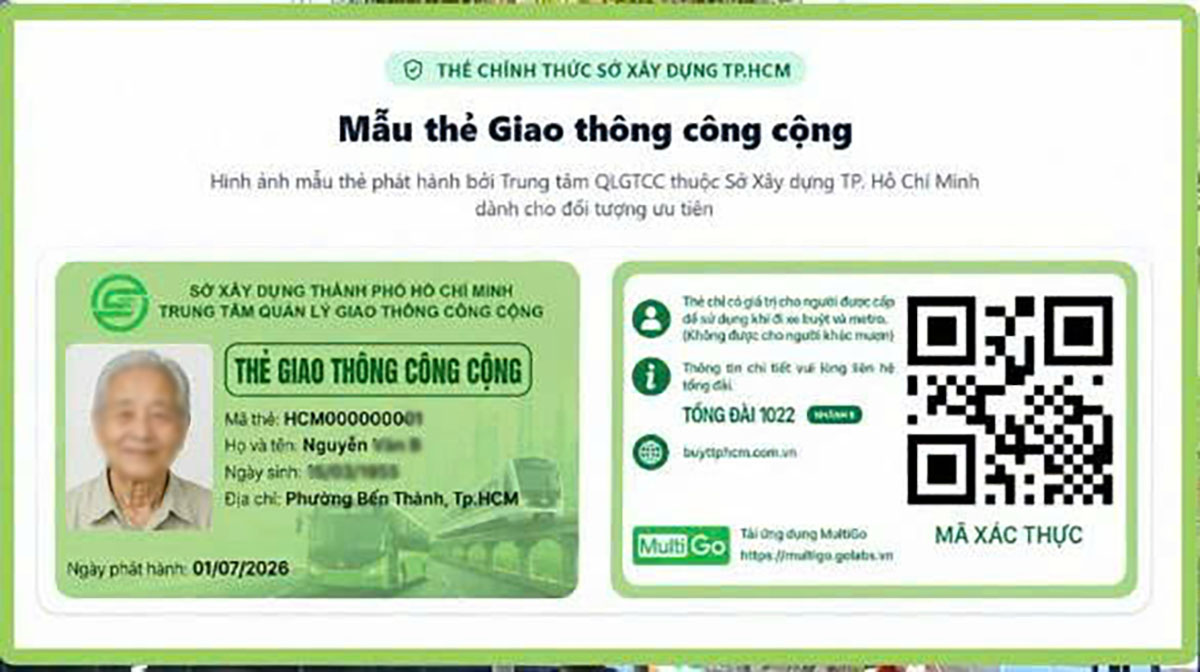
The increase in passenger volume also creates additional data on travel demand. Along with that, Ho Chi Minh City is implementing Public Transport Cards, gradually digitizing passenger transport activities.
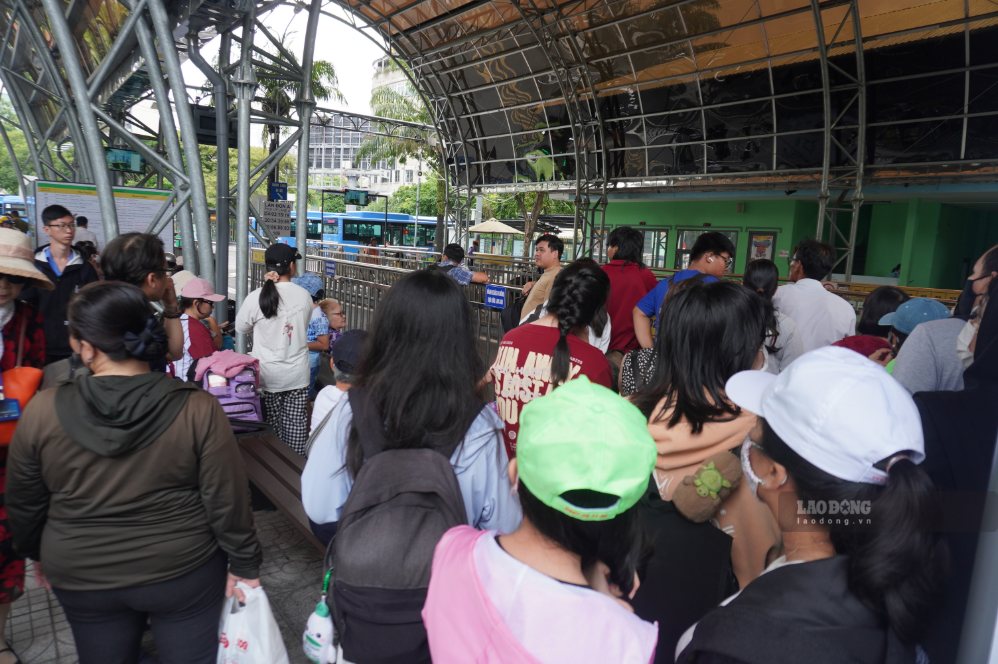
Talking to Lao Dong Newspaper, Mr. Le Hoan - Deputy Director of Ho Chi Minh City Public Transport Management Center said that as of August 7, the Center received 6,839 card registration dossiers, including 4,082 online dossiers and 2,757 direct dossiers.
Cards are not required to take free buses. People can still use CCCD, VNeID or other valid authentication forms.
According to Mr. Hoan, the value of the card lies in its ability to identify and record usage data, serving management, inspection and subsidy payment.
When the electronic ticket system and automatic ticket collection are completed, data will help identify routes and time slots with high demand, thereby adjusting frequency, number of trips and vehicle capacity more appropriately.
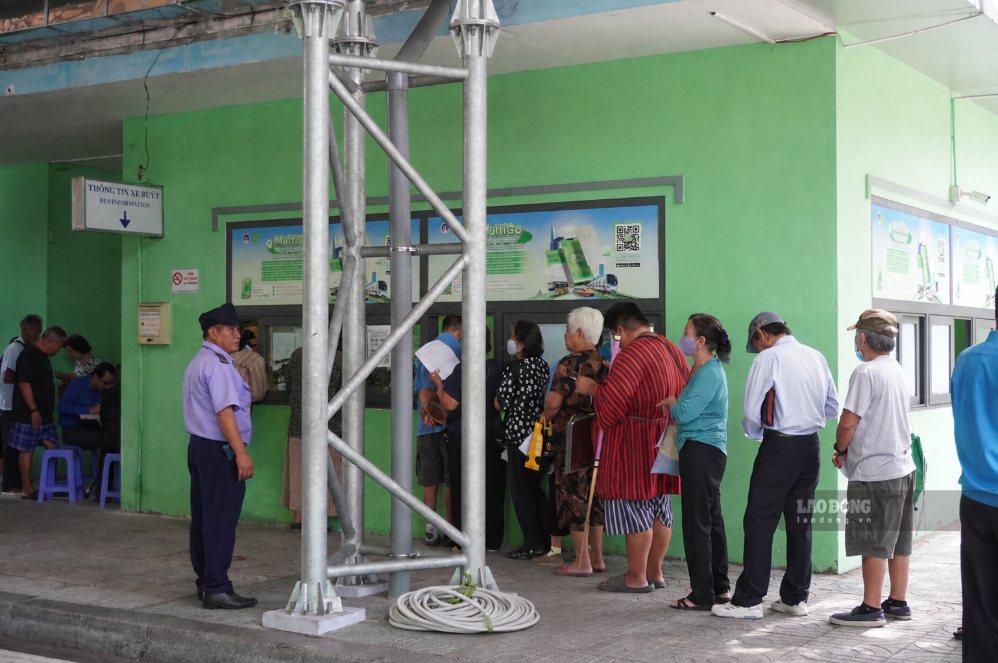
At Saigon Bus Station, Mr. Tran Van Minh (62 years old, Hanh Thong ward), who regularly takes the bus to the hospital and visits relatives, still registers for a card even though he can use his ID card.
I know that without a card, I can still take a free bus with my ID card, but I still register because I think that after this, just a swipe and I can both take the bus and the metro, which is much more convenient. Older people like us, the fewer papers we have to bring, the better" - Mr. Minh said.
A card, many ways to travel
According to the Ho Chi Minh City Public Transport Management Center, free tickets are only a solution to attract people to experience buses. To maintain passengers, the city continues to improve the network, waiting time, service quality and connection between modes of transport.
Ho Chi Minh City currently has about 6,241 bus stops, 1,030 waiting houses and 37 stations and parking lots. The Center is reviewing routes, frequency, bus schedules and stop infrastructure.
For Metro Line 1, infrastructure within a radius of about 1 km around 7 stations including Ben Thanh, Van Thanh Park, Thao Dien, An Phu, Rach Chiec, Thu Duc and Vietnam National University will be reviewed to add waiting rooms, roofs, renovate sidewalks and walkways.
The goal is to form a continuous journey: "walking - bus - metro - destination".
Ho Chi Minh City also continues to improve MultiGo, electronic tickets, cashless payments and research information and ticket intercommunication between types of transport.
When the systems are connected, public transport cards can become a unified authentication method, helping passengers switch from buses to the metro more conveniently, reducing the number of authentication steps and limiting the need to use many types of tickets and payment methods.
For people, this process can start from a simple operation: "one touch" for a journey. For the city, it is a transition to a public transport system managed and operated based on data.
The long-term goal is for people to choose buses, metro and public transport not only because they are exempted or supported in fares, but because of convenience, stability and safety" - Mr. Hoan emphasized.
From the free policy, Ho Chi Minh City has the opportunity to attract people to public transport. The next step is to turn convenience into a reason for them to continue choosing this method on their daily journeys.


