
Clear determination, flexible approach not only punishment
Re-establishing sidewalk order, eliminating "makeshift markets", spontaneous business spots has long been considered one of the difficult problems of large cities. The reality of implementation in Hanoi capital in recent times shows that when there is high political determination, methodical, synchronous approach and putting people at the center, urban order can be completely established sustainably.
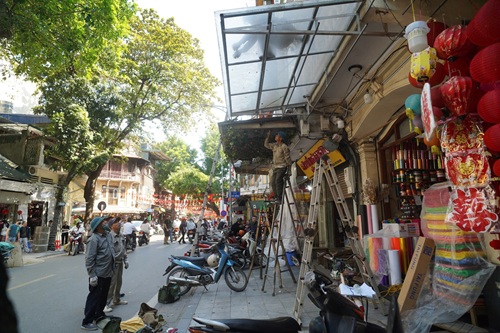
Identifying the goal of building a "bright, green, clean, beautiful, safe, and friendly" Capital, Hanoi City has simultaneously implemented solutions to definitively handle the situation of sidewalk and road encroachment. Instead of following short-term movements and campaigns, the city chooses a systematic approach, assigning specific responsibilities to each level and each force.
According to Mr. Nguyen Hoang Ha - Vice Chairman of Dong Da Ward People's Committee, implementing Plan 373/KH-UBND of Hanoi City People's Committee, Steering Committee 197 of the ward determined that eliminating sidewalk encroachment is a key and consistent task, with the motto "do it to the end", not to let it happen again.
The approach is concretized by the "6 clear" principle: clear people, clear tasks, clear responsibilities, clear authority, clear time and clear products. This is considered the "backbone" to help the implementation not fall into formality, avoid responsibility or breakdown in implementation organization.
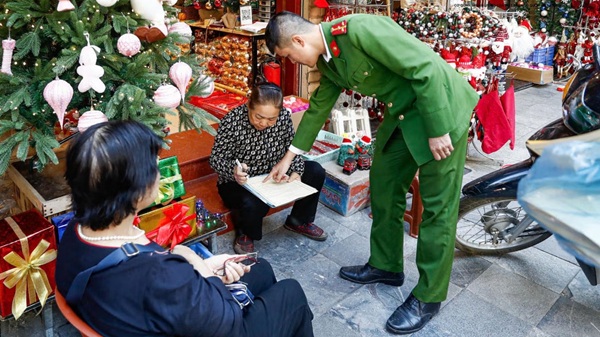
A noteworthy point in Hanoi City's approach is not to absolutize coercive measures. In parallel with handling violations, local authorities proactively calculate solutions for people's livelihoods, which is the core factor determining the sustainability of sidewalk order.
In Dong Da, instead of just clearing, the ward assigned functional units to coordinate with the Market Management Board to review empty kiosks and arrange business points for affected households. This approach helps gradually shift the habit of trading clinging to sidewalks to a stable and civilized business environment, while increasing the ability to control the origin of goods and ensure safety for consumers.
Along with that, propaganda work is deployed synchronously through mobile loudspeakers, digital platforms, social networks; mobilizing people to change their buying and selling habits at spontaneous points. Business households are guided to self-dismantle canopies and platforms, sign commitments not to re-encroach, not to litter indiscriminately.
Police force acts as a "backbone" to maintain results
In complex areas, the role of grassroots police forces is clearly promoted. Lieutenant Colonel Nguyen Doan To - Deputy Head of Hoan Kiem Ward Police said that the unit implements plan 332 of Hanoi City Police, focusing on handling two major "bottleneck points": traffic congestion and sidewalk order violations.
In addition to direct patrols, the ward police apply AI cameras, receive feedback from people to detect and handle violations. For special cases, especially households making a living for many years on sidewalks, functional forces persistently propagate and mobilize to convert business models. However, for cases of intentional violations, the viewpoint is to handle them strictly, without forbidden zones.
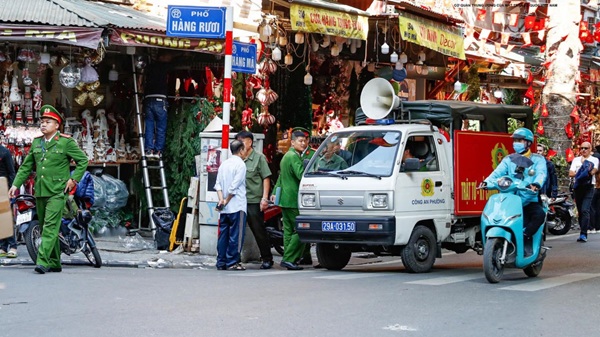
Reality shows that from "hot spots" such as the Old Quarter, urban order has had clear changes. Although there is still a risk of re-encroachment when functional forces are absent, maintaining closed patrols, combined with monitoring technology, has created sufficient deterrence.
In Dinh Cong ward, Lieutenant Colonel Nguyen Xuan Tien - Deputy Head of the Ward Police said that in addition to sidewalk encroachment, the area also develops a situation of stopping and parking vehicles to transport goods, causing frustration. The Ward Police coordinated with the Steering Committee 197 to launch a simultaneous and resolute crackdown, with the view of "no forbidden zones".
As for O Cho Dua ward, Mr. Nguyen Dinh Phuong - Vice Chairman of the Ward People's Committee said that the handling of sidewalk order is associated with the environmental sanitation movement, spreading to each residential group and each residential area. "Propaganda is key, but for cases of intentional violations, functional forces will handle them strictly," Mr. Phuong emphasized.
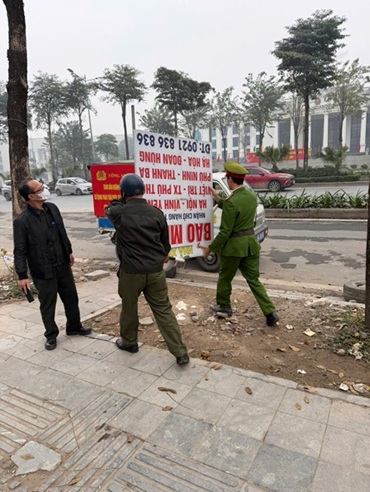
From the reality in Hanoi City, three major lessons can be drawn. First, there must be political determination throughout from the city to the grassroots level, avoiding the situation of "hot up, cold down". Second, handling violations must go hand in hand with solving livelihoods, otherwise it will be difficult to maintain long-term results. Third, to be sustainable, it is necessary to maintain regular inspection, apply technology and promote the supervisory role of the people.
With a methodical roadmap and the involvement of the entire political system, Hanoi City sets a goal to basically restore a clear and civilized space to the streets by the end of 2026. This is not only the result of urban management, but also a measure of operating capacity and social consensus in building a livable Capital.


