
3 scenarios to respond to extreme heat waves
In recent years, the economic growth rate in our country has always been maintained at a high level compared to countries in the region and in the world, along with that, the demand for energy in general and electricity demand in particular has also increased rapidly.
Speaking at the Workshop "Energy Transition - Driving Force for Double-Number Growth Goals" organized by Lao Dong Newspaper in coordination with the Ministry of Industry and Trade, Mr. Trinh Quoc Vu - Deputy Director of the Electricity Department (Ministry of Industry and Trade) - said that to ensure energy security, the Ministry of Industry and Trade has advised the Government to submit to the National Assembly for promulgation Resolution No. 253/2025/QH15 on national energy development mechanisms and policies for the period 2026-2030 to remove institutional bottlenecks in the past period, build mechanisms and policies to promote the development of power projects, and ensure energy security in the period 2026-2030.
Specifically in 2026, Mr. Trinh Quoc Vu said that the Ministry of Industry and Trade has developed 3 scenarios. Among them, the basic scenario with the load forecast scenario is 5.5% growth compared to 2025. The operating scenario forecasts loads up to 11.7%; the contingency scenario forecasts loads up to 14.1% compared to 2025. "We expect that during the extreme heat waves from June to August this year, the national load may reach 60,000MW and the load of the North may reach 32,000MW. Therefore, the Ministry of Industry and Trade has directed the electricity system and electricity market operators to prepare scenarios for operating the electricity system in extreme conditions. At the same time, it has directed Vietnam Electricity Group, power generation units and the National Power Transmission Corporation to implement investment projects to upgrade the transmission grid to ensure response to extreme conditions and ensure smooth operation of the national transmission grid. Especially urgently build and invest in building energy storage systems (BESS) at the nodes of load to help us have more ability to operate the electrical system flexibly and provide sufficient capacity during peak hours, especially evening rush hours" - Mr. Vu said.
Stabilizing policies, reducing institutional risks
To meet this need, promoting the development of renewable energy sources is considered an inevitable trend, both contributing to ensuring energy security and fulfilling commitments to reduce emissions and green development. However, the process of renewable energy development is still facing many difficulties such as transmission infrastructure not keeping up with the pace of electricity investment, and electricity price mechanisms.
Speaking at the Conference, Dr. Nguyen Quoc Viet - Lecturer at the University of Economics (Vietnam National University, Hanoi) - said that currently management agencies are under great pressure to both ensure electricity supply and maintain reasonable electricity prices, while meeting the requirements of green transformation. However, when discussing the electricity market institution, the issue is not only about costs or how much electricity prices increase or decrease. "For businesses, especially businesses investing in renewable energy, what they are most interested in is the ability to forecast policies and the level of institutional risk" - Mr. Viet said.
Dr. Nguyen Quoc Viet said that he is very sympathetic to the pressures that the electricity industry is facing. He cited the information that EVN has just announced profits after many years of financial difficulties and said that this is a positive sign, attracting social attention. "We are all happy when EVN returns to profits. However, behind that story, there are still very large pressures related to financial balance, ensuring electricity supply and investment requirements for the electricity system in the future" - he said. One issue that needs to be recognized is the method of allocating and sharing risks in the electricity market. If risks are transferred too much to businesses, especially businesses developing renewable energy, it will affect the investment motivation and capital mobilization capacity of the private sector.
Regarding electricity price policy, Dr. Nguyen Quoc Viet said that prices are not the only tool to regulate market behavior. He cited an example of the proposal to adjust peak hours of electricity use. Changing peak hours does not change people's domestic electricity prices but can help share risks with manufacturing enterprises, while creating motivation to optimize load and promote investment in energy storage systems. "In the context that the two-component electricity price mechanism cannot be fully implemented, adjusting the way of using electricity over time is also an important policy tool to improve the operational efficiency of the electricity system," - Mr. Viet said.
Businesses face difficulties in applying for licenses
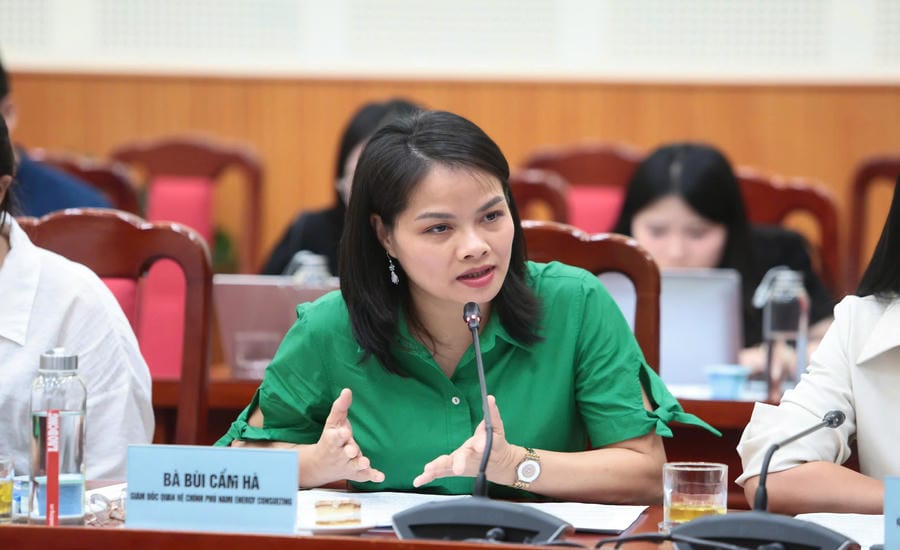
According to Ms. Bui Cam Ha - Director of Government Relations at Nami Energy Consulting, Decree 57 has created a relatively clear legal corridor for the mechanism of direct electricity purchase and sale and rooftop solar power development. However, after more than a year of implementation, the number of contracts signed in reality is still very limited.
The biggest barrier today is the issue of issuing electricity operating licenses" - Ms. Ha said.
According to her, although the regulations in the decree are quite clear, the understanding and application methods in localities are still different. In the process of applying for electricity operating licenses, many businesses are still required to supplement investment registration certificates. Meanwhile, according to the provisions of the 2025 Investment Law, domestic enterprises investing in electricity production activities are not required to apply for investment registration certificates.
Although the regulations are in place, when working in reality, businesses are still required to apply for more documents or work with many different agencies to complete dossiers. This is an administrative bottleneck, causing the project implementation process to be prolonged" - Ms. Ha said.
The understanding and application of regulations in localities are still different
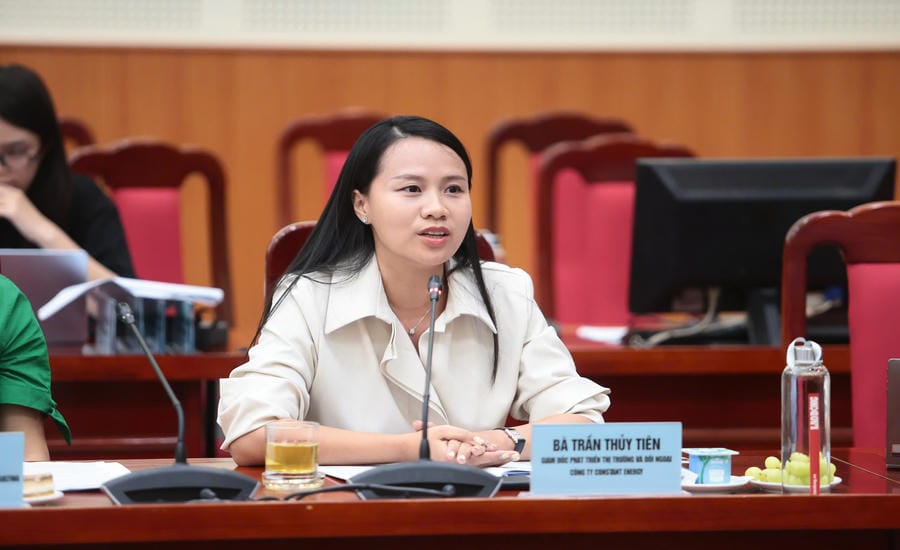
According to Ms. Tran Thuy Tien - Director of Market Development and External Relations of Constant Energy Company - in the process of implementing projects from 2019 to now, businesses have encountered many obstacles. Although the State has issued many policies and mechanisms to encourage the development of renewable energy, when implemented locally, the understanding and application of regulations in each place is still different, causing the implementation process to be longer than expected. Ms. Tran Thuy Tien gave an example of procedures related to fire prevention and fighting. In some stages, management requirements are supplemented or adjusted, causing businesses to review and adjust investment plans and project designs. Up to now, the system of legal documents has gradually been completed, management agencies also understand more about the renewable energy model, thereby helping the implementation process to be more convenient than before. Manufacturing enterprises, especially large enterprises, mainly want to focus on core production and business activities instead of directly participating in managing or operating the electricity system. Therefore, businesses hope to have simpler, more transparent and convenient mechanisms to be able to access and use clean energy sources for production" - Ms. Tien said.
Legal framework is still incomplete
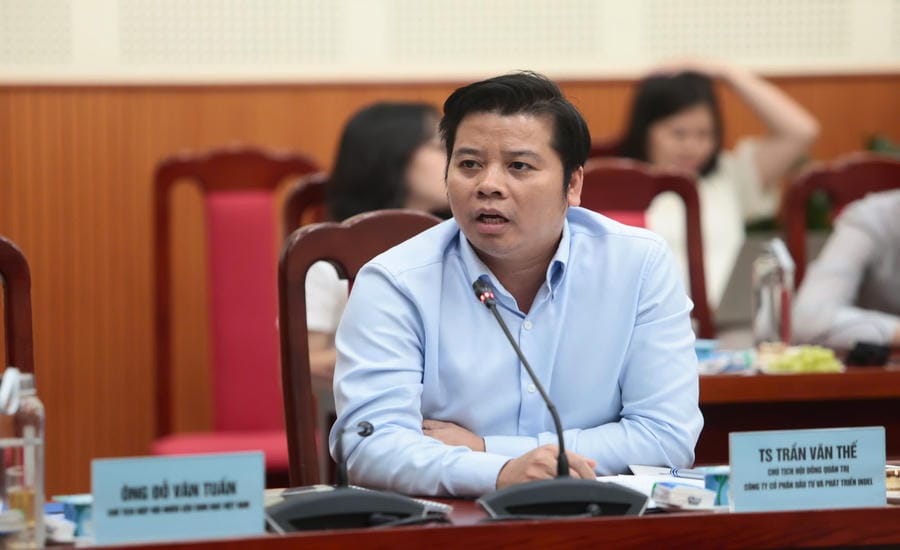
According to Dr. Tran Van The - Chairman of the Board of Directors of INDEL Investment and Development Joint Stock Company, the enterprise proposed to invest in the Van Phong energy project complex in Van Phong Special Economic Zone, Khanh Hoa province. However, specifically for the green hydrogen item, the investment proposal process still has many obstacles. First, the planning has not kept up with development practices. Researching and adjusting the planning to be able to implement green hydrogen projects early is an urgent requirement, although this process is quite complex and needs to be carefully considered. Second, the legal framework for green hydrogen, new fuels and new energy batteries is not yet complete. There is still a lack of technical standards for products before being put on the market. It is necessary to soon build mechanisms and policies for hydrogen development, including a system of technical standards for products. Third is financial barriers. Energy and green hydrogen projects require very large investment capital. In the process of working with Japanese and Korean corporations, partners have set out green criteria for businesses to access green credit sources and international green bonds.



