
Changing production thinking
Two years after participating in the Project "Sustainable development of one million hectares of specialized high-quality, low-emission rice associated with green growth in the Mekong Delta region to 2030", Ca Mau has had initial results not only in cultivated area but also in agricultural methods.
Instead of chasing productivity at all costs, demonstration models show that farmers can reduce seeds, reduce fertilizers, reduce pesticides but still maintain stable output, while increasing profits and reducing greenhouse gas emissions.
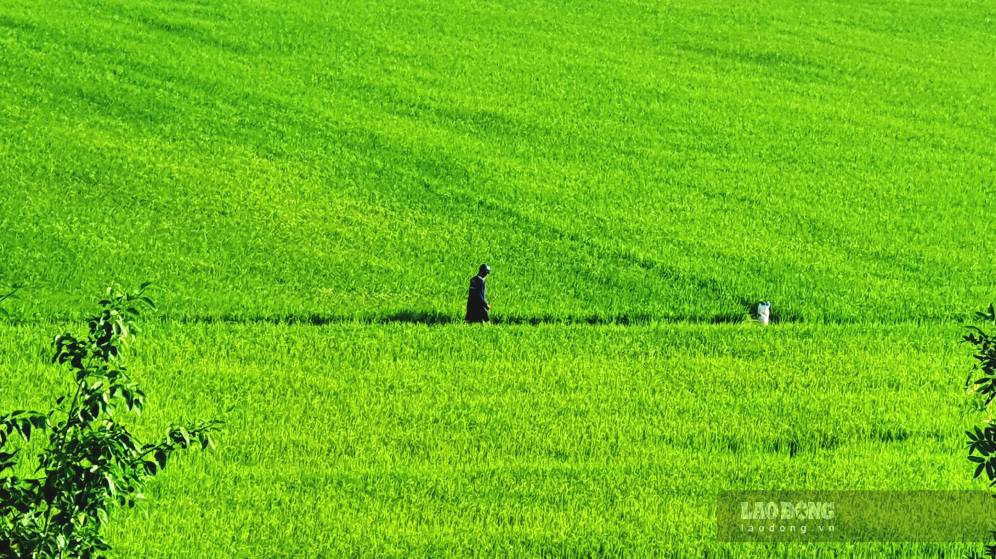
Ca Mau sets a target to build 54,680ha of high-quality, low-emission specialized rice areas by 2030, nearly 40,000ha producing from 2-3 rice crops, 14,700ha of shrimp-rice rotation areas. Currently, the province has built and operated demonstration models on 1,380ha with the participation of 720 households belonging to 7 cooperatives. The models are being implemented in Vinh Thanh, Hoa Binh, Vinh My, Da Bac, Khanh Binh with technical support from the International Rice Research Institute (IRRI), the Institute of Agricultural Environment and affiliated enterprises.
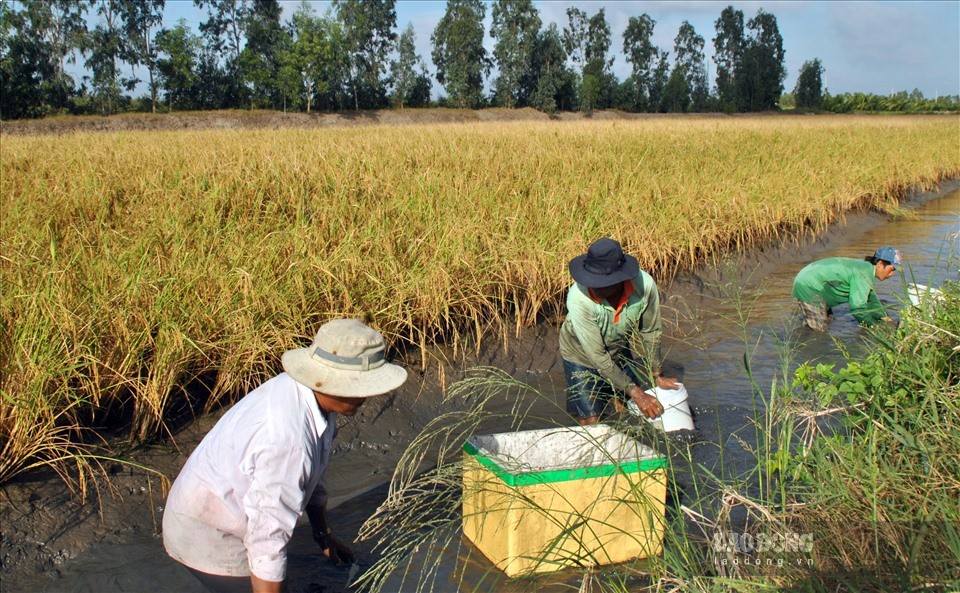
Mr. Ngo Nguyen Phong - Secretary of the Party Committee of Vinh Thanh commune - said that the good news is not the numbers on area but the change in people's thinking.
Farmers have boldly applied advanced farming processes such as'1 must, 5 reductions', using certified varieties, reducing the amount of varieties, fertilizers and pesticides. Costs are reduced but yield and quality of rice grains are still stable, and profits are clearly improved," Mr. Phong said.
According to calculations from models, farmers' profits increased by 2-4 million VND/ha compared to traditional farming methods, and total actual income was 15-20% higher.
Mr. Tran Quoc Duan, a member of Hong Phat Agricultural Service Cooperative (Vinh Thanh commune), said that thanks to the government's support in infrastructure investment and business connection, rice consumption is more favorable than before, and selling prices are stable, so people are assured to invest in production.
Many "bottlenecks" need to be removed
Ca Mau's biggest difficulty currently lies in the infrastructure serving production. In many areas, especially in the Southern Ca Mau sub-region, the system of culverts, pumping stations, closed dykes, and inter-field roads are not synchronized or have deteriorated. This causes many obstacles to water regulation, saltwater intrusion control, and mechanization in production.
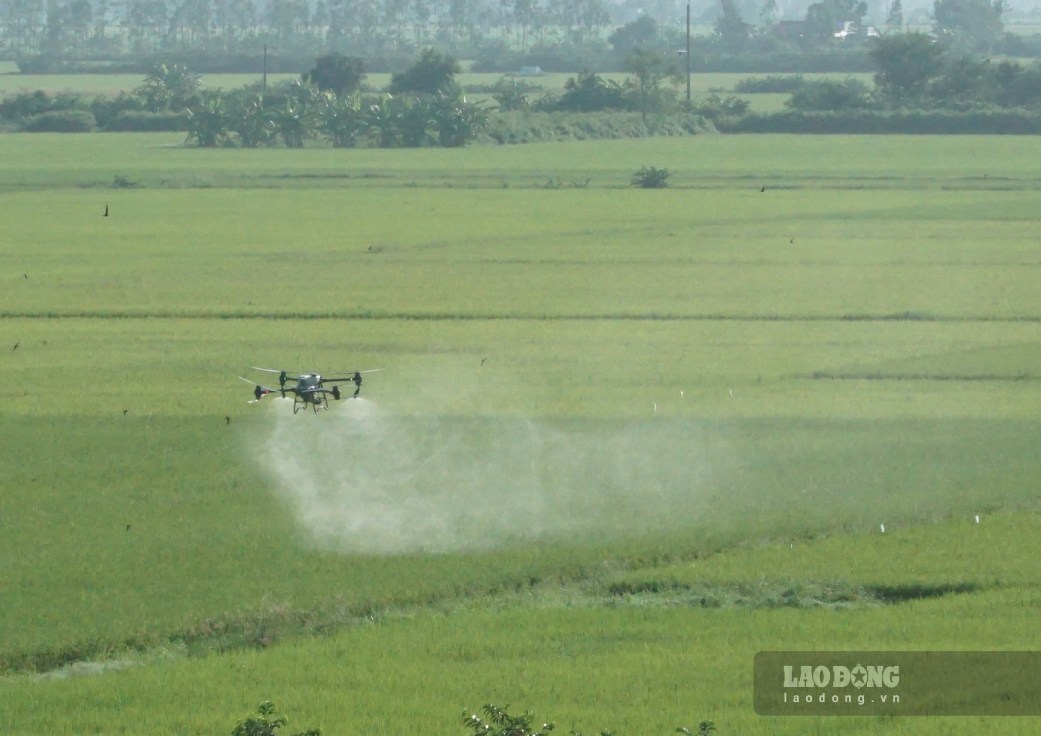
Climate change also creates more pressure as the weather becomes increasingly extreme. In the Summer-Autumn crop, storms and floods diễn biến erratically, making strict application of interspersed dry flooding irrigation procedures not always feasible.
Another barrier is that many production areas do not meet the conditions to form concentrated raw material areas. Linkages between businesses, cooperatives, and farmers in some places are still loose; the management capacity of many cooperatives does not meet the requirements for participating in large-scale value chains.
According to Vinh Cuong Agricultural Service Cooperative (Vinh My commune), the demand for investment in infrastructure, machinery, warehouses and drying systems serving low-emission production is very large, but access to preferential capital sources is still limited.
From local practice, Mr. Ngo Nguyen Phong proposed that the province continue to prioritize investment in irrigation, intra-field transportation, synchronous mechanization; and at the same time support cooperatives to build warehouses, dryers, digitize raw material areas, and strengthen the connection between businesses and farmers through binding linkage contracts.
Vice Chairman of Ca Mau Provincial People's Committee Le Van Su affirmed that in the coming period, the province will review areas that meet the conditions to focus on investment, build effective models and then replicate them, and at the same time consolidate the operating capacity of cooperatives to become production organization centers.


