
Green transition is an urgent requirement
On July 24, the People's Committee of Ca Mau province coordinated with the Mekong Institute (Can Tho University) to organize the scientific conference "Green Transition on the Digital Platform of the Mekong Delta - Ca Mau Model adapting to climate change".
The conference gathered scientists, managers, businesses and international organizations to exchange experiences and propose solutions to promote green economy, circular economy and digital transformation adapting to climate change. This is also a specific activity to concretize Resolution No. 57-NQ/TW of the Politburo on national science, technology, innovation and digital transformation development.
Speaking at the workshop, Vice Chairman of Ca Mau Provincial People's Committee Ngo Vu Thang said that green transformation on digital platforms is becoming an inevitable trend for countries, localities and businesses. This model combines digital transformation and green growth, helping to improve productivity, use resources effectively, reduce emissions and limit negative impacts on the environment.
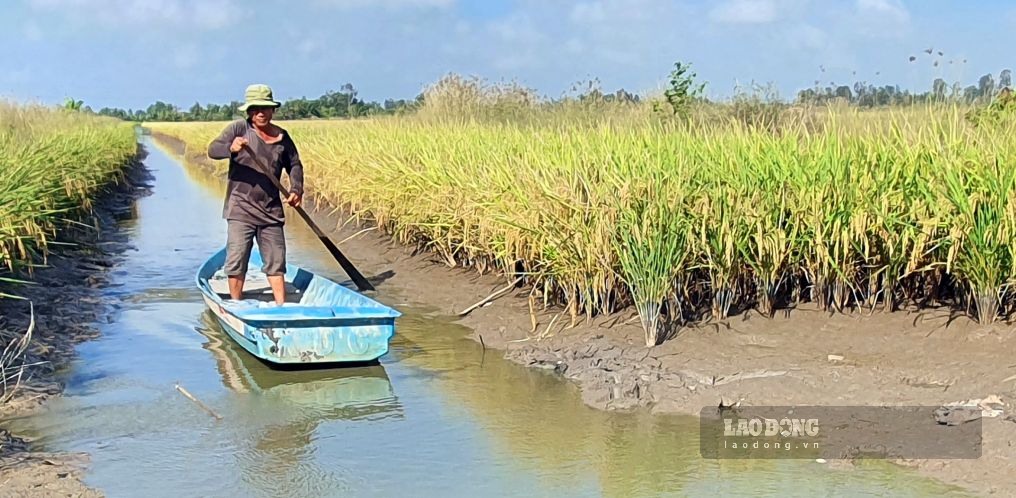
According to Mr. Ngo Vu Thang, for the Mekong Delta in general and Ca Mau in particular, green transformation is even more meaningful as the region is increasingly clearly affected by sea level rise, saltwater intrusion, coastal erosion, riverbank erosion and resource depletion.
The application of digital technology in aquaculture, mangrove management, environmental monitoring, product traceability and building digital government will contribute to improving management efficiency, reducing production costs, protecting ecosystems and increasing value for key economic sectors.
Associate Professor, Dr. Van Pham Dang Tri - Director of the Mekong Institute (Can Tho University) assessed that Ca Mau has many advantages in marine economy, aquaculture, mangrove forests, renewable energy and natural ecosystems. This is a favorable condition for the locality to become a testing ground for green growth models, circular economy, low-emission development and adaptation to climate change.
According to Mr. Tri, green transformation is not just a story of technology or emission reduction, but a process of innovating development methods and management based on knowledge, data, innovation and coordination between management agencies, scientists and businesses.
Promoting digitalization of the fisheries sector and data management
At the workshop, representatives of the Sub-Department of Fisheries (Department of Agriculture and Environment of Ca Mau province) said that the locality identifies developing high-tech fisheries as one of the key solutions to improve productivity, quality and competitiveness of the industry.
In recent years, Ca Mau has developed super-intensive shrimp farming models applying high technology, circular farming, biosafety farming, shrimp - forest, shrimp - rice and production in an ecological, organic direction, adapting to climate change. The province also builds a value chain "Ca Mau Shrimp 4.0", linking farming areas with digital transformation, traceability and international certification standards.
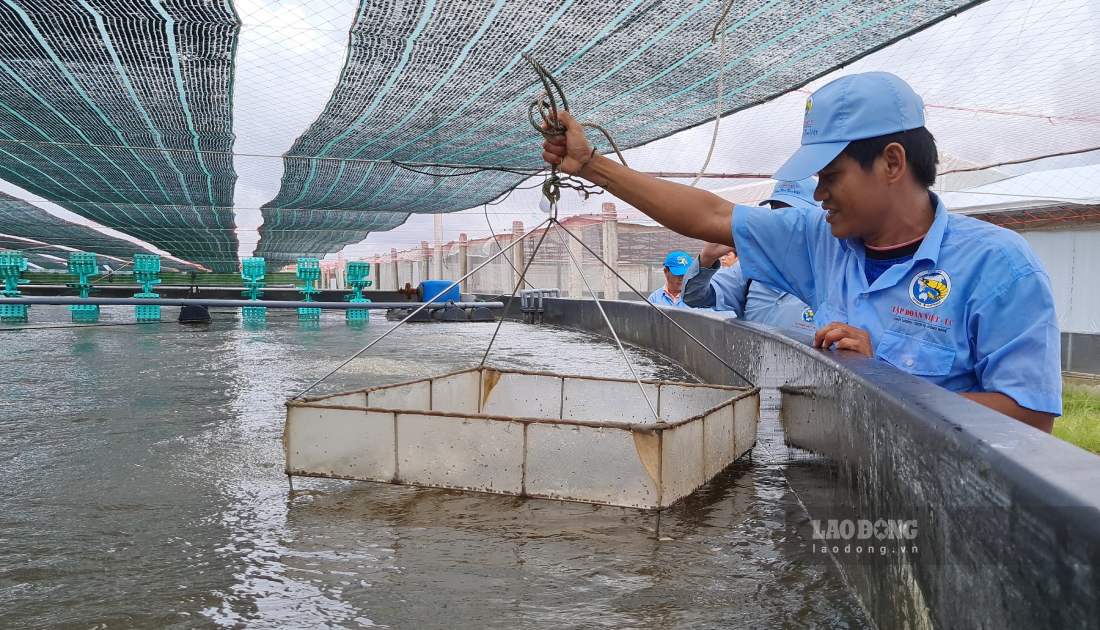
To date, the whole province has 48 linkage chains between businesses, cooperatives and people with linked area and international certification of more than 38,000 hectares, nearly 8,000 participating households. Many farming areas have achieved international certifications such as Naturland, EU Organic, Canada Organic, ASC, BAP..., contributing to enhancing the position of Ca Mau shrimp brand in the world market.
At the same time, the locality continues to invest in environmental monitoring systems, disease warning, seed quality control and transfer of biosafety farming processes. Thereby, gradually shifting from experience-based management to digital data management, reducing production risks and meeting the increasing requirements of export markets.
According to Dr. Thai Truong Giang (Department of Science and Technology of Ca Mau province), with its low terrain, three sides bordering the sea and an economy heavily dependent on natural resources, Ca Mau is under great pressure from subsidence, saltwater intrusion and extreme weather phenomena.
He believes that green transformation will only be effective when science, technology, innovation and digital transformation are applied in the right direction, solving practical problems of the locality. In which, data must become a platform for governance, supporting decision-making, improving resource efficiency, developing circular economy and increasing value for Ca Mau's key products.


