
According to a report by the agricultural sector, the whole city currently maintains 84,819 hectares of large rice fields (over 30% of the area is linked to consumption); over 40,000 hectares of fruit trees with a production of over 500,000 tons and over 10,000 hectares of vegetables, with a production exceeding 160,000 tons. The development of clean agriculture has been promoted with 3,897 hectares of rice, vegetables, and fruit trees certified VietGAP, GlobalGAP; and 20,759 hectares of rice are guided to be produced in an organic direction.
The total rice cultivation area reached 721,073 ha (exceeding 1.33% of the plan), with an output of nearly 4.7 million tons. The rice variety structure continues to shift towards improving quality, in which specialty, fragrant rice varieties such as ST, Dai Thom 8, RVT account for nearly 39.52%, high-quality varieties account for nearly 59.96% of the total cultivated area.
Implementing the Project "Sustainable development of one million hectares of high-quality, low-emission rice associated with green growth in the Mekong Delta region", Can Tho has implemented 12 pilot models, with a scale of 50 ha/model. The results show that production costs are reduced by an average of 1.1 million VND/ha, profits are higher than the control model from 1.3 - 6.5 million VND/ha (an increase of 6.6 - 36.7%). The models help reduce 50% of seeds, 30% of nitrogen fertilizer, reduce 2-3 times of spraying pesticides, reduce 30 - 40% of irrigation water and reduce emissions from 2 - 12 tons of CO2/ha. The rotational economic model from straw alone helps farmers increase by about 33 million VND/ha in 3 crops.
The agricultural sector built 28 integrated crop health management (IPHM) application models, helping farmers increase profits by an additional 9.1 million VND/ha of rice, 9.3 million VND/ha of longan and 1.88 million VND/ha of watermelon compared to traditional production.
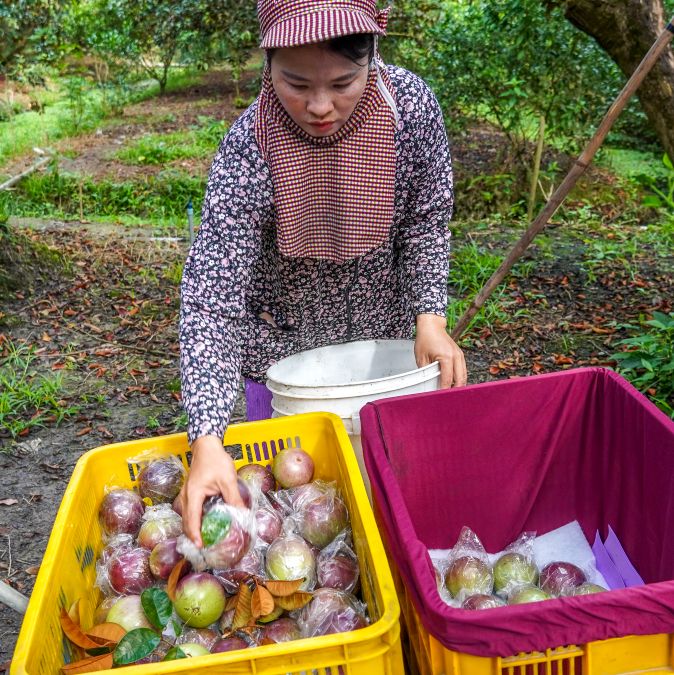
During the year, Can Tho City converted 5,169 hectares of inefficient cultivated land to higher-value production models. Cultivation area management continued to be strengthened with 605 cultivation area codes (area of 9,927 hectares) and 27 packaging facility codes supported for construction and inspection. The fruit tree area reached 100,327 hectares, with a harvested output of more than 1.2 million tons (an increase of 15.69% compared to the same period).


