Tracking "ghost" orders
In the article "Clicking on advertising on TikTok, users fall into sophisticated fraud traps", Lao Dong Newspaper reflected the fact that Ms. Ha Lan (character name has been changed, in Cau Giay, Hanoi) placed an order for cosmetics worth more than 1.2 million VND through the TikTok platform, but the product received was not as expected.
Continuing to investigate, Ms. Ha Lan went to SPX Express - the unit that receives and delivers products to customers. SPX representatives said that for orders that customers refuse to receive or not pay upon receipt, the goods will be returned to the original place of sending, and the sender will be notified to come to receive them again. In case there is no recipient, the mail will be stored in accordance with the provisions of the Postal Law.
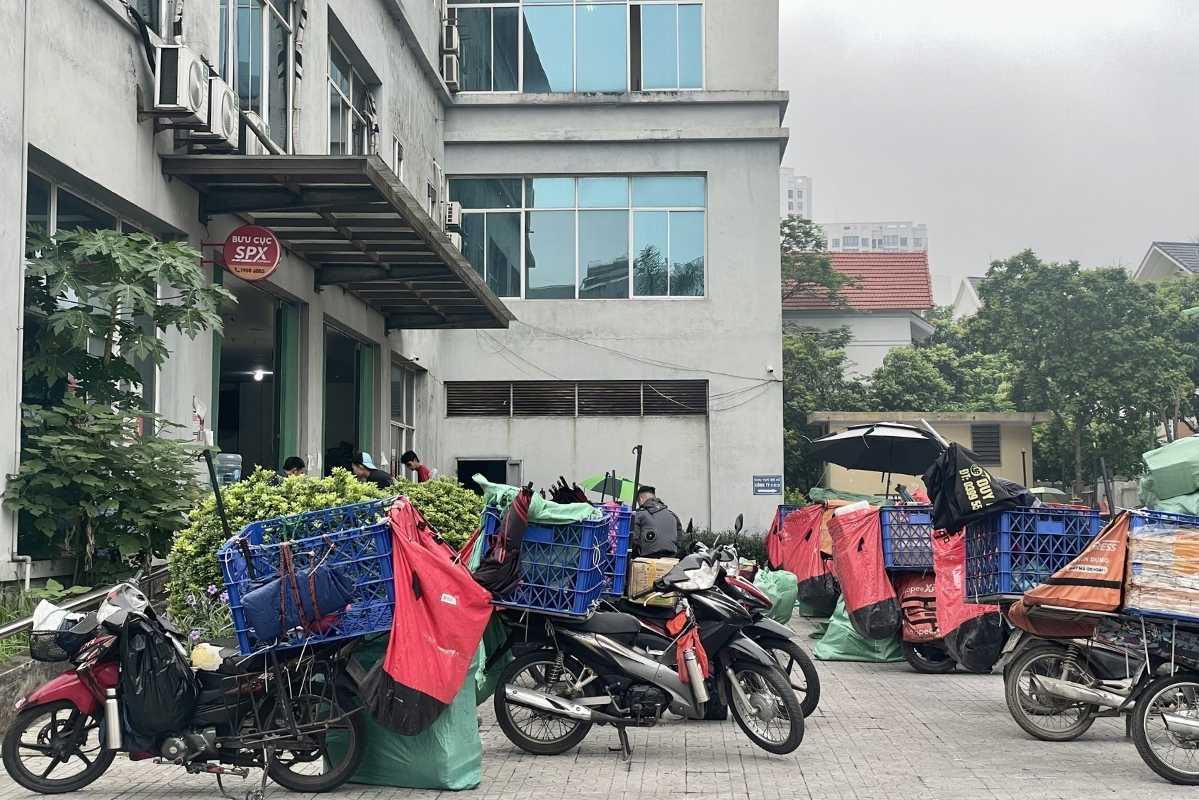
According to SPX representatives, this is an order arising outside the e-commerce platform, so traceability is very difficult. Senders can directly bring goods to the post office to send, while the declared address information is not always fully verified.
The shipping unit also instructed customers to contact the hotline for support. However, when continuing to report to this department, Ms. Ha Lan still only received similar explanations. SPX said it would receive information and support inspection, but could not commit to identifying the owner behind the sent order.
Loophole causes fraudsters to profit hugely
Talking to Lao Dong Newspaper, Lawyer Bui Dinh Ung (Hanoi Bar Association) said that Article 290 of the 2015 Penal Code (amended and supplemented in 2017) clearly stipulates the act of using computer networks, telecommunications networks or electronic means to commit acts of property appropriation.
Scammers often take advantage of the image and reputation of artists, celebrities or big brands to build trust and promote counterfeit and poor quality goods. In many cases, celebrities themselves also become victims when images are used illegally for fraudulent advertising campaigns" - Mr. Ung stated clearly.
According to him, cyberspace fraud has been handled quite fully according to the provisions of law. Specifically in the field of e-commerce, the E-commerce Law 2025, effective from July 1, requires strengthening the verification of the identity of sellers, publicizing information such as the name and business location of enterprises or household businesses according to registration.
This is an important basis to improve traceability, handle violations and limit the situation of taking advantage of e-commerce platforms to carry out fraudulent acts. This also raises the requirement that e-commerce platforms must tighten the work of identifying sellers.
Besides, one of the reasons why this type of fraud still exists is the psychology of victims being reluctant to report.
Many people think that the damage is only a few hundred thousand to more than one million VND, so they accept to let it go. But the subjects take advantage of that thought to collect small amounts of money from many victims, creating huge illegal profits.
He also did not rule out the possibility that fraudsters impersonated or colluded with delivery people, using uniforms of transportation units to create trust to request customers to pay.
In addition, the illegal editing and use of celebrity images to advertise products is also becoming common. According to lawyers, individuals who are impersonated have the full right to denounce violations to protect their honor and reputation, while consumers need to be alert and choose official sales channels instead of believing in rampant advertisements on social networks.
Not only stopping at impersonating in the online environment, fraudsters also use other people's home addresses to register to establish businesses, in order to create a legal cover for business operations.
According to him, to create favorable conditions for business operations, functional agencies currently mainly rely on the mechanism of self-declaring addresses when registering businesses, without requiring the presentation of land use right certificates or location lease contracts.
Open policies are necessary, but they have been exploited by some subjects to falsely declare addresses, serving illegal acts," he analyzed.
Regarding the case of Ms. Pham Lan Khanh (Ho Chi Minh City) being refunded all the money after a long complaint process, the lawyer said that this is a detail that needs to be clarified by functional agencies.
Accordingly, after about two weeks of continuously sending complaints and working with the shipping unit, a person claiming to be the store owner suddenly contacted, explained that business data had been stolen and proactively returned the entire amount to the customer.
From a legal perspective, lawyer Bui Dinh Ung believes that the quick refund may reflect the concern of being detected or handled by the related party. If it is indeed a business that has been forged or data breached, usually this unit will coordinate with functional agencies to investigate and verify the responsibilities of the parties instead of just compensating to close the case.
He also said that it is necessary to clarify the responsibilities of transportation units in the process of handling orders with signs of fraud. Although delivery staff only perform delivery duties, the transportation system still stores information about senders, receiving points and postal routes.
These are very important data, which can support functional agencies in verifying and tracking down the subjects behind the lines of selling fake goods, poor quality goods or fraud in the online environment," lawyer Bui Dinh Ung emphasized.
Lao Dong Newspaper has contacted TikTok to clarify the content censorship mechanism, handle fake accounts and the platform's responsibility in cases where users are lured to fraudulent websites. Upon receiving feedback, Lao Dong Newspaper will continue to provide information to readers.