The revolution to streamline the organizational structure, arrange administrative units and organize 2-level local government is an objective requirement of the process of renovating national governance, a historical step, creating a foundation for the country's development.
After 1 year of operating the overall model of the political system, the 3-level government model has achieved very positive results.
The new apparatus is more streamlined and scientific, significantly reducing intermediate levels, organizing a government apparatus close to the people, close to the people, serving the people. In particular, the new model basically operates smoothly, without creating widespread state management gaps.
The quality of service to people and businesses has positive changes; the commune level has gradually become a new operating center at the grassroots level. By May 2026, 33/34 localities had established and operated 3, 189 Public Administration Service Centers at the commune level; The satisfaction index is maintained at over 83%.
Bringing public services closer to the people, associated with communes, wards, and special zones is very important. People not only need a more streamlined apparatus but also need to see the government closer, solve problems faster, have better service attitudes and clearer responsibilities.
The commune-level government in the new model is gradually shifting from the grassroots administrative level in the traditional sense to the level directly managing the grassroots area, organizing policy implementation, providing public services and handling issues arising daily in people's lives.
According to the Ministry of Home Affairs, in 2026, the unit will focus on guiding the standardization of job positions and the structure of commune-level cadres and civil servants. Coordinating with relevant agencies to create strong changes in the training of commune-level cadres and civil servants - a task of decisive significance for improving the quality of grassroots government activities.
Regarding standards, adjusting administrative boundaries and establishing core urban areas, the Ministry of Home Affairs proposed that the Central Government, the Politburo, and the Secretariat allow the continued merger of small-scale commune-level administrative units that do not meet standards, taking into account specific factors; establish new wards based on towns and urban areas that meet the conditions.
Research the merger of some central wards to form wards with sufficient scale, playing the role of the development nucleus of provinces and cities; research the formation of new generation special economic zones to make growth poles, towards the goal of urbanization reaching over 50% by 2030.
Regarding solutions to improve the efficiency of the 2-level local government model in the coming time, Standing Deputy Secretary of the Lam Dong Provincial Party Committee Dang Hong Sy said that it is necessary to well implement the review, arrangement, and placement of the contingent of cadres, especially at the grassroots level.
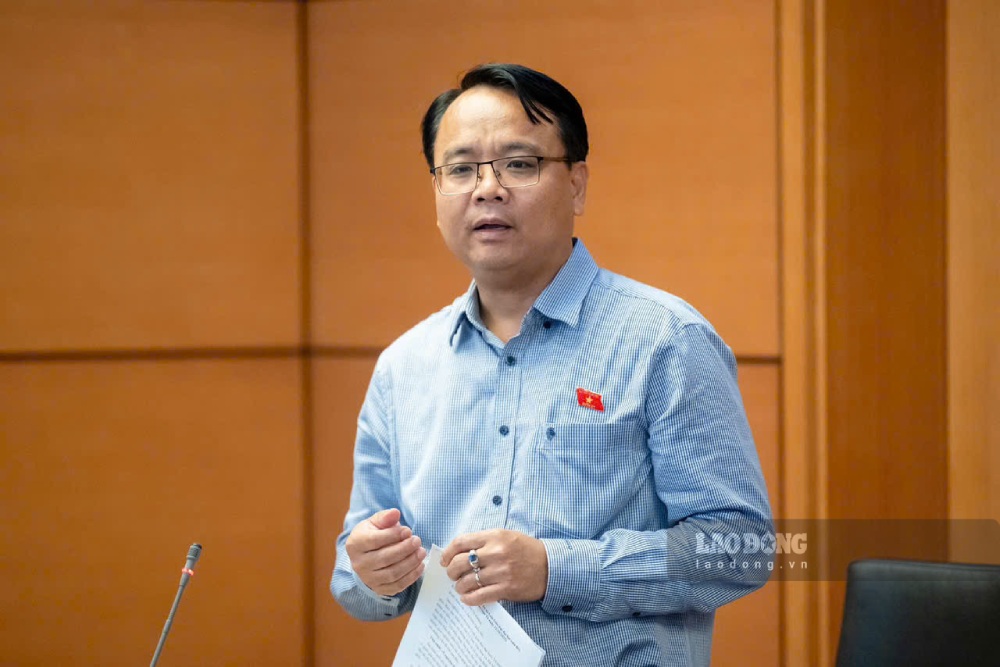
The arrangement of cadres must ensure the right people, the right jobs, in order to promote the capacity, strengths, and work experience of each cadre, civil servant, public employee, and employee.
At the same time, strengthen training and professional development, digital skills, management skills, strengthen the spirit and capacity to "bear" work pressure of cadres and civil servants, both at the provincial and commune levels; promote the exemplary responsibility of the head.
Strictly implement the work of evaluating and ranking cadres, based on specific results and products. Promote administrative reform, digital transformation, ensuring convenience and speed for people and businesses.
Assoc. Prof. Dr. Nguyen Ba Chien - Director of the Academy of Public Administration and Management - said that it is necessary to build a civil service culture that encourages creativity, accepts controlled innovation, protects cadres who dare to think and dare to do, and strengthens accountability.
The development trend of modern administration is not to build an increasingly larger apparatus but to build an increasingly flexible and efficient apparatus.
Local authorities must be able to react quickly to changes in the socio-economic environment, proactively handle arising problems, strengthen inter-sectoral coordination and effectively use digital tools in management work.