Green transformation to access preferential credit
In Ho Chi Minh City, many businesses in the fields of industrial production, real estate, and logistics have promoted green transformation to access preferential capital from domestic banks and international financial institutions.
However, the process of accessing green credit is not easy, especially for small and medium enterprises (SMEs) - a force that accounts for 90% of all Vietnamese enterprises.
According to Mr. Dinh Hong Ky - Ho Chi Minh City Business Association, many private enterprises, especially small and medium enterprises, are still confused in building green project dossiers and lack the capacity to prove environmental standards according to international requirements. This is a bottleneck that needs synchronous support from policies and consulting intermediary organizations.
It is worth mentioning that most of the businesses that boldly implement green transformation are mainly large corporations. SMEs also face many difficulties in the greening process, from financial limitations, shortages of human resources to difficulties in accessing technology.
Participating in a sustainable chain of links is also becoming a vital requirement. Textile, footwear, electronics enterprises... have been forced to invest in green factories, renewable energy, transparent supply chain management technology to maintain contracts and increase export capacity.
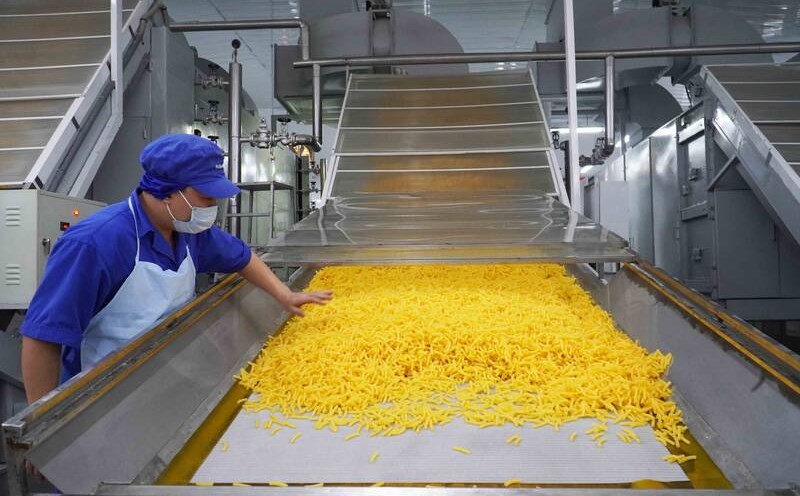
In the food processing industry, building linkages of raw material areas that meet GlobalGAP and VietGAP standards helps Vietnamese enterprises expand their markets to Japan and the EU.
Ms. Ly Kim Chi - President of the Ho Chi Minh City Food and Food Association - said that green transformation is an inevitable trend, requiring a long-term vision and investment in innovation in technology and equipment. Ms. Chi also emphasized the need to soon implement a large-scale and popular green credit program to support businesses, especially SMEs, to implement truly and effectively green transformation.
Green industrial park development trend
Mr. Nguyen Thanh Lam - Executive Director of Lam Viet Joint Stock Company (Tan Uyen City, Binh Duong) - said that the company must continuously adapt to increasingly strict requirements from partners. Therefore, the company is interested in investing in portfolios related to green transformation, digital transformation, circular transformation and carbon transformation.
"We have applied an ERP system at each production stage, publicized the origin of products and allowed accurate traceability of product information and legal wood origin at each production and consumption step. At the same time, build a greenhouse gas inventory report from the software.
The company also uses software for management, maintenance, machinery and equipment maintenance and automatic salary payment software for employees. In the 2025-2030 period, the company has developed an action plan to reduce emissions by 10% per year compared to 2024" - Mr. Nguyen Thanh Lam shared.
Not only individual enterprises, industrial parks are also promoting green transformation.
According to the Binh Duong Industrial Parks Management Board, currently, 100% of industrial parks have standard wastewater treatment systems and automatic monitoring systems. Recently, the Binh Duong Industrial Parks Management Board signed a coordination regulations on environmental protection with 29 enterprises operating in industrial park infrastructure. This is aimed at building green industrial parks.
Notably, the toy factory of Lego Group - the first carbon-neutral factory in Binh Duong - officially came into operation in April 2025.
Mr. Bui Minh Tri - Vice Chairman of Binh Duong Provincial People's Committee - affirmed that the province's FDI attraction strategy will be more selective, prioritizing smart, green development, based on science and technology and high-quality human resources.
In reality, although the green transformation process requires large investment costs, it brings long-term benefits such as expanding the market, increasing competitiveness, optimizing operating costs, and improving resilience to global fluctuations.
With the support of the government and the initiative of businesses, Ho Chi Minh City and localities such as Binh Duong are gradually forming a solid foundation to move towards green and sustainable economic development.