
On April 21, under the direction of the Vietnam Chamber of Commerce and Industry (VCCI), Business Forum Magazine in coordination with the Institute for Research and Application of Intelligent Energy (iSEAR) organized the Forum: "Perfecting renewable & storage electricity policies (BESS): A stable green energy platform for businesses".
Speaking at the Forum, Mr. Hoang Quang Phong - Vice Chairman of VCCI assessed that although the potential for renewable electricity development and energy storage in Vietnam is very large, the implementation process still has many obstacles.
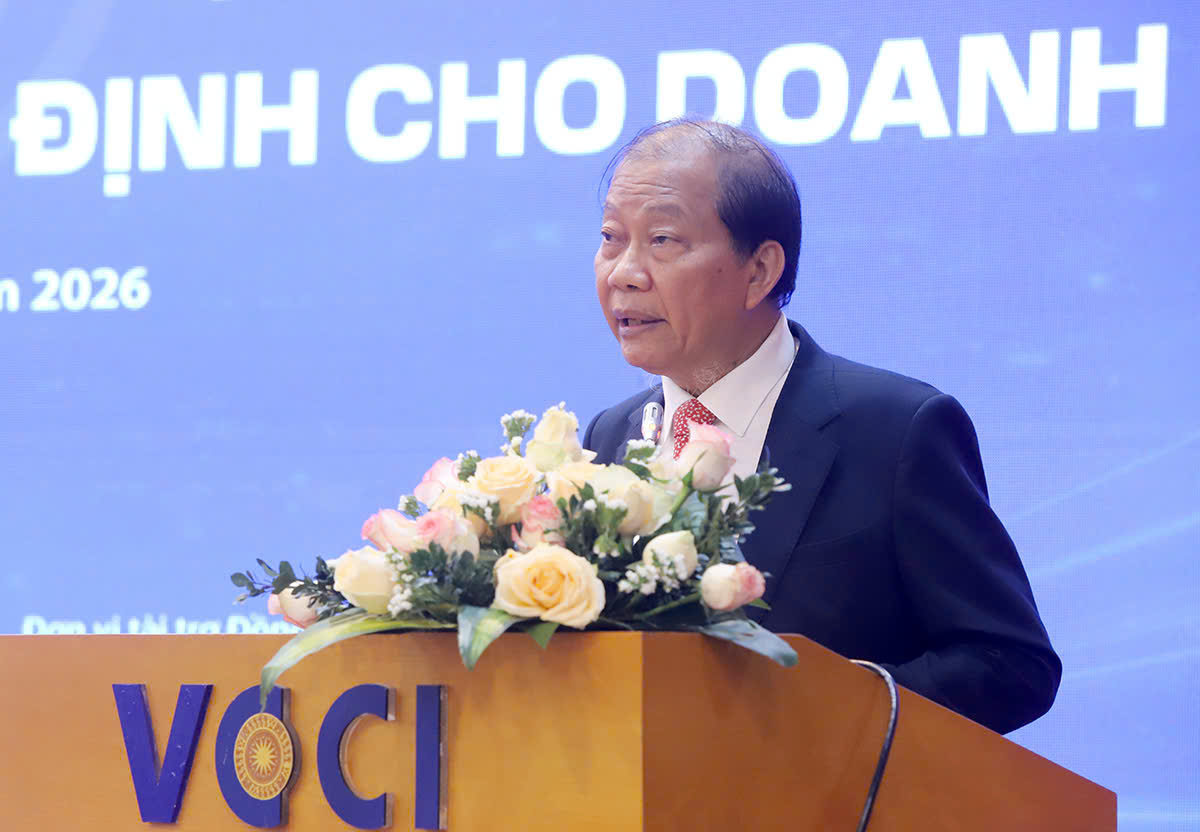
With the direct electricity purchase and sale mechanism (DPPA) implementation model, many businesses still face difficulties due to the unsynchronized policy framework and lack of specific guidance. Businesses are still confused in choosing suitable contract models, and the mechanism for determining transmission and distribution costs, payment procedures, and responsibilities and rights between stakeholders is not clear," Mr. Phong said.
According to VCCI representatives, with the energy storage development mechanism, regulations related to investment, connection, price mechanisms, business models, technical standards, supporting service markets, as well as capital mobilization mechanisms, green credit... have not kept up with development speed and actual needs.
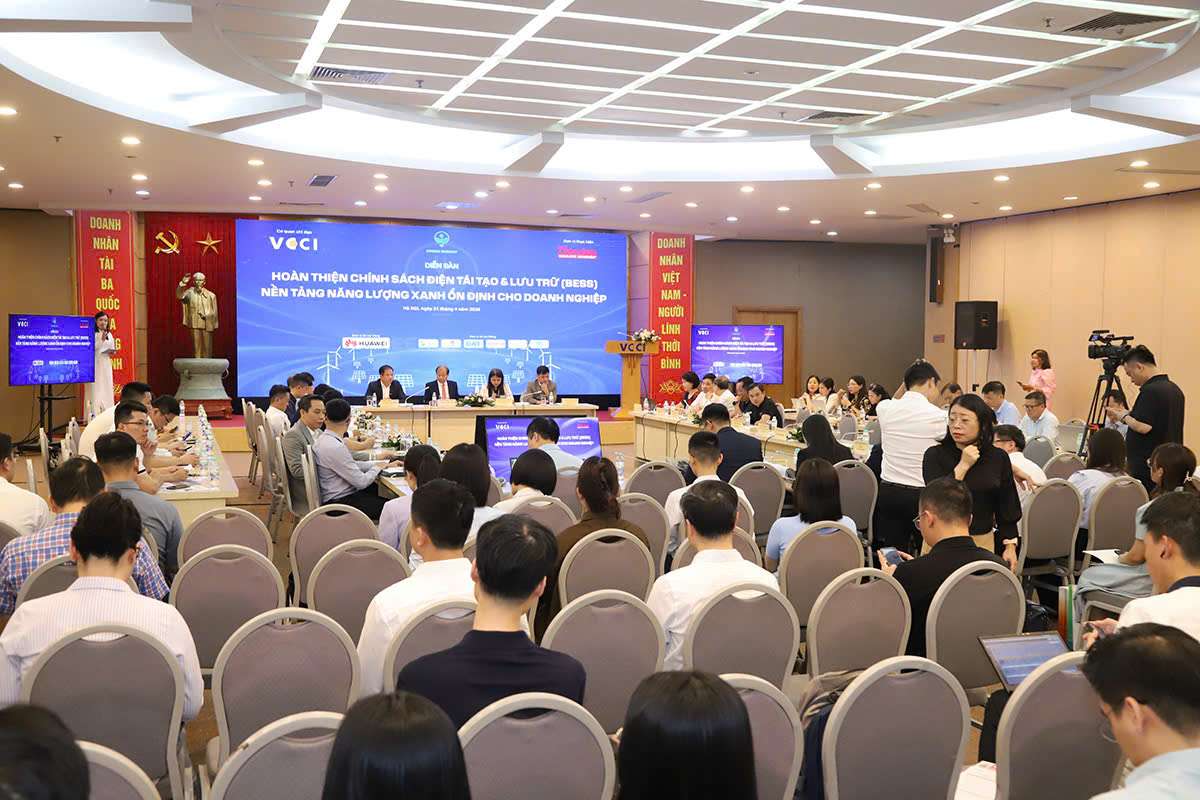
At the Forum, Ms. Phan Thi Thu Thuy - representative of the Electricity Department (Ministry of Industry and Trade) said that the urgent requirement today is to form appropriate mechanisms, creating conditions for businesses to proactively access clean electricity sources at reasonable costs and with forecasting capabilities. In that context, the direct electricity purchase and sale mechanism (DPPA) is one of the important tools.
Thoroughly grasping the major orientations in Resolution No. 70-NQ/TW of the Politburo on ensuring national energy security, the Electricity Department has reviewed and evaluated the implementation of the DPPA mechanism, and at the same time researched and proposed to improve relevant regulations to ensure that this mechanism operates effectively, in accordance with reality and does not generate risks to the power system.
First, study expanding the subjects participating in the DPPA mechanism according to a roadmap suitable to market development trends and actual needs.
Expanding the participants is necessary to meet the increasingly diverse needs of the market, including some new types of load such as data centers, infrastructure serving electrified transportation and electricity supply organization models in industrial parks and clusters.
However, the expansion will be carried out controlledly, on the basis of fully meeting the conditions on technical, measuring, and system connection, while ensuring that it does not affect the safe and stable operation of the national power system. The overarching principle is to expand and promote the mechanism in parallel with ensuring the safety of the power system.
Second, clarify the model and responsibilities of subjects in electricity supply in industrial parks and economic zones.
The orientation is to create conditions for units in industrial parks and clusters to participate more deeply in the electricity market, thereby improving flexibility in electricity supply and the accessibility of green electricity for businesses.
However, this must be accompanied by clearly defining the responsibilities of the parties in operating the system, complying with regulations on regulation, electricity safety and protecting the rights of electricity users. The organization of electricity supply within the area and cluster needs to ensure transparency, cost transparency, and not cause market distortion or formation of local monopoly.
Third, continue to improve the electricity price mechanism in DPPA transactions in the direction of strengthening market factors.
Participating parties are encouraged to actively negotiate and agree within the legal framework, in accordance with the specific characteristics of each type of transaction, and at the same time, the State continues to play the role of establishing a legal framework, supervising and regulating to ensure healthy competition, transparency and market stability, and limit abnormal fluctuations that may pose risks to participating parties.
The State does not intervene in each specific transaction, but plays a role in establishing a legal framework, supervising and ensuring the market operates transparently and disciplined.
Fourth, study the cost fluctuation control mechanism in long-term DPPA contracts.
One of the important requirements from businesses is the ability to forecast costs in the long term. Therefore, researching cost fluctuation control mechanisms, including clearance payments, is necessary to support businesses in building financial plans and risk management.


