
In the context of increasing pressure to reduce plastic waste, many retailers in Ho Chi Minh City are starting to change their approach, from providing free to collecting fees for bag storage.
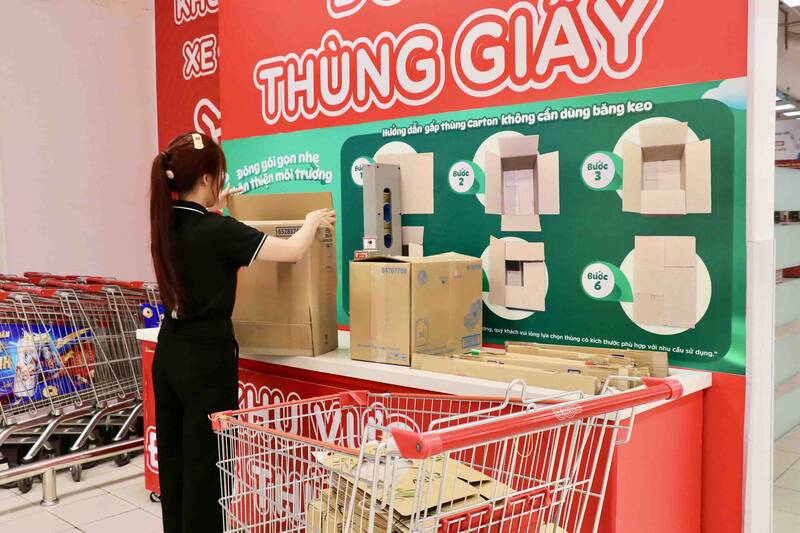
At the GO!, Tops Market, mini go! systems, biodegradable bags at the cashier counter are subject to a fee of 500 VND/bag. According to businesses, the fee collection aims to limit the use of disposable bags, and at the same time encourage customers to bring personal bags or use free cardboard boxes when shopping.
Representatives of Central Retail Vietnam said that along with stopping nylon bags at the cashier counter, this system has changed many types of packaging in the sales areas. At the fresh food counter, foam trays are replaced with sugarcane residue trays and biological trays; fruit containers are converted to recycled plastic. At the cake and processed food counter, paper bags, sugarcane residue boxes and paper cups are put into use. The mini go! model also applies similar types of packaging at the meat, vegetable and bread counters.
Ms. Nguyen Thi Bich Van - Communications Director of Central Retail Vietnam Group, said that these changes are aimed at reducing the amount of plastic waste generated in retail activities, while meeting the increasingly popular trend of limiting single-use products.
Many other retail systems are also implementing programs in a similar direction. Saigon Co. op launched the "30 Years - Green Commitment" campaign throughout the system, aiming to reduce disposable nylon bags. From now until May 13, member customers using personal bags on Thursdays will receive bonus points equivalent to 5,000 VND. The program is also associated with activities to support clean water for areas affected by saltwater intrusion.
From the perspective of management and trade promotion, Mr. Le Anh Hoang - Deputy Director of the Ho Chi Minh City Trade and Investment Promotion Center, said that the application of green standards (ESGs) is becoming a global trend. Many countries have issued preferential policies for products that meet this standard, including the Islamic (Halal) and Malaysian markets.
Green standard products are understood as products with a life cycle that minimizes negative impacts on the environment, from input materials to post-use treatment. In Vietnam, key export industries such as textiles, footwear, agricultural products, and wood furniture are under pressure to transform to maintain market share in major markets such as the EU, the US, and Japan.
If these standards are met, businesses can overcome "green barriers", improve their reputation and access preferential capital sources. Consumers in many markets, especially the Muslim bloc, are willing to pay higher for products that meet both Halal standards and environmental responsibility.
In Ho Chi Minh City, local authorities are also introducing many policies to support this transition process. According to the Department of Industry and Trade, the draft amendment of Resolution 09/2023/NQ-HĐND proposes to support a maximum of 100% interest rate for rooftop solar power models, and 50% for logistics projects meeting green standards, with a preferential term of up to 7 years.
In addition, the city is expected to spend more than 1.76 billion VND in 2026 to support businesses in inventorying greenhouse gases and identifying "carbon footprints". Industries such as textiles, footwear and food will be prioritized for training to adapt to new standards.
According to the Department of Industry and Trade, many businesses have begun to shift from an environmental treatment approach at the end of the process to a circular production model right from the input. From small changes such as collecting bags at supermarkets, to green transformation strategies in production and export, the trend of sustainable development is gradually reshaping the way businesses operate and compete in the market.


