
Having worked as a freelancer, wandering around many places, in 2021, Mr. Nguyen Duc Thuan, born in 1990, residing in Tay Hoa Lu ward, Ninh Binh province, decided to choose the eggplant farming model to start a business.
The predestined relationship with the profession began when Mr. Thuan accidentally saw a model of raising crabs at a friend's house. Realizing that this is an animal of economic value, he learned about the technique and bought 10 pairs of breeds to try raising.
However, in the early days, they encountered many difficulties due to lack of experience, not understanding the habits of "ca cuong", up to 8 or 9 pairs of seedlings died.
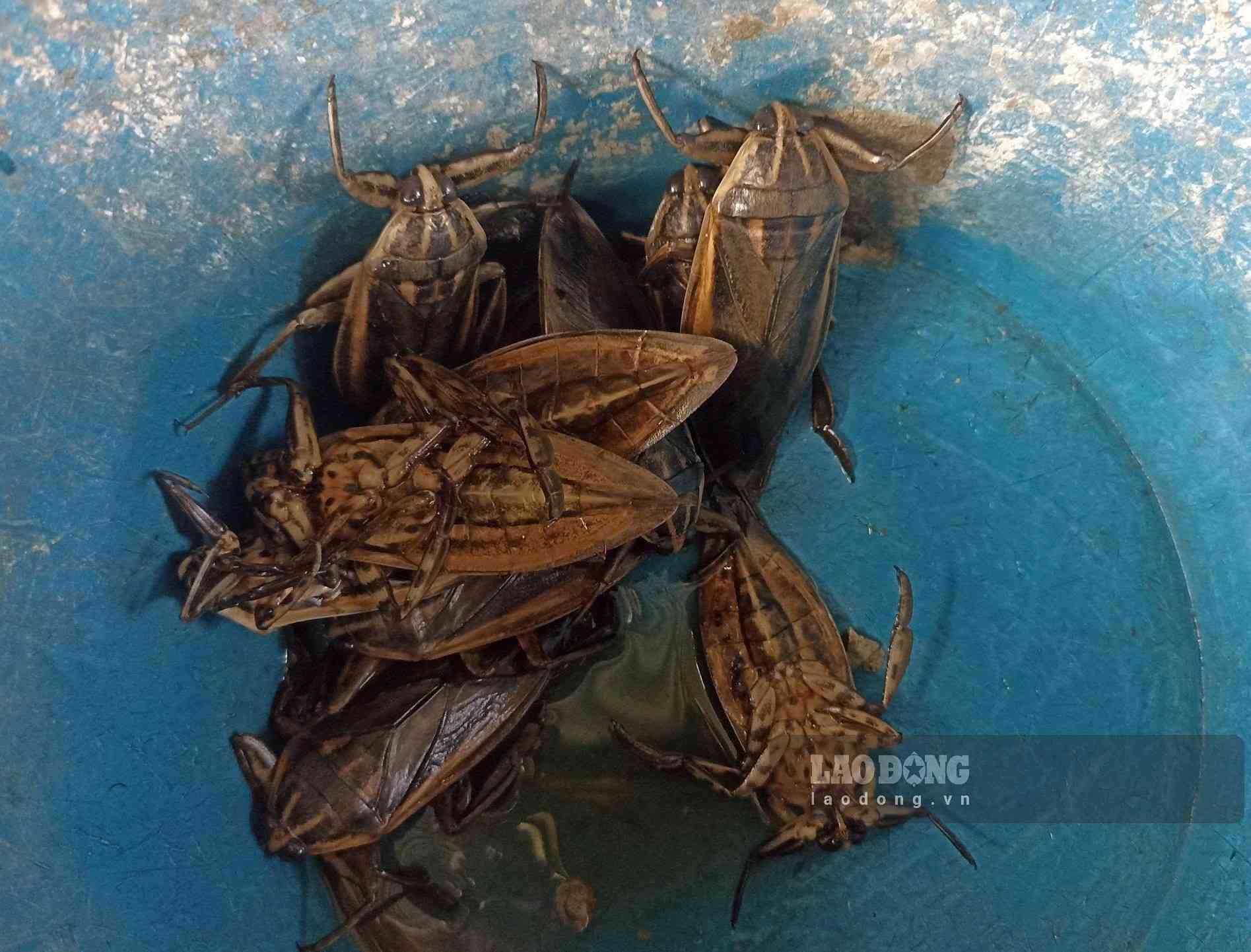
Not wanting to give up, I continued to buy breeds for the second time, raising them in styrofoam boxes and tarpaulin tanks. I both did it and learned from experience online and learned from friends. Thanks to perseverance, I have the model like today" - Mr. Thuan shared.
According to Mr. Thuan, eggplant used to appear a lot in canals and rice fields, but is now increasingly rare in nature. Meanwhile, the demand for using eggplant as food and spices is still quite large.
This is also a model with initial investment costs that are not too high, suitable for people who want to start a small-scale business.
The life cycle of the eggplant is from laying eggs, hatching, developing to maturity, and can be sold for about 45 days. This is also the time when the eggplant accumulates enough essential oil.
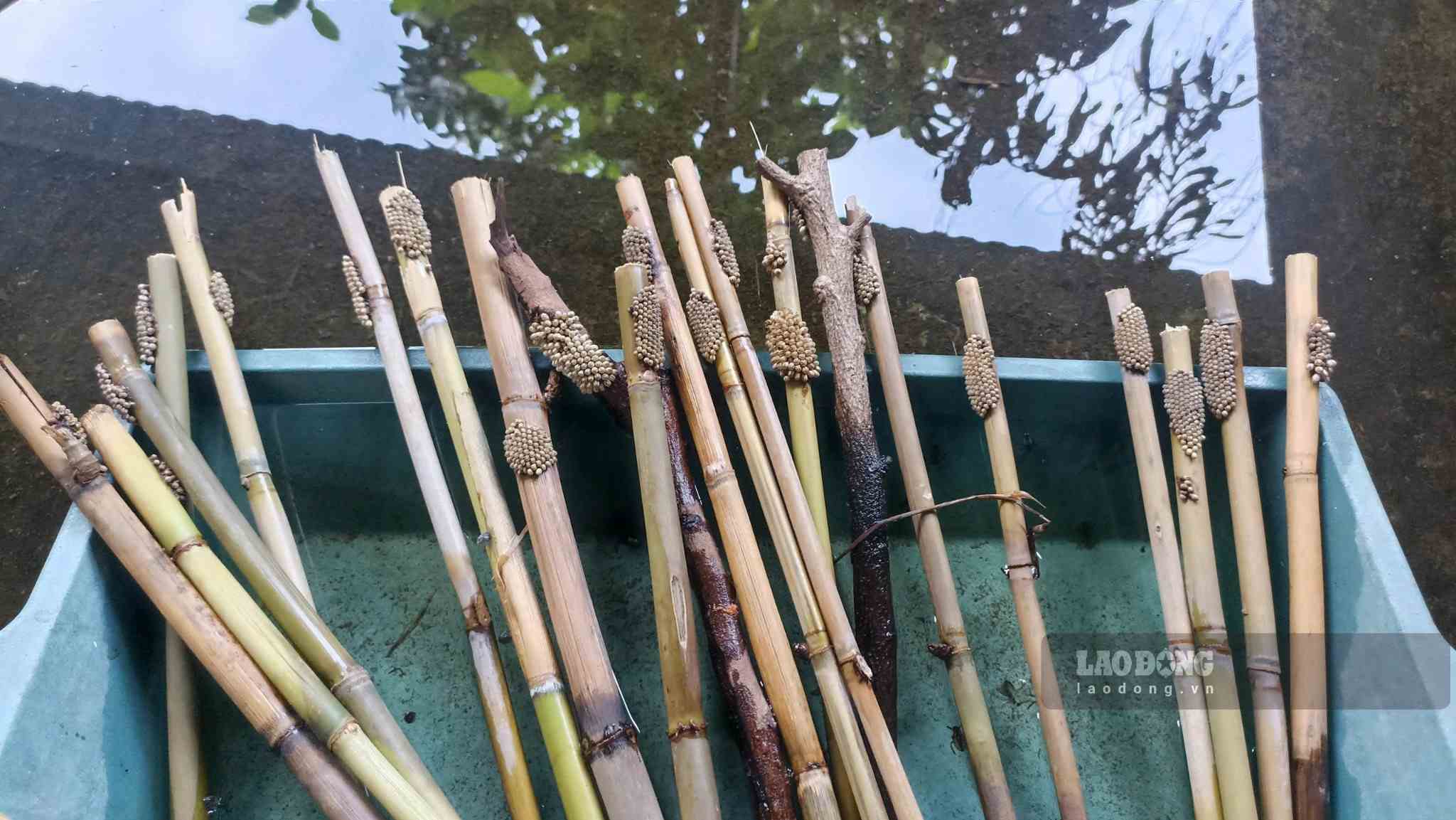
The most difficult stage is incubating eggs and caring for larvae. The eggs are ivory white, shaped like golden apple snail eggs. After about 5-7 days, the eggs hatch into larvae. Within 45 days, the larvae undergo 5 transformations before becoming adult eggshells.
Eggplants lay many eggs, but if the incubation technique is not guaranteed, the eggs are very easily spoiled. Farmers must regularly monitor the temperature, water source and development process of larvae" - Mr. Thuan said.
To ensure eggplants grow well, farmers must maintain clean water sources and provide appropriate feed such as juveniles, tadpoles, and small shrimp. The density of farming in tanks must also be controlled. If there is a lack of feed, eggplants can eat each other; if raised too densely, they will develop slowly.
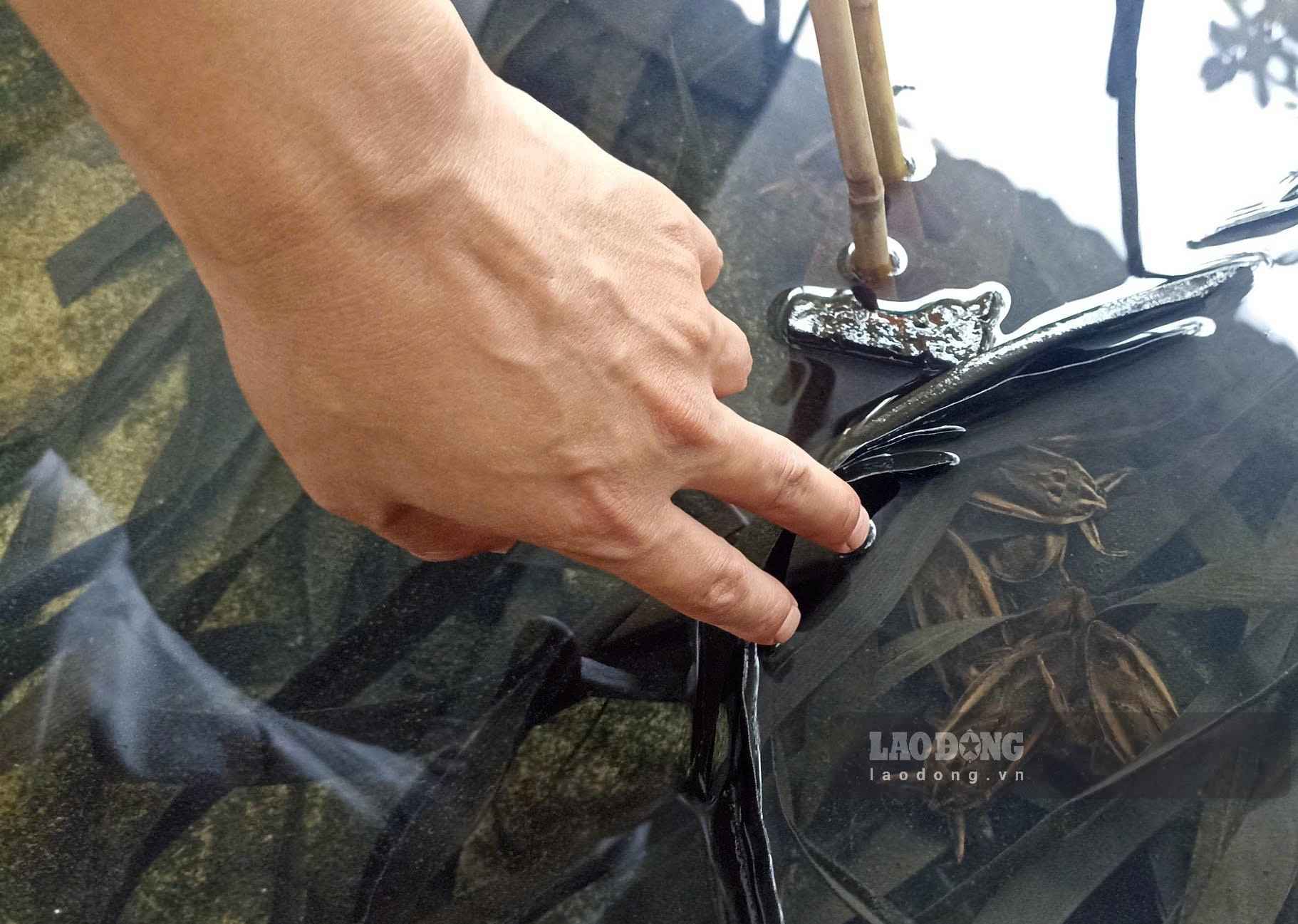
Up to now, Mr. Thuan has built more than 10 cement tanks, each tank raising from 50 - 80 animals. The tanks are divided into separate areas for breeding, commercial farming and breeding.
This division helps farmers conveniently monitor each stage of development, while limiting the situation of female eggplants breaking eggs of other animals.
Clams have the ability to reproduce year-round, concentrated most from May to October of the solar calendar. Currently, Mr. Thuan maintains more than 200 pairs of parent clams.
Each month, his facility supplies many products to the market such as eggplant seedlings, commercial eggplant, grilled eggplant, essential oils and eggplant fish sauce.
Commercial eggplant is sold at a price of about 45,000 VND/piece. After deducting expenses, Mr. Thuan earns more than 20 million VND per month.
Not only developing the family economy, Mr. Thuan also provides breeds, technical guidance and product consumption for many farmers across the country.
According to him, market demand is currently quite large, while supply is not stable. At times, his facility does not have enough products to deliver to customers.
Ca cuống, also known as đà cuống, is one of the aquatic insects. Their bodies are flat, leaf-shaped, dull yellow or earth brown, with an average length of 7-8cm, some can reach 10-12cm.
From an insect that used to live commonly in the fields, cà cuống is becoming a high-value economic livestock, opening up a livelihood for those who want to develop small-scale livestock models.


