
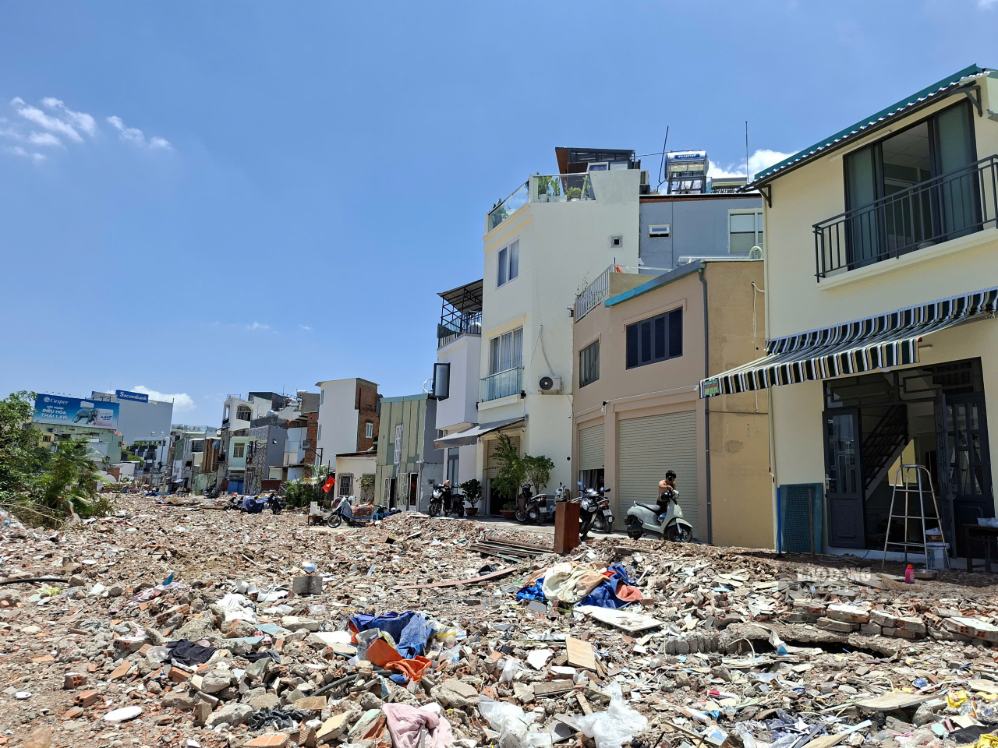
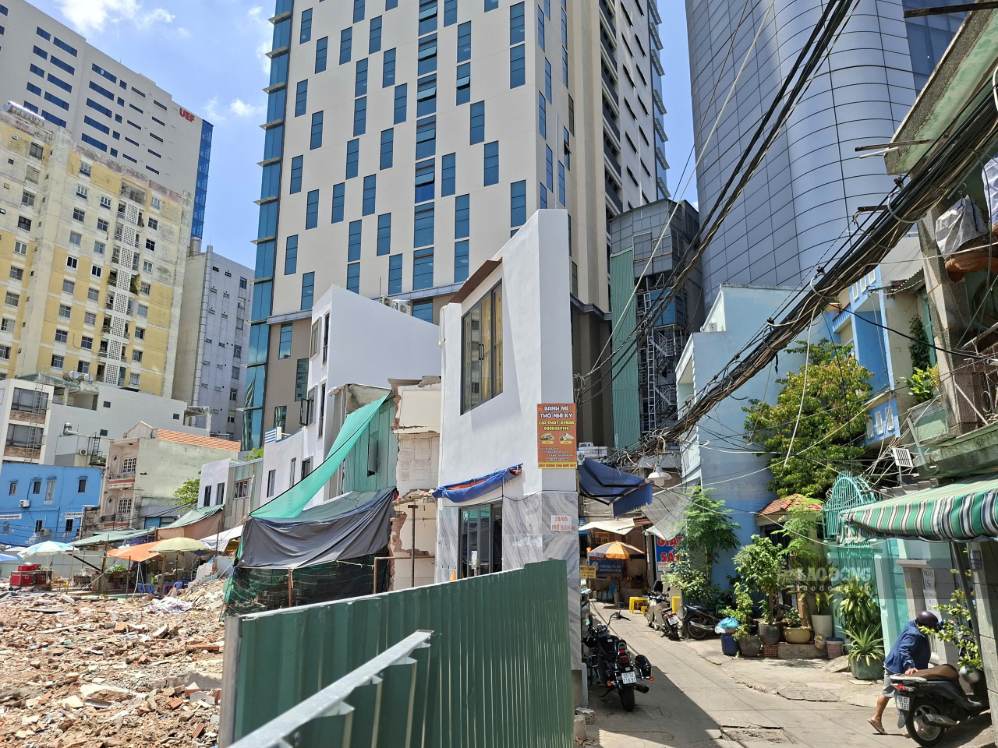
After site clearance for the Xuyen Tam canal project, many houses with an area of only 2 - 7m2 appeared.
Especially the section passing through Gia Dinh ward has 41 houses under 9m2 when households repair the remaining area to continue living.
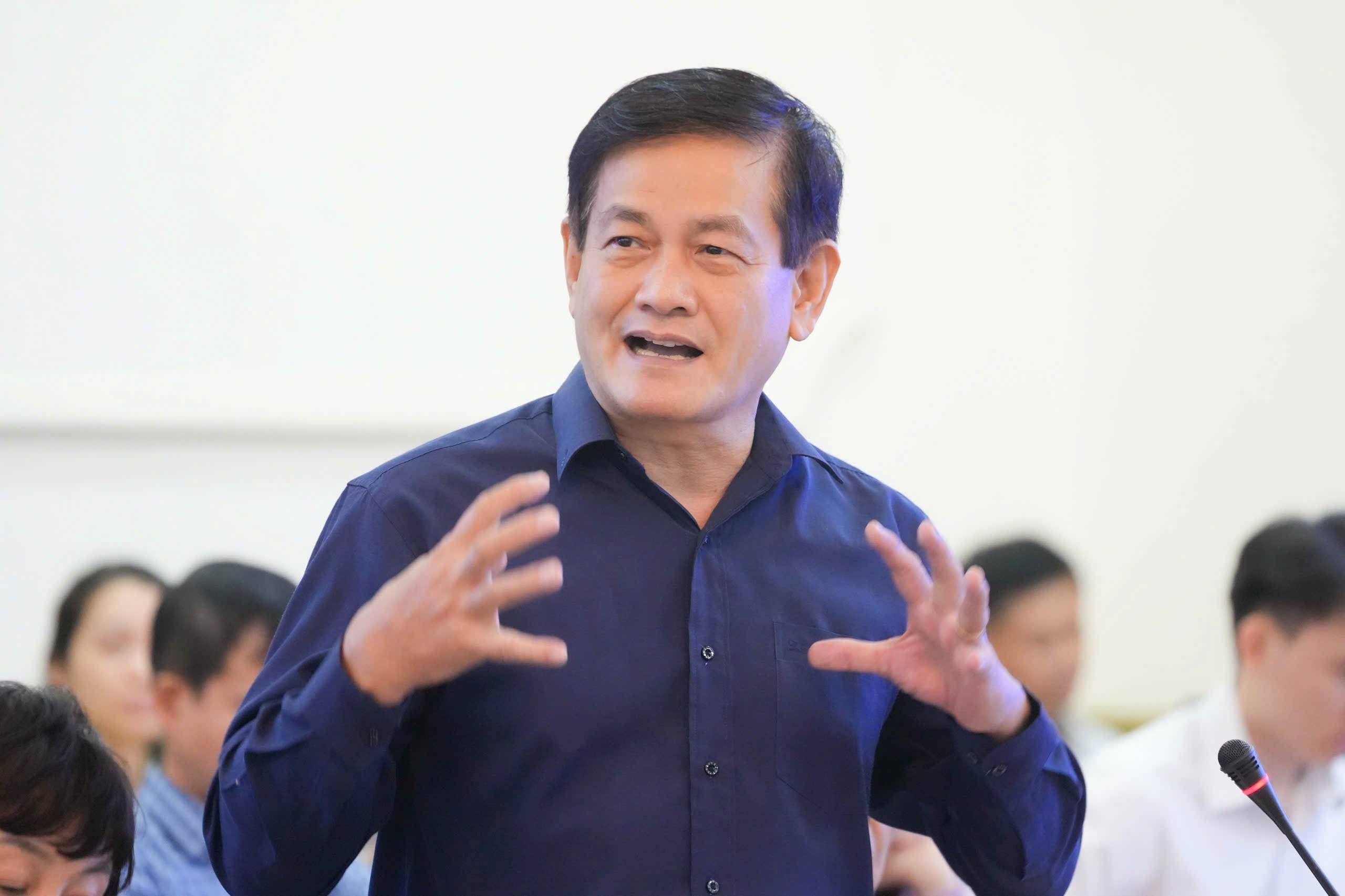
Regarding this story, Lao Dong Newspaper reporters exchanged with Doctor of Science, Architect (Dr. Sc. Architect) Ngo Viet Nam Son - urban planning expert.
Scars" after urban embellishment
After many road opening and canal renovation projects, the situation of super-thin, super-skewed houses still recurs. According to you, where is the core cause?
- I think that is a manifestation of an incomplete approach to planning.
For a long time, we have mainly solved the traffic problem or renovated canals and ditches, but have not solved the urban space problem on both sides of the route at the same time.
The sectors still follow the "mono-sector" thinking, lacking coordination between transportation, planning, architecture and urban development.
Therefore, many roads are invested very beautifully, but on both sides there are still super-thin, super-skewed houses, creating "scars" in the urban face.
According to you, what is the "knot" that causes this situation to repeat itself?
- The story of 41 houses with an area of less than 9m2 in Gia Dinh ward after the clearance of Xuyen Tam canal is just the tip of the iceberg.
Currently, most projects only recover land to the edge of the road boundary. After opening the road, the remaining land of people is often too small or distorted but still becomes frontage land, so homeowners still try to build to continue using it.
In fact, on major boulevards such as Vo Van Kiet, Pham Van Dong, although the road surface is spacious, on both sides there are still "sloppy" projects, not worthy of the infrastructure invested with trillions of VND.
Proposal to recover land 30 - 50m deeper
According to you, what is the fundamental solution to end this situation?
- To handle it from the root, it is necessary to change the scope of land recovery.
For key roads or canal and ditch renovation projects, the State should recover land deep inside about 30 - 50m instead of just stopping at the road boundary.
After synchronous clearance, this land fund will be re-planned to build modern works, no longer having pieces of land or super-thin houses.
If this is done, the urban appearance will change comprehensively, synchronously with the new infrastructure system.
More recovery but greater resource creation
This option may increase compensation costs and be entangled in legal regulations. What do you think?
- It is true that the current procedures are still complicated and need adjustments from the general law of the Central Government.
However, while waiting, Ho Chi Minh City needs to make the most of special mechanisms (such as the Urban Development Law to be submitted to the National Assembly for approval) to empower local authorities to decide on project boundaries.
Regarding resources, after the infrastructure is completed, the value of land funds on both sides of the road will increase dozens, even hundreds of times. The government can auction off this land fund to recover infrastructure investment capital.
The State expands roads without spending a penny, even having surplus to pay the budget or build public utilities such as schools, health stations, and parks.
Is there concern that the revocation of more land will affect the rights of the people?
- In fact, this is a fairer option.
Currently, when roads are opened, households on the frontage are completely cleared, while people deep in alleys suddenly "change their lives" into frontage houses without having to contribute anything to the city.
The recovery of an additional 30 - 50m will help compensate more fairly to all people in the affected area.
Ho Chi Minh City is aiming to relocate 40,000 houses along canals and ditches by 2030. According to you, can this model be applied immediately?
- There are solutions, the important thing is whether the leaders are determined to implement them or not.
If implemented methodically, we will not only eliminate super-thin houses but also create new civilized, modern and sustainable urban spaces for the future.
Thank you, sir!


