
VN-Index sends positive signal
On the afternoon of May 28, 2026, Nhat Viet Securities Joint Stock Company (VFS) organized the seminar "Securities 2026: New Growth Cycle - Opportunities from Differentiation and Growth Quality".
Speaking at the event, Mr. Nguyen Minh Hoang - VFS Analysis Director - said that VN-Index is sending many signals of a new wave of increase. After a strong correction due to the impact of geopolitical conflicts, the index bottomed out around 1,590 points and then quickly recovered about 18%, with the leading role belonging to the large-cap group, especially real estate.
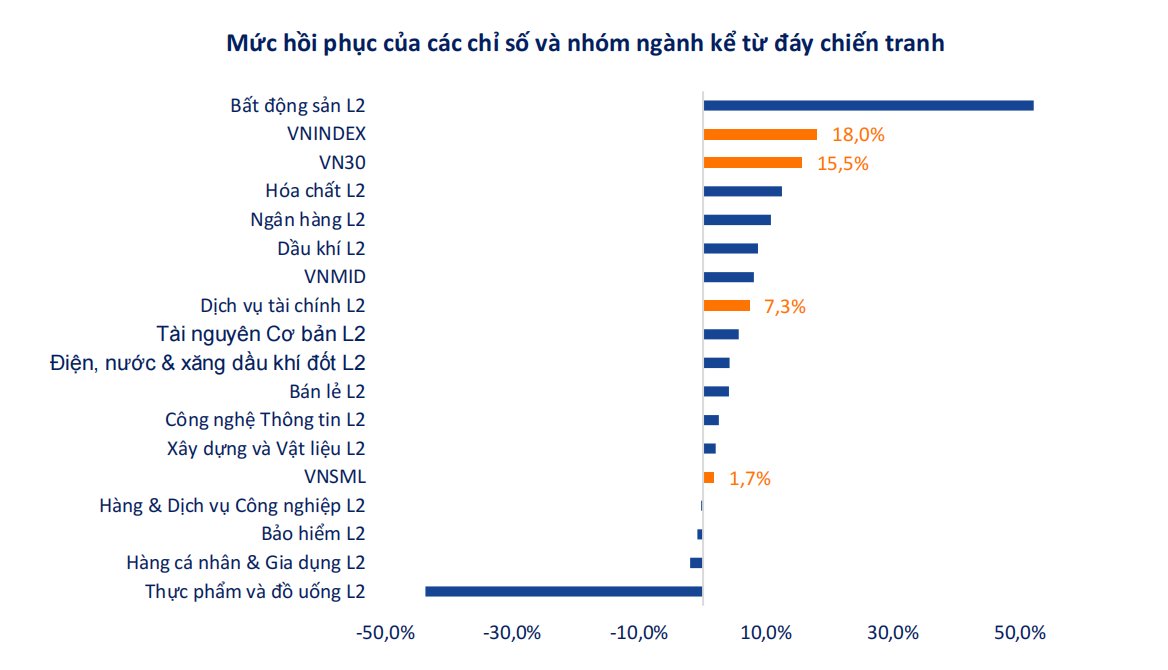
Mr. Hoang believes that market valuation is still in an attractive range if excluding the influence of Vin stock group. Most industries are trading at a P/E ratio lower than the 10-year average, while the long-term performance of VN-Index still significantly exceeds deposit interest rates.
However, he assessed that in the coming period, the market will differentiate strongly. The index may not increase too strongly, but many individual stock groups still have opportunities.
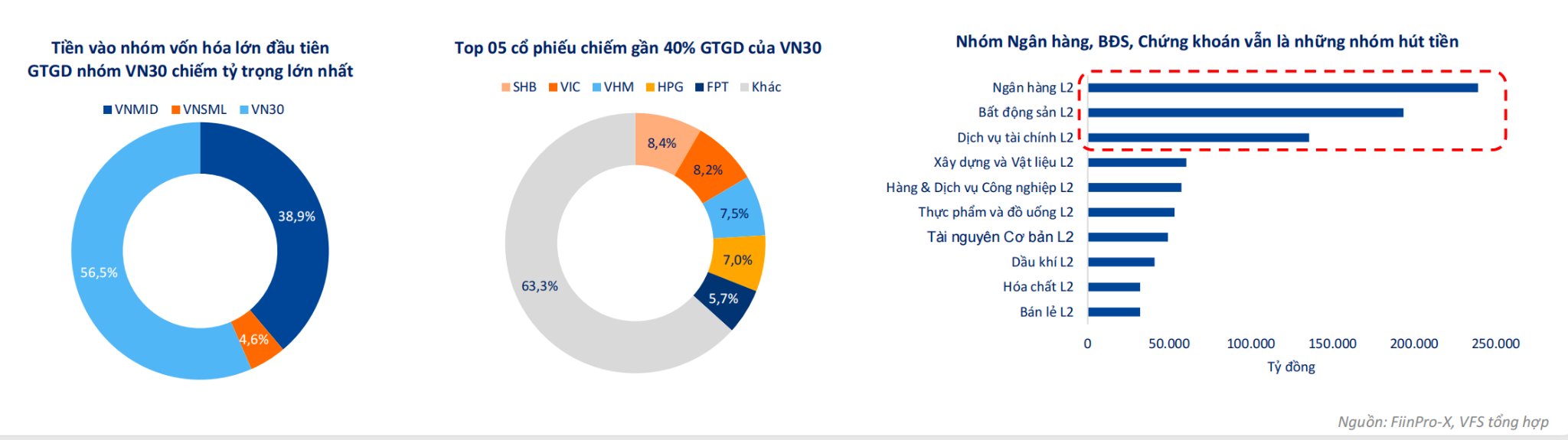
According to Mr. Hoang, from the end of March 2026, domestic institutional cash flow has returned to the market, then personal cash flow has also gradually improved. Cash flow is currently mainly concentrated in the banking, real estate and financial services groups.
Representatives of VFS believe that the "wave" of the market in 2025 is mainly the "policy wave", associated with stories such as high credit growth, public investment, market upgrades and support for the private economic sector. In 2026, these drivers are expected to continue to be maintained.
According to Mr. Hoang, credit growth will still be the most important driving force of the market. With a credit growth target of about 15% this year. In addition, it is to promote public investment disbursement of about 1 million billion VND, institutional reform and the expectation of market upgrade in September 2026 according to FTSE Russell's assessment.
However, he also noted that the monetary space is no longer too large due to liquidity pressure and the gap between credit growth and capital mobilization growth.
Money will no longer be mass-produced as before but will have strong differentiation. Capital flows will focus more on large corporations, manufacturing, infrastructure, technology and effective real estate projects," Mr. Hoang assessed.
In addition, a representative of VFS said that the capital increase wave of the banking industry will continue to take place strongly in 2026 to meet the requirements of expanding credit and improving financial capacity.
Corporate profit becomes a key factor
Meanwhile, Ms. Do Hong Van - Head of Data Analysis Department of Fingroup - believes that the profit prospect of enterprises will be a key factor determining market trends in the current period.
According to Ms. Van, the profit picture for the first quarter of 2026 is positive but highly focused. If excluding the impact from some large enterprises such as VHM, BSR, HPG, the total market profit growth is only about 15.4%, significantly lower than the announced level of 38.4%.
This shows that cash flow is currently mainly concentrated in some industry groups and leading enterprises.
According to a representative of Fingroup, the financial group, which has been the driving force behind profit growth for many years, is entering a period of slowdown. The banking industry is under pressure due to the continued narrowing of net profit margins, while the securities industry is affected by market liquidity decline.
Ms. Van also said that cost pressure is clearly affecting businesses, from raw material costs, operating costs to compliance costs with policies, taxes and new legal regulations.
According to her, industry groups are currently clearly differentiated. Some industries still maintain the ability to expand profit margins such as residential real estate, oil and gas, mining, milk and beverages. Meanwhile, groups such as chemicals, industrial park real estate and textiles are under great pressure from input costs and geopolitical fluctuations.
Currently, I have not seen a strong enough industry group to play a leading role in the entire market in 2026," Ms. Van said.
According to Ms. Van, in the context of valuation no longer being too cheap and profit growth showing signs of slowing down, investment opportunities will focus more on the business level instead of the entire industry.
Stories such as business restructuring, IPO of subsidiaries, divestment, asset sale or private placement to strategic investors can create opportunities for stock revaluation.
I believe that 2026 will be a more selective market period, focusing on each business with its own story instead of the trend of widespread consensus," Ms. Van assessed.


