Báo cáo của VNDirect Research đã chỉ ra 5 tác động lớn của hành động này tới nền kinh tế và thị trường chứng khoán Việt Nam.
Thứ nhất, tình hình tài chính toàn cầu thắt chặt hơn làm giảm triển vọng tăng trưởng của nền kinh tế thế giới, dẫn đến nhu cầu đối với hàng xuất khẩu của Việt Nam thấp hơn. Việc Fed thắt chặt chính sách tiền tệ sẽ làm tăng lãi suất cho vay bằng đồng USD, từ đó làm giảm nhu cầu tiêu dùng của người dân cũng như làm suy yếu nhu cầu mở rộng đầu tư của các doanh nghiệp. Do đó, hoạt động xuất khẩu của Việt Nam có thể sẽ chậm lại trong những quý tới do người tiêu dùng tại các thị trường xuất khẩu chủ chốt như Mỹ và Châu Âu thắt chặt chi tiêu.
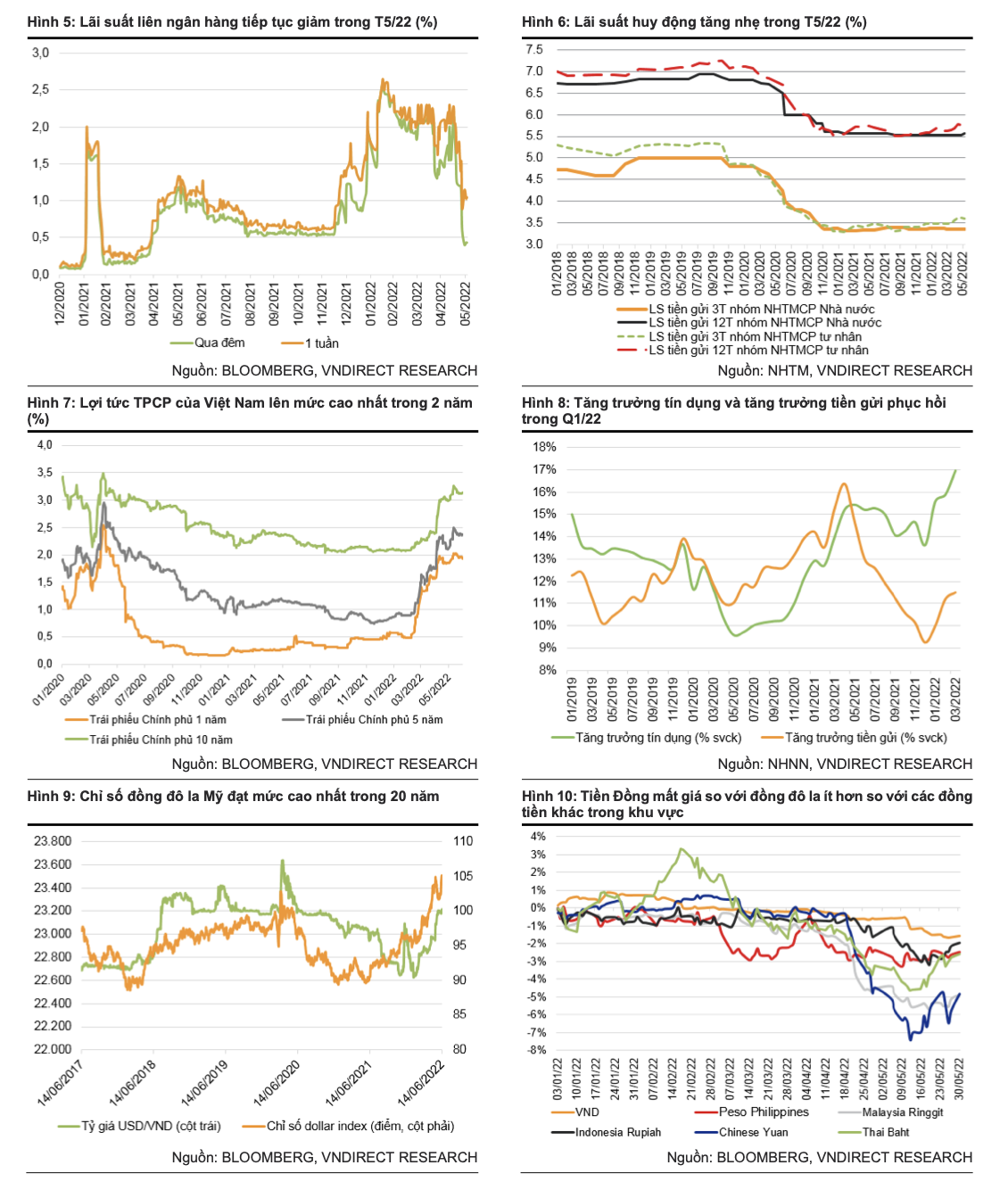
Thứ hai, lãi suất huy động bằng VND chịu áp lực tăng trong những tháng cuối năm. Tính đến cuối tháng 5.2022, lãi suất huy động kỳ hạn 3 tháng và kỳ hạn 12 tháng của các ngân hàng quốc doanh không đổi so với mức cuối năm 2021 trong khi lãi suất tiền gửi kỳ hạn 3 tháng và lãi suất huy động kỳ hạn 12 tháng của các ngân hàng tư nhân lần lượt tăng 20 điểm cơ bản và 23 điểm cơ bản so với mức cuối năm 2021.
VNDirect Research cho rằng lãi suất huy động sẽ tiếp tục tăng từ giờ đến cuối năm 2022 do lãi suất USD tăng và áp lực lạm phát tại Việt Nam tăng cao trong những quý tới. Tuy nhiên, mức tăng sẽ không lớn với dự báo lãi suất từ nay tới cuối năm tăng thêm khoảng 30-50 điểm cơ bản.
Lãi suất tiền gửi kỳ hạn 12 tháng của các ngân hàng thương mại có thể tăng lên 6,0-6,2%/năm vào cuối năm 2022 (hiện ở mức bình quân là 5,7%/năm), vẫn thấp hơn so với mức trước đại dịch là 7,0%/năm.
Thứ ba, lãi suất USD tăng gây áp lực lên nghĩa vụ trả nợ nước ngoài của Chính phủ và doanh nghiệp Việt Nam. Theo ước tính của VNDirect Research, nợ nước ngoài của Việt Nam chiếm 39% GDP vào cuối năm 2021. Trong bối cảnh thanh khoản trên thị trường tài chính quốc tế thắt chặt hơn, Chính phủ và các doanh nghiệp Việt Nam sẽ khó huy động vốn trên thị trường quốc tế và phải chịu lãi suất cao.
Thứ tư, về lý thuyết, dòng vốn đầu tư gián tiếp nước ngoài (FII) có thể bị tác động tiêu cực bởi “taper tantrum” (kế hoạch "rút chân ga" khỏi "cỗ máy kích thích kinh tế" bằng cách giảm lượng trái phiếu mà Fed mua vào một cách từ từ và trong quãng thời gian dài trước đó).
Tuy vậy, thị trường chứng khoán Việt Nam cũng đã chứng kiến một đợt giảm điểm mạnh trong 2 tháng qua, kéo mặt bằng định giá các chỉ số chứng khoán về vùng hấp dẫn khi so sánh với lịch sử và các thị trường chứng khoán trong khu vực. Định giá hấp dẫn sẽ kích thích dòng vốn ngoại đổ vào chứng khoán Việt Nam và phần nào giảm thiểu tác động của “taper tantrum”.
Thứ năm, đồng USD mạnh gây áp lực lên tỷ giá hối đoái của Việt Nam. Đồng USD mạnh kéo tỉ giá USD/VND tăng 1,7% kể từ đầu năm. Tuy nhiên, VND vẫn là một trong những đồng tiền ổn định nhất khu vực.
Báo cáo nhận định các yếu tố cơ bản để giữ cho VND ổn định trong những năm gần đây vẫn được duy trì, bao gồm thặng dư thương mại cải thiện và dự trữ ngoại hối cao. VNDirect Research kỳ vọng thặng dư thương mại tăng lên mức 7,2 tỉ USD trong năm 2022 từ mức 3,3 tỉ USD trong năm 2021.
Bên cạnh đó, giải ngân FDI tăng trưởng ổn định và nguồn kiều hối dồi dào cũng góp phần ổn định thị trường ngoại hối. Do đó, tỉ giá USD/VND được dự báo tăng không quá 2% trong cả năm 2022.
Trong khi đó, Chứng khoán BSC nhận định trong trung và dài hạn thị trường chứng khoán Mỹ sẽ chịu áp lực khi chính sách tiền tệ thắt chặt làm giảm kỳ vọng tăng trưởng kinh tế. Chứng khoán Việt Nam cũng có thể sẽ chịu ảnh hưởng tương tự trong trung và dài hạn. Do vậy, BSC khuyến nghị nhà đầu tư cần cẩn trọng trong những phiên giao dịch tiếp theo.