
Debt burden due to shrimp farming on sand
More than 10 years ago, the sand shrimp farming movement developed rampantly in the coastal area of Ninh Chau commune. Shrimp ponds stretching across the white sand once brought significant income, helping many households escape poverty and become well-off.
Ms. Mai Thi Hien's family (in Tan Hai village) was one of the typical successes at that time. With 10 concentrated shrimp farming ponds on an area of about 3 hectares, invested methodically from the farming system to care techniques, her family's model was once the dream of many people in the area.
After learning from experience from the southern provinces, Ms. Hien and her husband returned to their hometown to start a business and quickly achieved success. The first farming crops brought profits of hundreds of millions of VND, and even crops with profits of billions of VND.
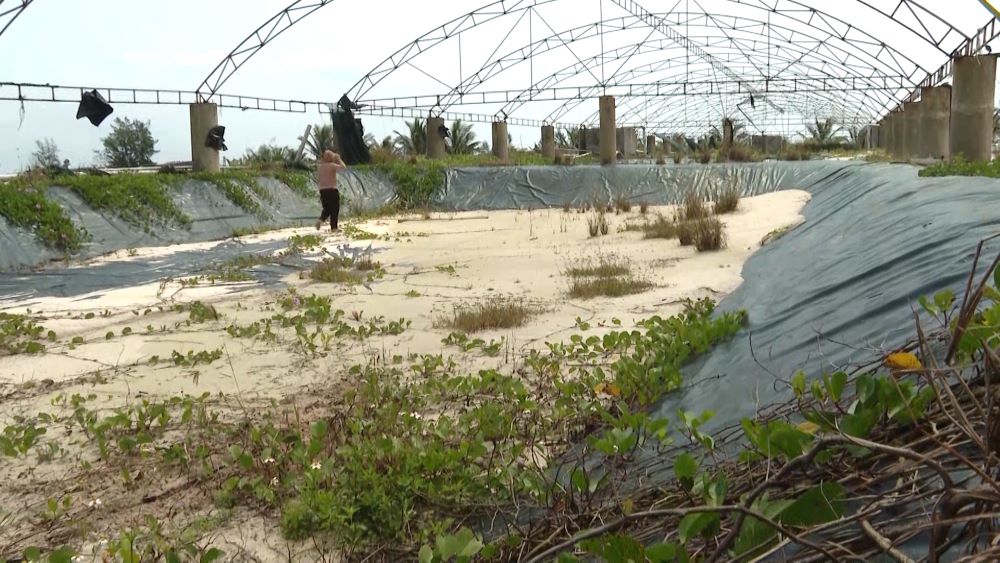
However, after only a few years of favorable development, shrimp farming began to reveal many risks. Since 2020, shrimp diseases have occurred continuously, and output has decreased sharply. Meanwhile, investment costs from seeds, feed to environmental treatment are increasing, causing economic efficiency to decline significantly.
In the past, raising shrimp was a capital of four profits, but later investing billions of VND and earning small change," Ms. Hien shared.
Prolonged losses forced her family to mortgage all assets to borrow capital from the bank in the hope of recouping losses. However, the more they invested, the more they lost money, and the debt became larger and larger.
For nearly 3 years, her family's once bustling shrimp farming area has fallen into desolation, many ponds are abandoned. Meanwhile, the family still has to bear a bank debt of nearly 10 billion VND, becoming a prolonged pressure with no way out.
Spontaneous, high risk
Not only Ms. Hien's family, many households in the coastal area of Ninh Chau commune are also in a similar situation when shrimp farming is no longer effective.
After many years of being attached to shrimp farming, Ms. Mai Thi Huong's family also had to stop due to prolonged losses, with a debt of nearly 5 billion VND.
To have a source of income to cover expenses and repay debts, her family switched to raising snakehead fish with the expectation of improving the economy. However, the reality is not easy.
The batch of fish has passed the selling time but is still growing slowly, while the cost of food and care continues to increase, putting increasing financial pressure on the family. People who are already difficult find it difficult to do anything" - Ms. Huong choked up.
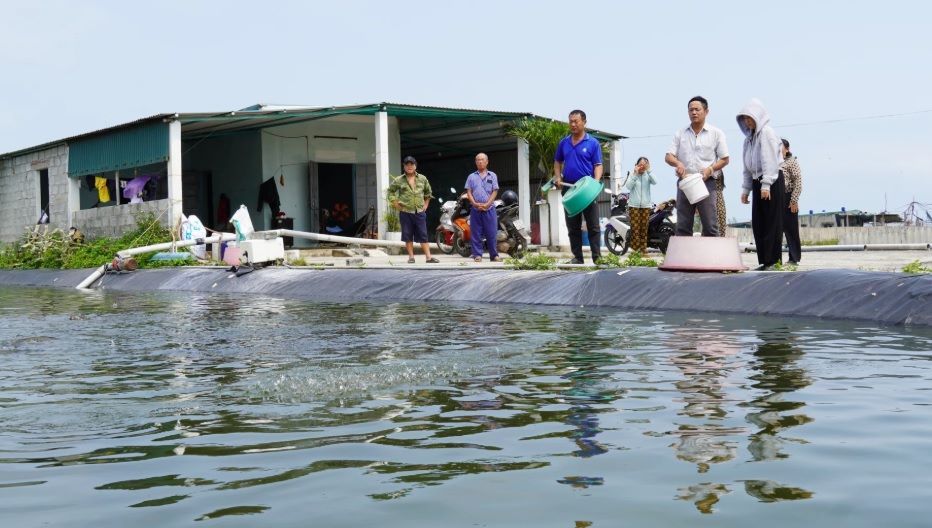
According to statistics, the sandbar area of Ninh Chau commune currently has about 15 hectares of aquaculture. However, to date, many areas have been abandoned because people have suffered prolonged losses and no longer have the ability to reinvest in production.
Mr. Tran Van Lai - Vice Chairman of Ninh Chau Commune People's Committee said that in the past time, the spontaneous shrimp farming movement not according to planning of people has turned shrimp farming on sand into a "disaster" of debt, causing hundreds of households to struggle.
Local authorities have repeatedly warned and advised people and not allocated more land to limit spontaneous shrimp farming. At the same time, encouraging people to convert production models, from shrimp farming to other aquatic products such as snakehead fish, fragrant snails, giant fish, and mullet to reduce risks and find more suitable directions.


