
Although fuel prices have been adjusted down for many times, passenger transport fares have not shown signs of cooling down. Even, many long-distance routes have increased by more than 100,000 VND/trip. This paradox is negatively affecting the pockets of people, especially low-income workers, in the context of rising living costs.
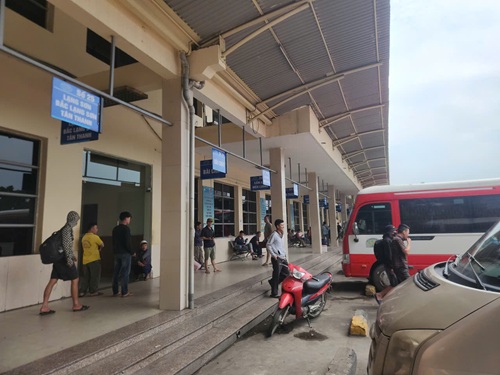
According to reporters of Lao Dong Newspaper at major bus stations in Hanoi such as My Dinh, Giap Bat..., ticket prices on many fixed routes are still maintained at a high level after gasoline and oil price adjustments.
Mr. Nguyen Van Dang (from Viet Tri, Phu Tho) said that previously the ticket price for the My Dinh - Viet Tri route was about 70,000 VND, now it has increased to 9,000 VND.
Not only car fares, but the prices of many essential goods have also increased according to previous fuel prices, but have not decreased again. For low-income workers, each trip increases by 20,000 - 30,000 VND, which is a significant burden when traveling, visiting hometowns or solving work," Mr. Dang shared.
Real-world surveys show that from the beginning of March 2026 to now, long-distance transport routes recorded the highest increase of up to more than 100,000 VND/trip. Meanwhile, short routes (under 200km) also increased from 20,000 VND to 50,000 VND/person/trip.
Although the price of diesel has decreased to the threshold of 28,172 VND/liter, mazut oil is still 20,027 VND/kg, this price is still higher than after the Lunar New Year 2026. This is one of the reasons why many bus companies are not enthusiastic about reducing fares.
According to Mr. Nham Dinh Dai (driver of Thanh Son - My Dinh route), the increase in fares has significantly reduced the number of passengers. "There are days when there are not enough passengers, we have to concentrate 2-3 trips on one bus to run to cover operating costs. Bus companies still have to make endless losses even though they have asked to increase fares," Mr. Dai said.
Agreeing with this view, Mr. Ho Sy Tien (driver of Hanoi - Vinh route) also said that in addition to peak periods such as April 30th and May 1st holidays, cars are very deserted on weekdays. Pressure on fuel costs and vehicle depreciation is still a difficult problem.
Talking to a reporter from Lao Dong Newspaper, Mr. Nguyen Hoang Tung - Director of Giap Bat Bus Station said that there are currently about 60 bus companies applying for fare increases. However, the trend of applying for fare increases has begun to slow down.
Explaining the reason why gasoline prices have decreased but fares have not decreased, Mr. Do Van Bang - Chairman of the Hanoi Transport Association said that there is a delay according to the regulations of the Ministry of Finance and the tax authorities. Specifically, when businesses want to adjust fares, they must register and wait at least 7 days to be applied. Meanwhile, fuel prices fluctuate erratically, making it difficult for businesses to be proactive. Many units are forced to keep prices high to compensate for the previous period of losses.
Adjusting ticket prices is the right of businesses to balance costs, but it is necessary to ensure reasonableness and compliance with legal regulations. Price management agencies and the transport sector need to soon inspect and review the cost structure of transport businesses, avoiding the situation of "quick up, slow down", causing prolonged pressure on people and workers.


