
Exploiting the energy potential of the lake area
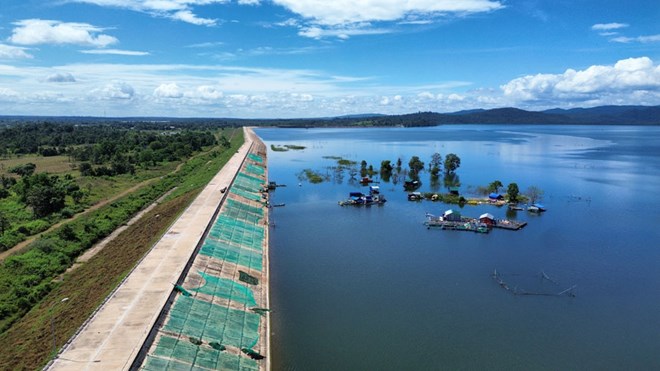
On June 24, Gia Lai Provincial People's Committee just issued a decision approving the investment policy and also approving investors for 2 large-scale floating solar power projects in the area.
From 2020 to now, many investors have participated in developing wind power and solar power projects in Gia Lai. However, this is the first time the province has selected an investor to implement a floating solar power project in the lake area.
The two projects have been considered, evaluated, and appraised by relevant departments, functional sectors, and localities. The top priority criterion is the commitment not to cause environmental pollution, because the lakebed area is a source of water for long-term living and production of local people.
Kanak floating solar power plant is invested by Power Generation Corporation 2 - JSC (EVNGENCO2). The project has a designed capacity of 40MW, with electricity output in the first year of about 71,770MWh.
The total estimated investment is more than 779 billion VND, of which the investor's contributed capital accounts for 30%, and loans from credit institutions account for 70%. The project is implemented in Kbang commune.
The Plei Tho Ga 2 floating solar power plant project combined with a storage battery system is invested by Plei Tho Ga Energy Joint Stock Company. The project has a designed capacity of 20MW, with an electricity output of about 37,995MWh/year.
The total estimated investment is 450 billion VND, of which the investor's contributed capital accounts for 20%, and mobilized capital accounts for 80%. The project's operating term is 50 years.
The two projects will provide clean electricity from renewable energy to the national power system, contributing to ensuring energy security and meeting the socio-economic development needs of Gia Lai province.
Priority number 1 must be environmental protection, modern technology
Gia Lai province authorities require investors to commit not to use cleaning chemicals during operation; prioritize applying automatic dry cleaning robots or using RO purified water to clean the panels, in order to protect water quality.
Investors must install automatic water quality monitoring systems, conduct periodic monitoring and share monitoring data with state management agencies.
In addition, investors are responsible for repairing and overcoming damaged roads due to the transportation of materials and equipment; not causing negative impacts on the environment, land and property of people in the project area as well as neighboring areas.
Investors must also use machinery and equipment with clear origins; apply advanced technology, not belonging to the list of outdated technology causing environmental pollution. The selection of equipment must be associated with energy saving requirements, environmental protection and have solutions to treat and recycle panels after they expire according to regulations.


