
Gold prices fell slightly in the last session of the week as they were under pressure from a stronger USD and uncertainties surrounding the ceasefire between the US and Iran. However, the precious metal is still heading for its third consecutive week of increase, as expectations of diplomatic solutions and buying power from central banks continue to support the market.
As of 12:00 PM today Vietnam time, spot gold prices fell to 4,750.82 USD per ounce, while June gold futures contracts in the US fell 0.9% to 4,776.60 USD per ounce. Overall for the week, it still increased by about 1.6%. Meanwhile, June gold futures contracts in the US fell 0.9% to 4,776.60 USD per ounce.
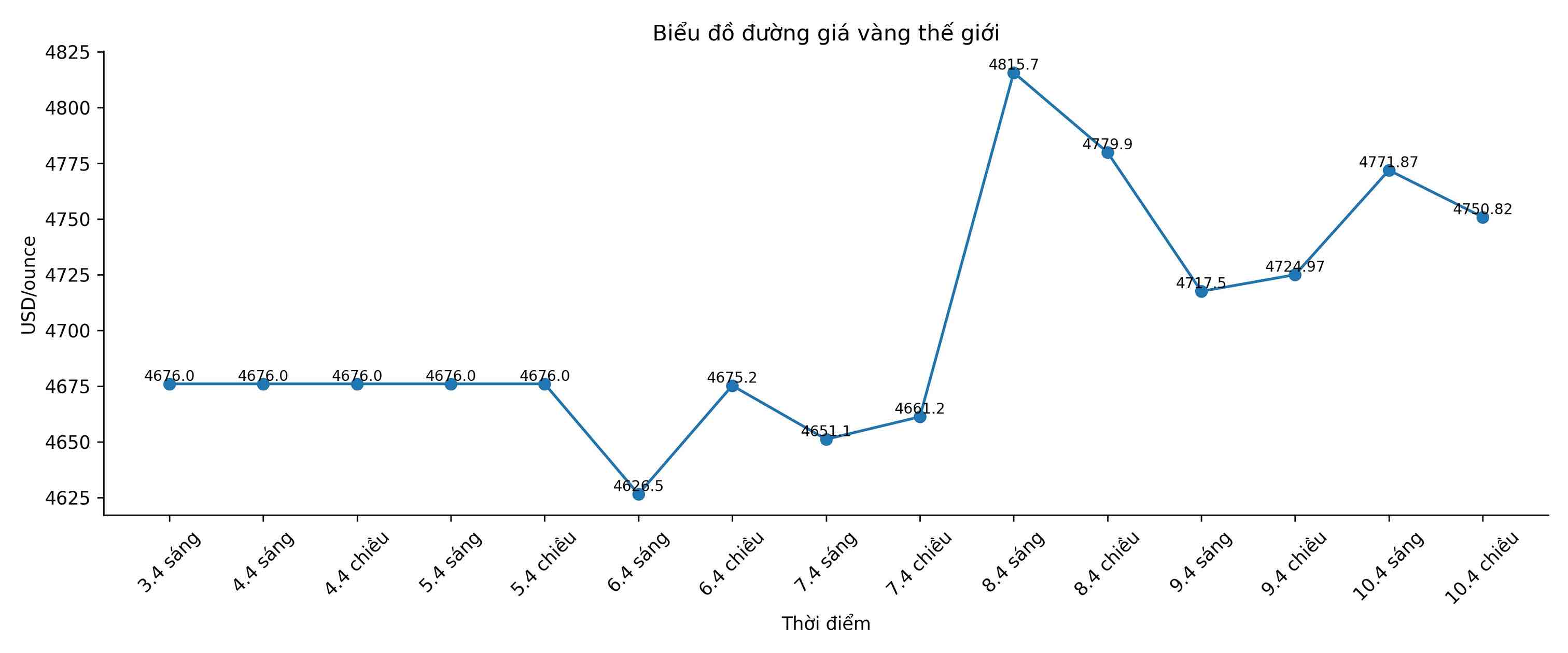
The short-term decline mainly came from the rising USD, making gold - an asset valued in greenbacks - less attractive to international investors. In addition, the unclear developments of the ceasefire in the Middle East caused the market to maintain a cautious state.
Geopolitical developments continue to be the dominant factor. US President Donald Trump said he is optimistic about the possibility of reaching an agreement to end the six-week conflict, but at the same time issued a tough warning regarding cross-border activities in the Strait of Hormuz. Meanwhile, Israeli airstrikes in Lebanon continue to increase, raising concerns about the possibility of the already fragile ceasefire breaking down.
Mr. Kyle Rodda - Expert at Capital. com - said that the market currently lacks clear signals about the direction of the conflict as well as the impact on the energy market, causing gold prices to fluctuate in a narrow range in the last sessions of the week.
In the opposite direction, Brent oil prices fell more than 11% in the week, recording the strongest drop in many months, as the market expects the Hormuz Strait - the transportation route accounting for about 20% of global oil and liquefied natural gas flows - to soon resume. The USD also fell about 1.2% in the week, while stocks recovered, thereby creating a certain support for gold prices.
However, since the conflict broke out at the end of February, gold prices have still fallen nearly 10%, as the safe-haven role weakened as a part of investors had to sell assets to offset losses in other markets.
The energy supply shock continues to increase inflation risks, forcing the market to readjust monetary policy expectations. The possibility of the US Federal Reserve (Fed) cutting interest rates is shrinking, even not excluding the scenario of maintaining higher interest rates for longer - a disadvantage to gold, which is a non-interest asset.
The latest data shows that the US consumer spending index increased by 2.8% in the 12 months up to February, while the market expects the March consumer price index to continue to rise sharply. According to CME's FedWatch tool, the probability of the Fed cutting interest rates in December has increased to about 31%, showing that policy expectations are still differentiated.
Experts at ANZ Banking Group Ltd. said that with the fragility of the ceasefire order, gold prices may still be under adjustment pressure if energy prices remain high. However, the fundamental supporting factors for precious metals have not changed.
In the context of increasing macroeconomic instability, along with concerns about the global fiscal situation and public debt, gold continues to be seen as a tool to diversify investment portfolios. Demand from central banks remains positive, as Poland aims to increase reserves to 700 tons, while China bought about 5 tons more in March. ANZ forecasts that total gold purchases by central banks in 2026 could reach about 850 tons.
According to Mr. Rodda, the outlook for gold prices largely depends on the developments of the conflict. If the ceasefire is maintained and inflation is controlled, gold prices may head towards the 5,000 USD per ounce mark. Conversely, if tensions escalate again, prices may quickly adjust down to lower levels.
In the short term, the market is likely to continue to fluctuate in a narrow range as investors closely monitor geopolitical developments and signals from global monetary policy.
In other metals, silver prices rose 0.5% to $75.48 per ounce, while platinum fell 2.5% to $2,049.84 and palladium fell 0.3% to $1,552.59 per ounce.


